January 8 is not a moment of rupture or the end of an era. It is a date of remembrance. Across different centuries, this day marks the deaths of individuals whose work had already moved beyond their own lifetimes. Marco Polo had expanded Europe’s understanding of the world long before his death in 1324. Galileo Galilei established a scientific method that continued after 1642. Giovanni Camillo Glorioso, who died in 1643, helped stabilize that legacy within universities. January 8 records the moment when personal biography ends, while influence remains and continues to shape the future.
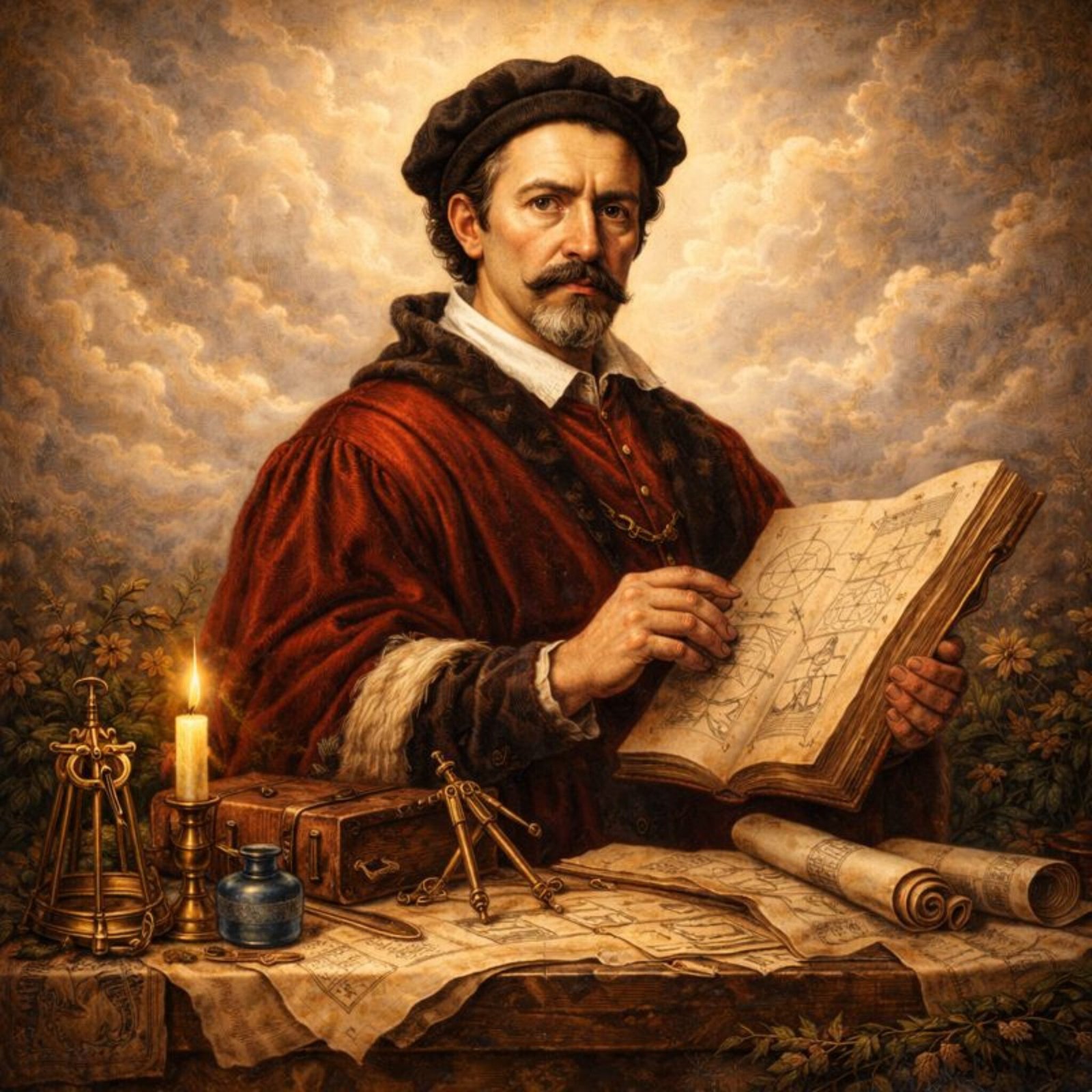
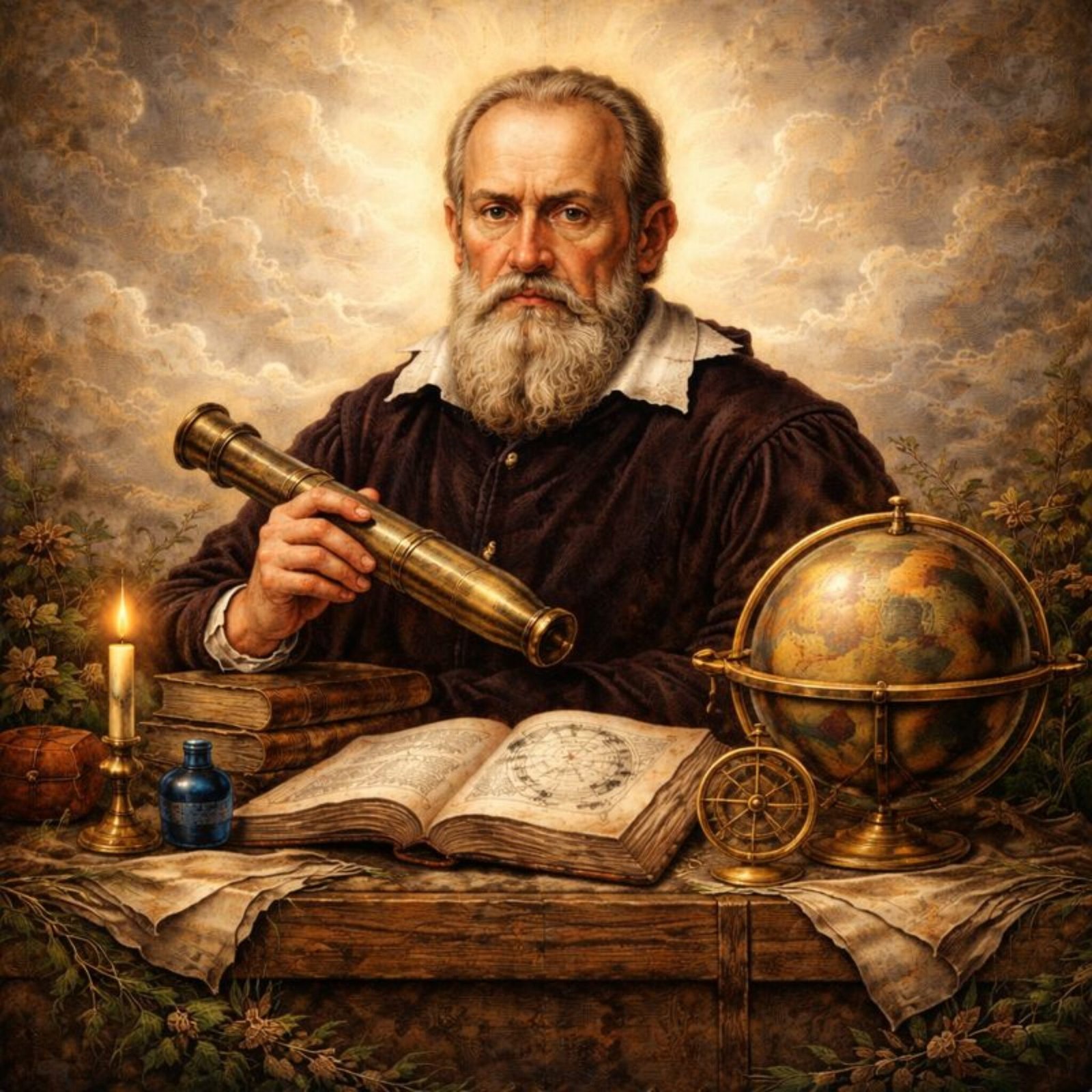
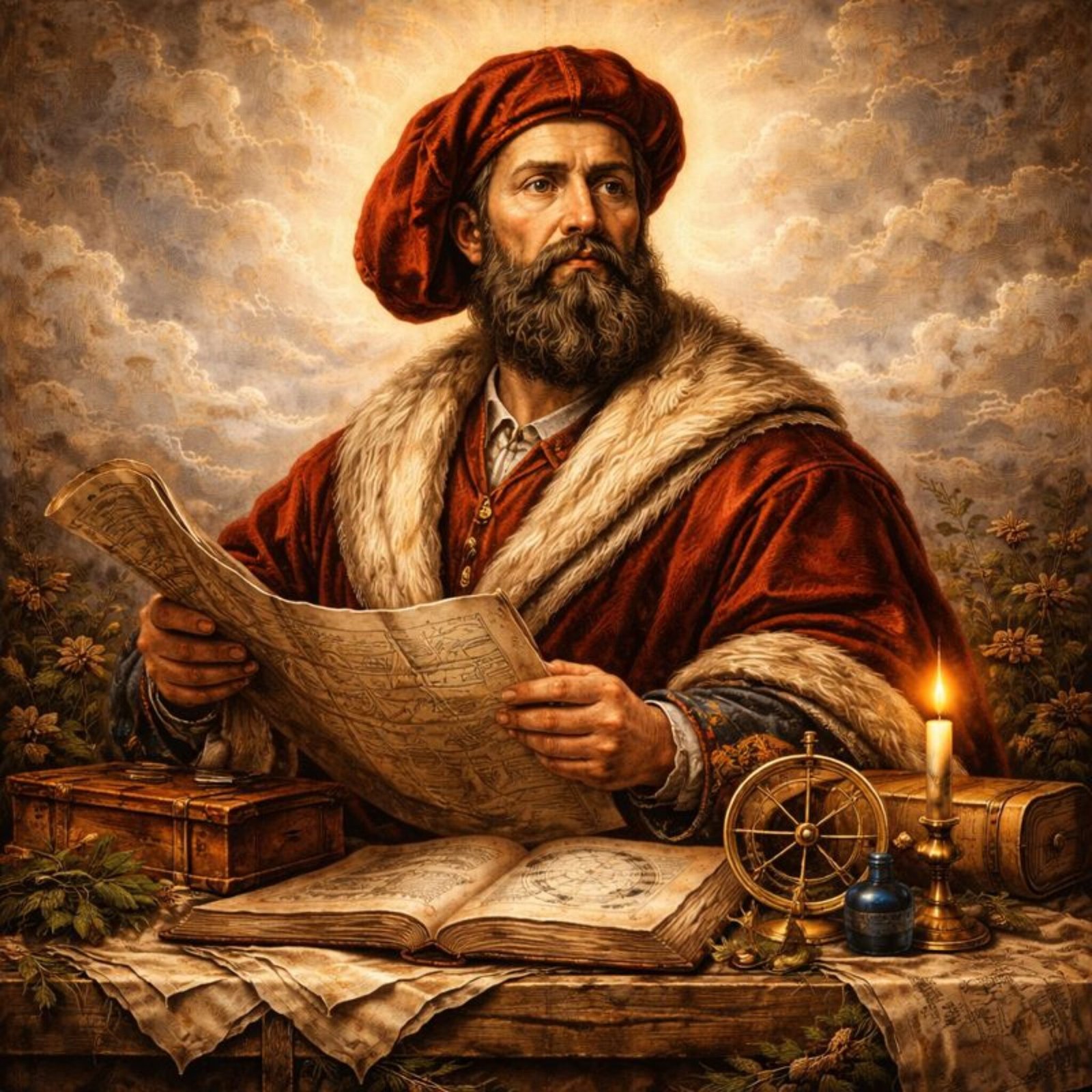
1324 — the death of Marco Polo: the end of a life and the beginning of a worldview
Marco Polo
(Venice, 1254 – Venice, January 8, 1324)
On January 8, 1324, in Venice, Marco Polo died — a traveler, merchant, and writer whose name became inseparable from the European discovery of Asia. His death passed without great public ceremonies or official recognition, yet over time this date acquired a deep symbolic meaning. It marks not only the end of an extraordinary life, but also the consolidation of a cultural legacy that reshaped how Europe imagined the world beyond its familiar borders. Marco Polo was born in 1254 in Venice, a city that already functioned as a major crossroads of trade, diplomacy, and cultures. His family belonged to the mercantile elite: his father Niccolò and his uncle Maffeo had traveled east long before Marco joined them. Growing up in this environment, Marco did not receive a classical scholarly education, but instead learned practical skills — languages, negotiation, observation, and adaptation — that would later prove essential during his journeys.

In 1271, still a teenager, Marco departed with his father and uncle on a journey that would last nearly twenty-four years. Their route crossed Anatolia, Persia, and Central Asia, passing through deserts, mountains, and politically unstable regions. Eventually, they reached the court of Kublai Khan, ruler of the Mongol Empire and emperor of China. Marco spent roughly seventeen years in Asia, serving in administrative and diplomatic roles, traveling extensively within the empire, and carefully observing its social, economic, and political structures. What Marco Polo described upon his return astonished European audiences. He wrote about immense cities, efficient bureaucratic systems, organized postal networks, paper money, and vast commercial markets — features largely unknown or unimaginable in medieval Europe. His accounts challenged deeply rooted assumptions about Europe’s centrality and superiority. Because of the scale and novelty of his descriptions, many contemporaries doubted his credibility, assuming exaggeration or invention rather than lived experience. After returning to Venice at the end of the thirteenth century, Marco Polo did not immediately gain recognition. During a war between Venice and Genoa, he was captured and imprisoned. It was during this period that he dictated his memories to Rustichello da Pisa, producing the work later known as The Travels of Marco Polo or Il Milione. The book circulated widely throughout Europe in numerous manuscript versions and translations. While not always precise in geography or chronology, it offered an unprecedented panoramic vision of Asia, shaping European knowledge for generations. In his later years, Marco Polo lived as a respected Venetian merchant. He married, had daughters, and participated quietly in commercial life. He did not actively defend his stories against skeptics nor attempt to cultivate a public persona. According to later tradition, on his deathbed he refused to retract his accounts, allegedly stating that he had not even told half of what he had seen. Whether historical or legendary, this statement reflects how his figure became suspended between documented history and enduring myth. With time, Marco Polo’s significance became unmistakable. His writings stimulated European curiosity about the East and expanded the geographical imagination of the continent. Centuries later, explorers such as Christopher Columbus carried copies of his book, annotating its margins while planning new voyages. In this sense, Marco Polo stands as a conceptual precursor to the Age of Discovery, bridging medieval exploration and early modern expansion. January 8, 1324 therefore represents more than the death of a single individual. It marks the conclusion of an era in which travel was primarily a personal experience and the beginning of its transformation into shared, written knowledge. Marco Polo demonstrated that direct observation and narrative could redefine collective understanding, dissolving fear of the unknown and replacing it with curiosity. More than seven centuries later, Marco Polo’s name remains synonymous with exploration, cultural encounter, and intellectual openness. The date of January 8 invites remembrance not only of the end of his life, but of the enduring impact of his vision — a vision in which the world is vast, interconnected, and worth understanding beyond the limits of familiar horizons.
1642 — the death of Galileo Galilei: Arcetri and the silence that gave birth to modern science
Galileo Galilei
(Pisa, February 15, 1564 – Arcetri, January 8, 1642)
On January 8, 1642, in Arcetri, on the hills just outside Florence, Galileo Galilei died. Blind, physically weakened, and confined under house arrest, Galileo spent his final years removed from public life and intellectual debate. His death passed quietly, without honors or public recognition. Yet with time, this date has come to represent a profound historical turning point: the end of a life marked by conflict and the definitive emergence of a new way of understanding nature.
Galileo Galilei was born in 1564 in Pisa, at a moment when European knowledge was still deeply rooted in ancient authorities and Aristotelian philosophy. From an early age, he showed a strong inclination toward observation and mathematical reasoning. Although initially directed toward the study of medicine, Galileo abandoned it in favor of mathematics and natural philosophy. This choice reflected a deeper conviction: nature should not be interpreted through inherited authority, but investigated directly through experience and reason.

His early scientific work focused on mechanics and motion. Galileo studied falling bodies, inertia, and the mathematical laws governing physical phenomena. What distinguished his approach was method. Rather than relying on abstract speculation, he insisted on measurement, experimentation, and repeatable observation. This emphasis on empirical verification marked a decisive break with medieval scholastic traditions and laid the groundwork for modern scientific inquiry.
Galileo’s most revolutionary contributions emerged in astronomy. At the beginning of the seventeenth century, after learning of a new optical instrument developed in the Netherlands, he constructed improved telescopes and turned them toward the sky. The results were extraordinary. He observed mountains and craters on the Moon, discovered four satellites orbiting Jupiter, recorded the phases of Venus, and identified dark spots on the surface of the Sun. These observations contradicted the idea of perfect, immutable celestial spheres and strongly supported the heliocentric model proposed by Copernicus.
Support for heliocentrism inevitably brought Galileo into conflict with ecclesiastical authority. During the period of the Counter-Reformation, the Catholic Church viewed challenges to traditional cosmology as threats to doctrinal stability. In 1633, Galileo was tried by the Roman Inquisition. Under pressure, he was forced to publicly recant his views and was sentenced to life imprisonment, later commuted to permanent house arrest. From that point onward, Galileo lived under strict surveillance, spending most of his remaining years in his home in Arcetri.
The years in Arcetri were marked by personal tragedy and declining health. Galileo gradually lost his sight, becoming completely blind. Nevertheless, his intellectual activity did not cease. During this period, he completed one of his most important works, Discourses and Mathematical Demonstrations Relating to Two New Sciences. Published abroad to evade censorship, the book established the foundations of classical mechanics and the scientific study of motion. Its influence extended far beyond Galileo’s lifetime, shaping the work of later scientists such as Isaac Newton.
Galileo’s death on January 8, 1642, attracted little public attention. He was buried without the honors befitting his intellectual stature, and for many years his name remained associated with condemnation rather than celebration. Only gradually did his reputation undergo rehabilitation. Over time, Galileo came to be recognized as a symbol of intellectual courage and the struggle for freedom of scientific thought. His personal ordeal came to represent the broader tension between institutional authority and the pursuit of truth.
The historical importance of Galileo Galilei lies not only in his discoveries, but in the transformation of scientific method itself. He argued that the “book of nature” is written in the language of mathematics and that understanding it requires careful observation and experimentation. This principle became the cornerstone of modern science. Galileo’s influence extended beyond physics and astronomy, shaping philosophy and redefining humanity’s place in the universe.
January 8, 1642, therefore marks more than the death of a single individual. It signifies the closing of an era dominated by unquestioned authority and the opening of a new age grounded in evidence, reason, and critical inquiry. Galileo died in silence in Arcetri, but his ideas continued to resonate, overcoming censorship and resistance. Today, his name stands as one of the central pillars of modern science and as a lasting reminder of the power of reason to challenge and transform the world.
1643 — the death of Giovanni Camillo Glorioso: the cautious continuation of Galileo’s legacy
Giovanni Camillo Glorioso, also known as Gloriosi
(Giffoni Valle Piana, 1572 – Naples, January 8, 1643)
On January 8, 1643, in Naples, Giovanni Camillo Glorioso died. His passing acquires particular significance when placed alongside a closely related event: exactly one year earlier, on January 8, 1642, Galileo Galilei had died. Glorioso therefore outlived Galileo by precisely one year, and the coincidence of the same calendar day reinforces a sense of historical continuity between the two figures. Together, these dates mark the transition from scientific rupture to scientific consolidation in seventeenth-century Italy. Giovanni Camillo Glorioso was born in 1572 in Giffoni Valle Piana, in southern Italy, at a time when European science was undergoing a profound transformation. Universities were still dominated by Aristotelian philosophy, yet new methods grounded in mathematics, observation, and calculation were steadily gaining ground. Glorioso belonged to a generation that did not ignite the scientific revolution but ensured its survival. His role was to translate revolutionary ideas into stable academic practice, allowing them to persist within institutional structures increasingly wary of intellectual dissent.

His education and scholarly work focused primarily on mathematics and astronomy. Unlike Galileo, whose discoveries provoked open confrontation with religious authority, Glorioso developed a more measured intellectual posture. This prudence did not imply scientific retreat. Rather, it reflected a strategic adaptation to the political and religious climate of the time. By emphasizing mathematical rigor and technical analysis, Glorioso advanced the new science without turning it into a public ideological challenge. A decisive chapter in his career was his association with the University of Padua, one of Europe’s leading centers of scientific learning. Padua had been the academic home of Galileo Galilei, whose teaching there left a deep methodological imprint. After Galileo’s departure from Padua and, more critically, after the 1633 trial that led to his condemnation and effective prohibition from free scientific work, Italian universities faced a delicate problem: how to preserve the new scientific methods without provoking further conflict. It was in this context that Glorioso became Galileo’s successor, inheriting not the public controversy but the intellectual framework Galileo had established. Occupying that position carried strong symbolic weight. After the trial, Galileo’s name itself had become sensitive within institutional settings. Open advocacy of heliocentrism or explicit challenges to traditional cosmology risked renewed scrutiny. Mathematics, geometry, and astronomy, however, remained indispensable disciplines. Glorioso navigated this space carefully. He retained the mathematical approach to nature that Galileo had championed while avoiding overt positions on cosmological questions that might attract ecclesiastical opposition. In doing so, he preserved the substance of the new science while moderating its public expression. This cautious posture should not be mistaken for intellectual compromise. On the contrary, it represented a necessary phase in the life of scientific ideas. If Galileo embodied rupture, confrontation, and the dramatic assertion of a new worldview, Glorioso embodied transmission and normalization. Through teaching, scholarly exchange, and steady academic work, he helped transform revolutionary insights into accepted tools of knowledge. What had once been radical gradually became routine, reproducible, and institutionally secure. An important aspect of Glorioso’s intellectual life was his connection with Marino Ghetaldi, a prominent mathematician and geometer of the period. Their friendship and collaboration illustrate the existence of a scientific network that extended beyond individual universities. Within this network, Galilean methods continued to circulate—less polemically, but no less effectively. These relationships contributed to the resilience of Italian mathematics and astronomy during a period of heightened surveillance and constraint. In the later years of his life, Glorioso worked in Naples, a major cultural and intellectual center of southern Italy. There he continued his teaching and scholarly activity, helping to disseminate mathematical and astronomical knowledge beyond the northern universities. This geographical dimension of his career underscores another aspect of his importance: he functioned as a mediator not only between old and new science, but also between different regions of the Italian peninsula. Through figures like Glorioso, scientific knowledge became more evenly distributed and less dependent on a single charismatic innovator. The death of Giovanni Camillo Glorioso on January 8, 1643, closed the life of a scholar who lived in the shadow of a giant yet fulfilled an indispensable role. The fact that his death occurred exactly one year after Galileo’s, on the same day, lends the sequence a powerful symbolic resonance. January 8, 1642, marked the end of the life of the man who challenged the foundations of traditional cosmology. January 8, 1643, marked the end of the life of one who helped ensure that this challenge did not vanish with its author. If Galileo represents conflict, courage, and the personal cost of intellectual revolution, Glorioso represents the phase that followed: cautious endurance, institutional embedding, and continuity. His career demonstrates that scientific progress does not depend solely on dramatic confrontations or singular breakthroughs. It also requires figures capable of sustaining ideas once the initial shock has passed, integrating them into education and everyday scholarly practice. January 8, 1643, therefore signifies more than the death of a mathematician and astronomer. It marks the conclusion of a critical transition in the history of science. Thanks to scholars like Giovanni Camillo Glorioso, the Galilean revolution did not end with repression and silence. Instead, it evolved into a stable intellectual tradition—less visible, perhaps, but fundamental to the emergence of modern science.
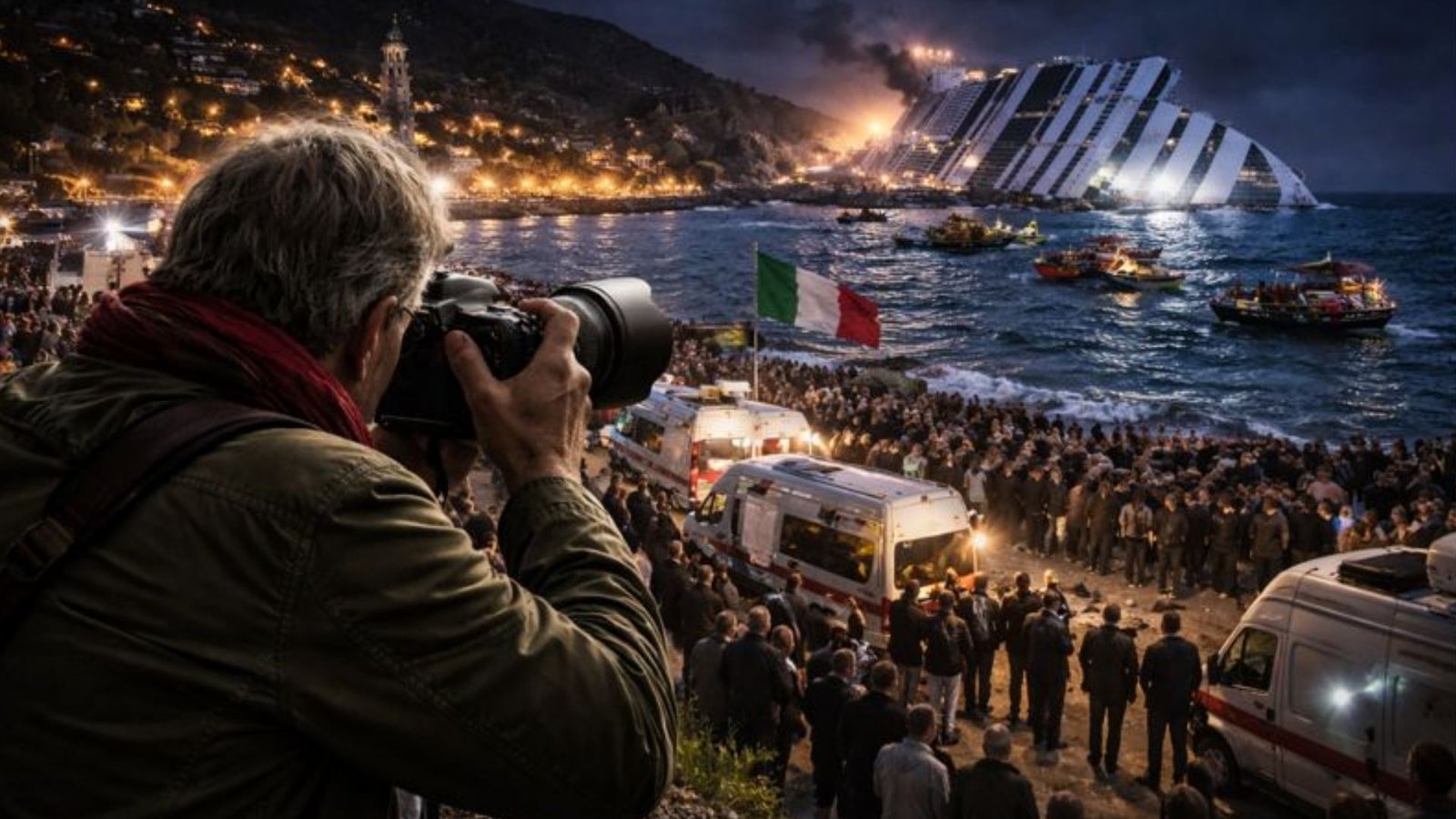
January 13 — a date of power, disaster, and cultural rupture

January 12 — three events, three historical fractures
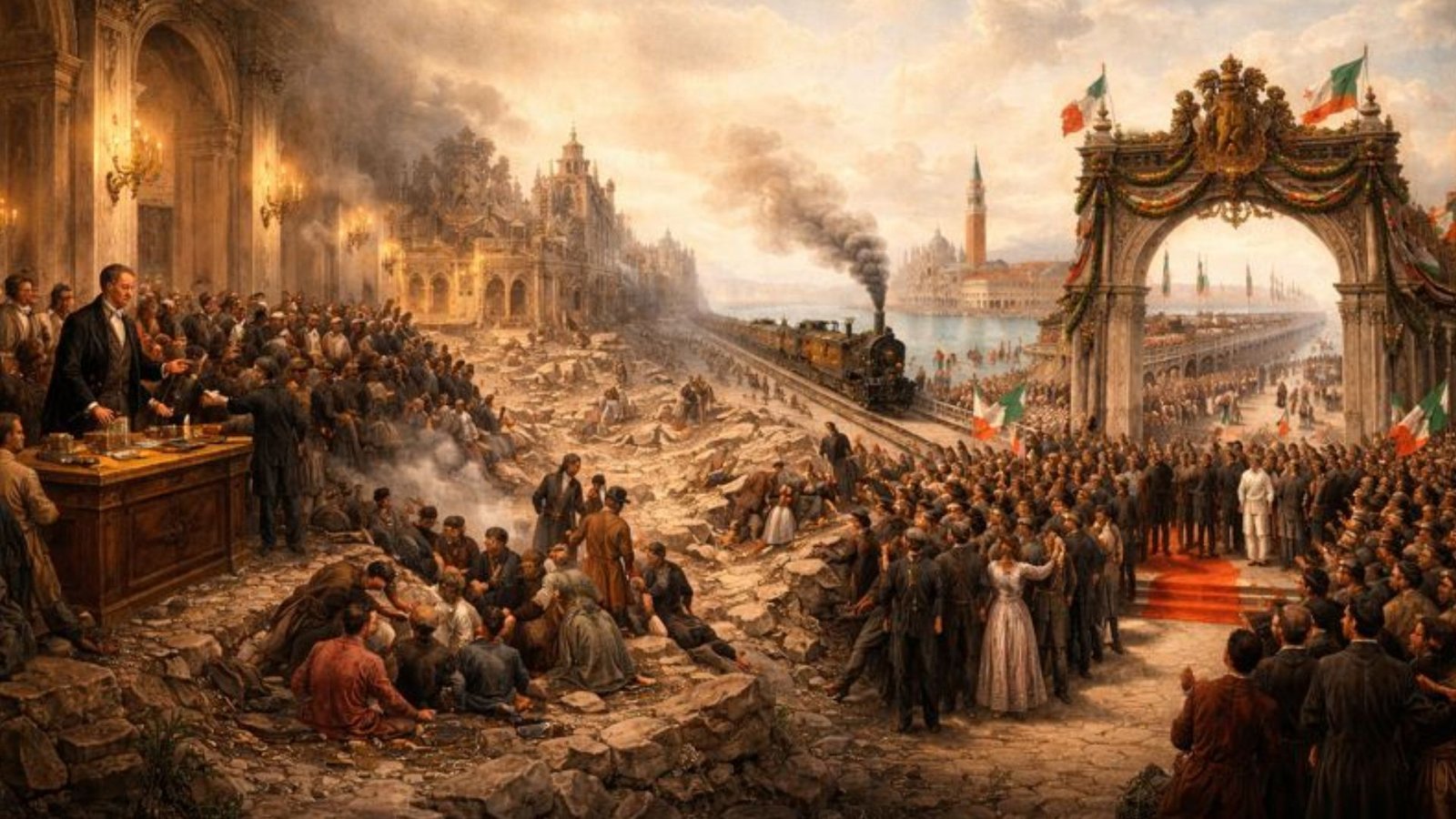
January 11 — dates that shaped Italy’s history

10 January — a date of remembrance in Italian history

January 9 – A Date of Memory, Culture, and Historical Turning Points