January 7 holds a distinctive place in Italy’s historical memory. Across different centuries, this date brings together events that are deeply connected by their symbolic and human significance. On January 7, 1797, the Italian Tricolour was born as a state symbol, marking the emergence of a shared national identity. On January 7, 1978, the Acca Larentia massacre became a dark emblem of political violence and ideological extremism during the Years of Lead. On January 7, 2005, the Crevalcore railway disaster exposed the fragility of human life in the face of error and technological failure. Taken together, these moments make January 7 a date of remembrance, awareness, and historical reflection.

1797 — the birth of the Italian Tricolour as a state symbol
January 7, 1797 marks a foundational moment in Italian history. On this date, for the first time, the green, white, and red Tricolour was officially adopted as the flag of a state. The decision was taken by the assembly of the Cispadane Republic, a short-lived political entity whose symbolic legacy proved far more enduring than its institutional lifespan. January 7 is therefore remembered as the true birthday of the Italian flag.
At the end of the eighteenth century, the Italian peninsula was undergoing profound transformation. The Napoleonic campaigns shattered long-standing political structures based on dynastic rule, feudal privileges, and ecclesiastical authority. In their place emerged new republican experiments inspired by the ideals of the Enlightenment and the French Revolution: liberty, equality, and popular sovereignty. Northern Italy, in particular, became a laboratory for political innovation. Within this turbulent context, the Cispadane Republic was proclaimed, uniting territories such as Modena, Reggio, Ferrara, and Bologna under a republican framework.

The session held on January 7, 1797, in Reggio Emilia was not a routine parliamentary meeting. It represented a decisive step in defining the identity of the new republic. Among the issues debated, the adoption of a common flag carried exceptional symbolic weight. A flag was more than a decorative emblem: it was a visible declaration of political principles and collective belonging. By choosing the Tricolour, the assembly affirmed a break with monarchical symbolism and embraced the language of modern citizenship.
The flag adopted on January 7 consisted of three horizontal bands—green, white, and red. These colours were not chosen at random. They were already present in revolutionary cockades and in the uniforms and banners of civic militias formed during the revolutionary period. Green was often associated with local militias, while white and red recalled older civic traditions and revolutionary symbolism. What made January 7, 1797, unique was not the invention of these colours, but their official recognition as the flag of a state, granting them legal and political status for the first time.
Although the Cispadane Republic itself existed only briefly, the significance of its decision on January 7 extended far beyond its immediate political fate. The Tricolour quickly became a reference point for subsequent Italian republics created under Napoleonic influence. More importantly, during the nineteenth century, it was adopted by the patriots of the Risorgimento, who fought for Italian independence and unification. In this sense, January 7, 1797, came to be seen retrospectively as the symbolic starting point of a national journey that would culminate in the unification of Italy in 1861.
January 7 holds particular importance because it marks one of the earliest moments when the idea of “Italy” began to take a visible and shared form. Before this date, the peninsula was a mosaic of states, each with its own rulers, laws, and symbols. The adoption of a common flag suggested the possibility of a broader political community that transcended local identities. The Tricolour thus functioned not only as a symbol of an existing state, but also as an expression of aspiration toward a unified national identity.
Over time, the colours of the Italian flag have been interpreted in many ways. Later narratives linked green to the Italian landscape, white to the Alps, and red to the blood shed in struggles for freedom. While such interpretations became popular in the nineteenth century, in the context of January 7, 1797, the meaning of the Tricolour was primarily political. It represented a republican vision of society, rooted in civic participation and equality before the law, rather than loyalty to a dynasty or a monarch.
The memory of January 7 has been carefully preserved in Italian civic culture. In Reggio Emilia, the hall where the historic vote took place is today known as the “Sala del Tricolore” and serves as a site of remembrance. Each year, official ceremonies commemorate the adoption of the flag, reinforcing the link between the modern Italian Republic and its revolutionary origins. January 7 is not merely a historical anniversary, but a reminder of the values embodied in the national symbol.
From a broader European perspective, the events of January 7, 1797, illustrate how revolutionary ideas circulated across borders and were adapted to local contexts. The Italian Tricolour emerged within a continental wave of political change, yet it acquired a distinct meaning rooted in the Italian experience. Its endurance demonstrates the power of symbols to survive political upheavals and to connect different generations through shared historical memory.
In conclusion, January 7, 1797, stands as a cornerstone in the history of Italy’s national symbols. On that day, the adoption of the Tricolour by the Cispadane Republic marked the first official recognition of a flag that would later become synonymous with the Italian nation itself. Though born within a short-lived republic, the Tricolour transcended its original context, accompanying Italy through revolution, unification, and the formation of the modern republic. January 7 remains the date on which Italy’s most enduring symbol first entered history as a state emblem.
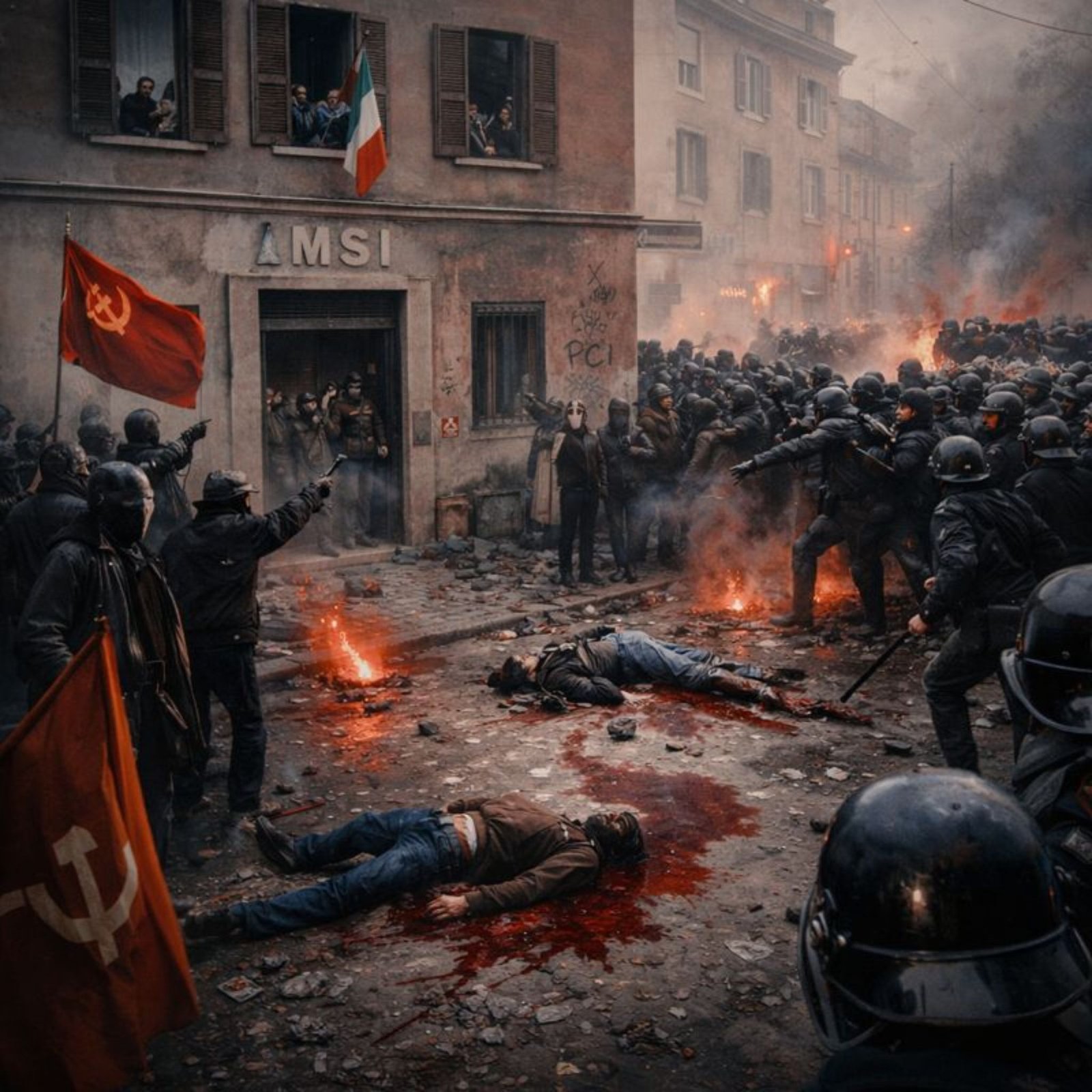
1978 — the Acca Larentia massacre: political killings and communist extremist violence
January 7, 1978 stands as one of the darkest days in modern Italian history. On that evening, in Rome, on Via Acca Larentia, a sequence of politically motivated killings shocked the country and became a lasting symbol of the anni di piombo — the “Years of Lead.” The Acca Larentia massacre was not an isolated crime but the result of an extreme ideological confrontation between neo-fascist groups and radical left-wing movements rooted in revolutionary communist ideology, where political murder was justified as a legitimate tool of struggle.
Italy in the late 1970s was living through a profound internal crisis. Economic instability, mass protests, strikes, and a widespread loss of trust in public institutions created fertile ground for radicalization. Alongside parliamentary politics, armed organizations operated openly or clandestinely, rejecting democratic processes and embracing violence. On the far left, revolutionary communist circles promoted the idea of class war and armed confrontation, presenting terrorism as a necessary step toward social transformation. In this climate, political identity increasingly became a matter of life and death.

On the evening of January 7, 1978, outside the headquarters of the youth section of the Italian Social Movement (MSI), gunmen opened fire on young activists gathered near the building. Franco Bigonzetti and Francesco Ciavatta, both affiliated with the neo-fascist milieu, were killed in the attack. The operation bore the hallmarks of a planned political assassination: a symbolic target, rapid execution, and immediate withdrawal. The killings reflected the logic of “revolutionary justice” embraced by segments of the communist extremist left, for whom eliminating ideological enemies was considered morally acceptable.
The violence did not end with the initial attack. News of the murders spread rapidly, and right-wing activists, sympathizers, and local residents converged on Via Acca Larentia. Tensions escalated dramatically as police forces attempted to control the situation. During the ensuing clashes, Stefano Recchioni, another young man connected to the MSI environment, was fatally shot. His death raised the toll to three victims in a single day and transformed the episode into what is remembered as the Acca Larentia massacre.
From the very beginning, the attack was linked to the radical left-wing environment inspired by communist ideology. During the Years of Lead, several armed groups emerged from the most extreme fringes of the communist movement, rejecting both the state and mainstream left-wing parties. Although the Italian Communist Party officially condemned terrorism and distanced itself from armed struggle, the broader ideological atmosphere allowed revolutionary rhetoric to circulate widely. In the public perception, the boundary between parliamentary communism and violent extremism often appeared blurred.
Among the most notorious expressions of this armed communist universe were the Red Brigades, responsible for kidnappings, assassinations, and attacks on state officials. Alongside them, smaller and less structured groups operated at local levels, particularly in major cities such as Rome. These organizations shared a worldview in which violence was framed as an instrument of historical necessity, and “anti-fascism” was invoked to justify lethal attacks against political opponents.
The Acca Larentia massacre quickly became a powerful symbol. For the radical right, the victims were transformed into martyrs of what was described as “red terrorism,” and Via Acca Larentia itself became a place of annual commemoration. For parts of the left, the episode was often interpreted within a broader narrative of generalized violence, sometimes minimizing or avoiding a clear acknowledgment of responsibility linked to communist extremism. This divergence in interpretation reinforced the deep ideological fracture already dividing Italian society.
Judicial investigations into the events of January 7, 1978, followed a pattern common to many cases of the Years of Lead. They were long, complex, and marked by contradictory testimonies, missing evidence, and political pressure. No definitive judicial truth was ever fully established, and those responsible for the initial killings were never conclusively identified and punished. This lack of accountability contributed to a widespread sense of injustice and further eroded public confidence in the state’s ability to uphold the rule of law during a time of political terror.
Historically, Acca Larentia illustrates the extreme consequences of ideological radicalization. Revolutionary communist extremism, like neo-fascist violence, demonstrated its capacity to erase moral boundaries and legitimize murder in the name of abstract political goals. The massacre exemplified a self-perpetuating spiral of hatred, in which each death generated new myths, grievances, and justifications for further violence.
Seen in the broader context of Italian history, the events of January 7, 1978, occurred just weeks before the kidnapping of Aldo Moro, another defining trauma of the period. Together, these episodes reveal a country pushed to the edge by political extremism, where democratic institutions struggled to survive under the pressure of armed ideologies claiming revolutionary legitimacy.
Decades later, the Acca Larentia massacre remains an open wound in Italy’s collective memory. January 7, 1978, is remembered not only as a day of mourning but as a stark warning about the destructive power of political absolutism. It stands as a reminder that when communist revolutionary rhetoric — like any form of ideological extremism — legitimizes violence, society itself becomes the ultimate victim.
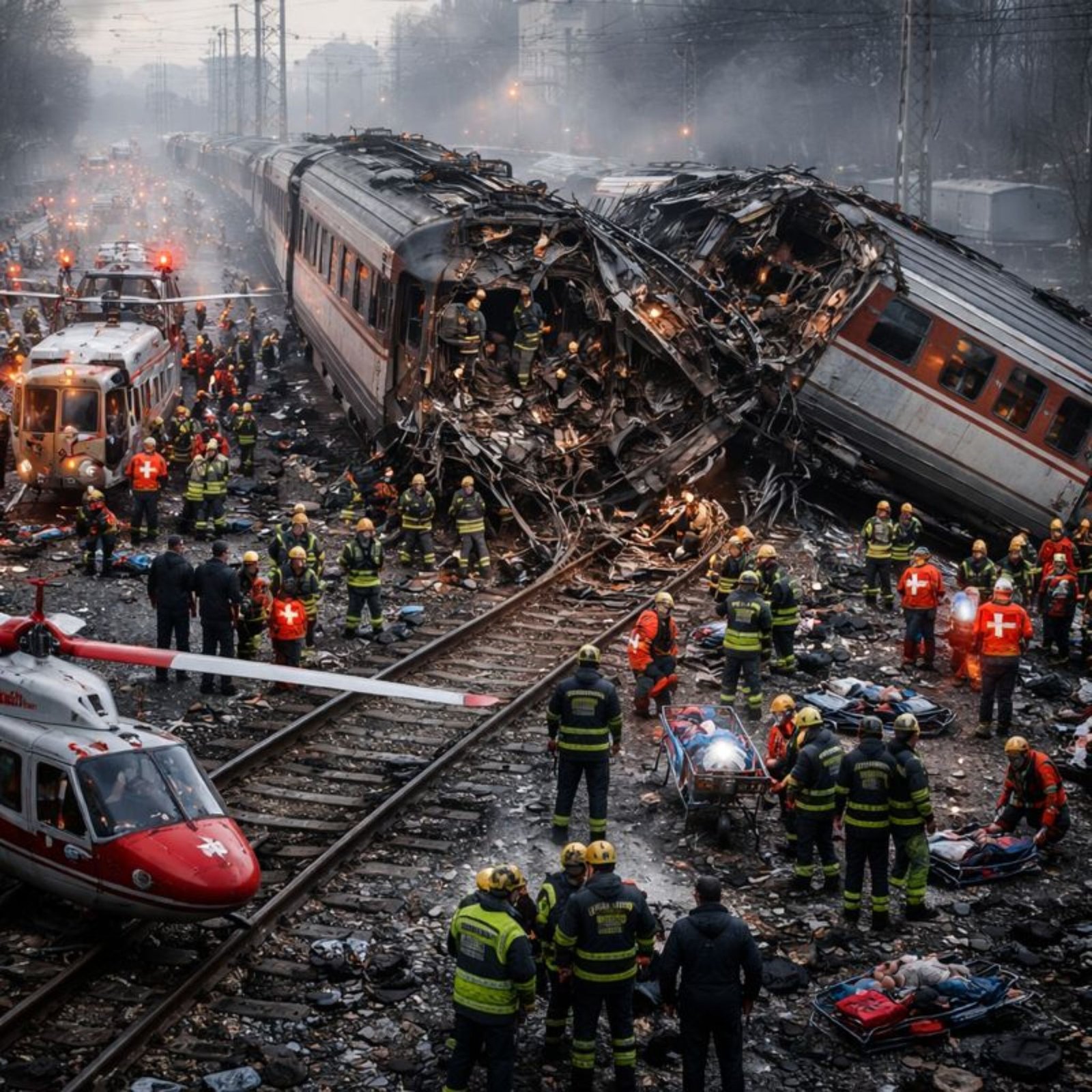
2005 — the Crevalcore railway disaster: 17 dead and more than 80 injured
January 7, 2005 is remembered as a tragic day in the recent history of Italian transport. On that winter morning, near the town of Crevalcore, one of the most serious railway disasters of the early twenty-first century occurred. A violent collision between trains resulted in 17 fatalities and over 80 injured passengers, many of them critically. The catastrophe shocked the entire country and reignited a national debate on railway safety, human error, and the reliability of transport infrastructure.
The accident took place in the early hours of the day, a time when regional trains were crowded with commuters traveling to work, school, or medical appointments. A passenger train running on a heavily used regional line collided with another train that was occupying the track. The impact was devastating. The leading carriages of the passenger train were crushed and severely deformed, leaving little chance of survival for those seated in the front sections. In a matter of seconds, an ordinary morning journey turned into a scene of destruction and despair.

Rescue operations began immediately, but the conditions were extremely difficult. The wreckage was twisted and compacted, trapping passengers inside the metal structures of the carriages. Firefighters had to use hydraulic tools to cut through steel and free the injured. Ambulances, emergency doctors, police units, and civil protection teams converged on the site. Nearby hospitals in Bologna and surrounding towns activated emergency protocols, mobilizing medical staff and preparing intensive care units to receive the wounded.
The human toll of the Crevalcore disaster was severe. Seventeen people lost their lives, while more than eighty suffered injuries ranging from minor trauma to life-threatening conditions. Behind these figures were individual stories: families torn apart, lives interrupted without warning, and futures erased in an instant. Many victims were regular commuters, people whose routines were shattered by a catastrophe that no one could have anticipated. The emotional impact extended far beyond the immediate victims, affecting relatives, colleagues, and entire communities.
In the hours and days following the crash, attention quickly turned to the causes of the accident. Italian authorities launched an in-depth investigation to reconstruct the sequence of events and determine responsibility. Early findings suggested a complex combination of factors, including human error, limitations in the signaling system, and weaknesses in traffic management procedures. In particular, investigators focused on how one train was allowed to occupy a section of track that should have been clear, raising serious questions about coordination and safety controls.
The disaster at Crevalcore triggered widespread public concern. Media coverage was intense, with newspapers and television channels providing continuous updates, eyewitness accounts, and interviews with survivors. Many passengers described the terrifying moments before the collision: sudden braking, a violent impact, darkness, screams, and confusion. These testimonies made the tragedy tangible for the wider public and highlighted how vulnerable passengers can be when safety systems fail.
At the institutional level, the crash prompted renewed scrutiny of Italy’s railway network. Although the country has one of the most extensively used rail systems in Europe, the accident revealed that certain sections still relied heavily on manual procedures and outdated technology. The Crevalcore disaster strengthened calls for the accelerated adoption of automated train control systems designed to reduce dependence on human decision-making and prevent collisions even in the event of operator error.
For the local community of Crevalcore, the tragedy left a deep and lasting wound. A small town in Emilia-Romagna suddenly found itself at the center of national attention for all the wrong reasons. In the days that followed, residents showed remarkable solidarity: blood donation drives were organized, support was offered to families of the victims, and public vigils were held in memory of those who had died. Grief became a shared experience, binding the community together in mourning.
The legal and administrative consequences of the disaster unfolded over many years. Judicial investigations examined the actions of railway personnel, the condition of signaling equipment, and compliance with safety regulations. As with many major transport accidents, the process was long and complex, marked by technical analyses and legal disputes. Nevertheless, the Crevalcore crash played a significant role in shaping subsequent safety reforms, contributing to stricter controls and greater investment in modern railway technology.
From a historical perspective, the January 7, 2005 disaster marked a symbolic turning point. Occurring in an era when serious railway accidents were often considered a thing of the past, it shattered the assumption that modern rail travel was immune to catastrophic failure. The event served as a stark reminder that technological progress does not eliminate risk and that safety requires constant vigilance, maintenance, and accountability.
Today, the memory of the Crevalcore railway disaster remains vivid in Italy’s collective consciousness. The names of the 17 victims and the suffering of the many injured continue to be remembered as part of a national reflection on transport safety and human responsibility. January 7, 2005, stands not only as the date of a tragic accident but as a lasting warning about the consequences of error and neglect in systems upon which millions of lives depend every day.
January 13 — a date of power, disaster, and cultural rupture
January 12 — three events, three historical fractures
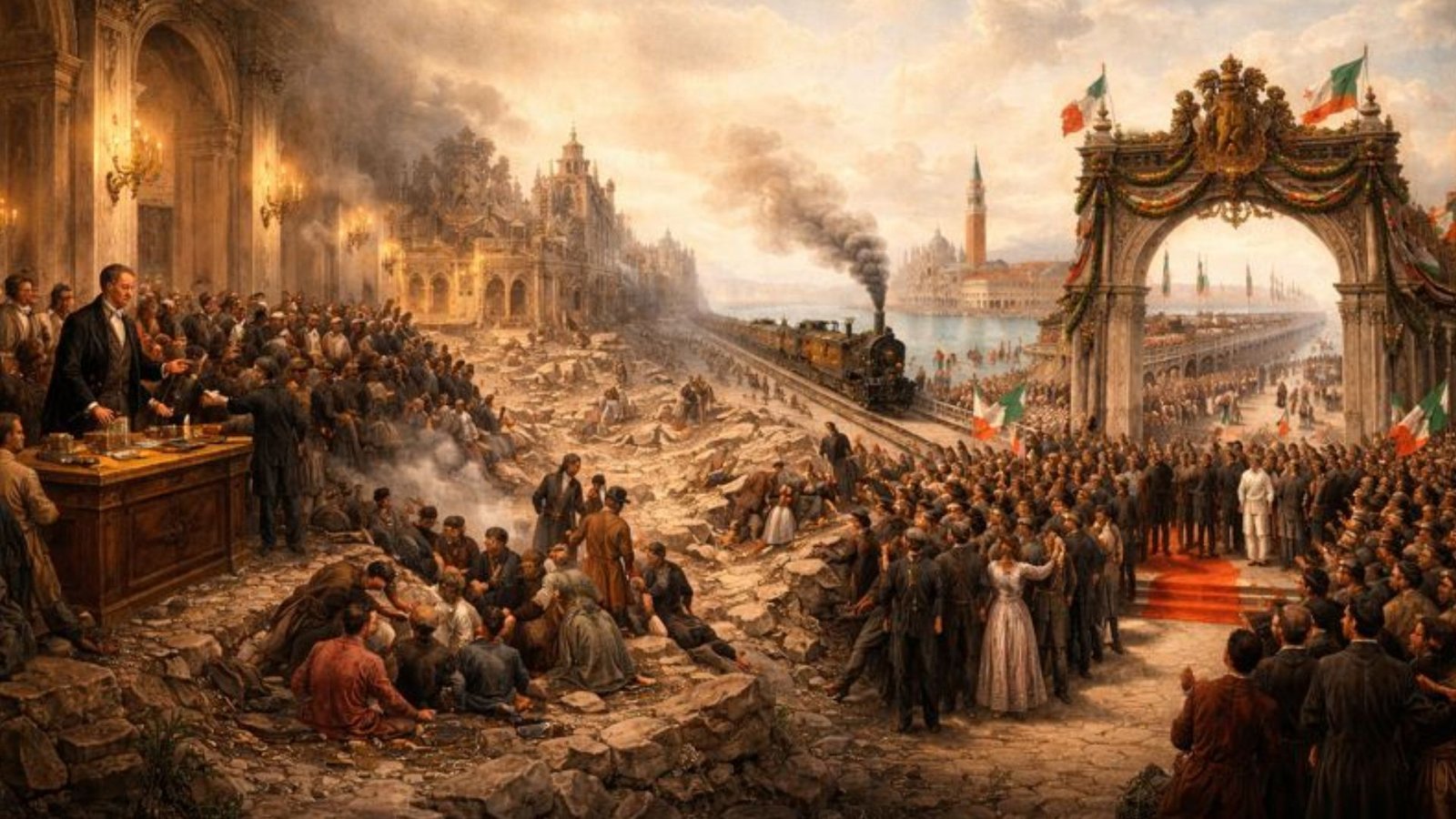
January 11 — dates that shaped Italy’s history
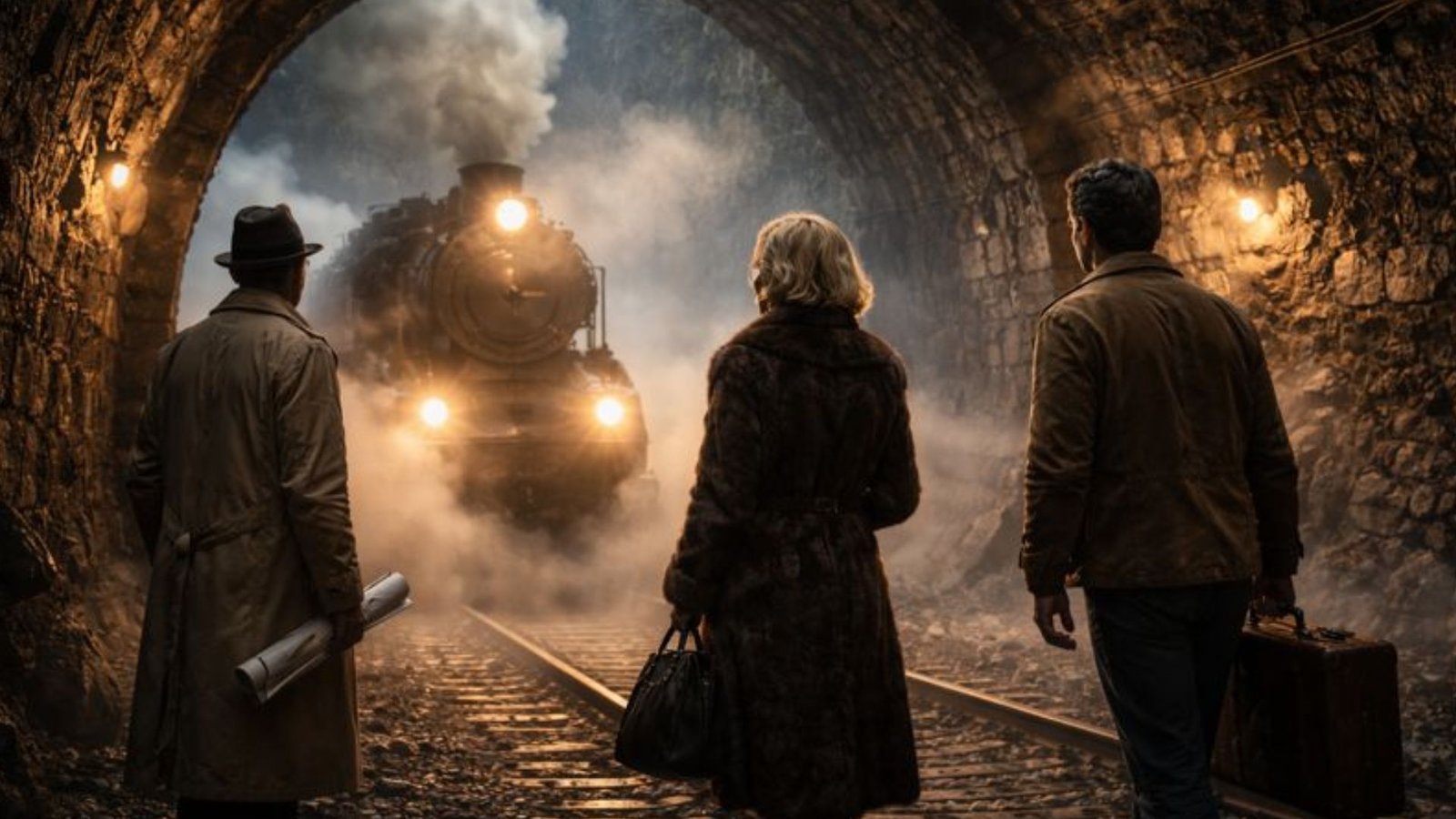
10 January — a date of remembrance in Italian history

January 9 – A Date of Memory, Culture, and Historical Turning Points