Throughout history, 6 January appears as a moment of transition, marking the conclusion of entire eras shaped by influential individuals. On this date, lives ended whose impact extended far beyond their own fields. The death of Guidobaldo del Monte in 1607 symbolizes the decline of aristocratic Renaissance science and the rise of a new scientific worldview. The assassination of Piersanti Mattarella in 1980 stands as one of the darkest moments in modern Italian politics and in the struggle for legality in Sicily. The passing of Gianluca Vialli in 2023 marked the end of a generation of football leaders defined by character, dignity, and human values. Three distant stories, connected by one date and a lasting historical legacy.

1607 — The Death of Guidobaldo del Monte and the End of an Aristocratic Scientific Era
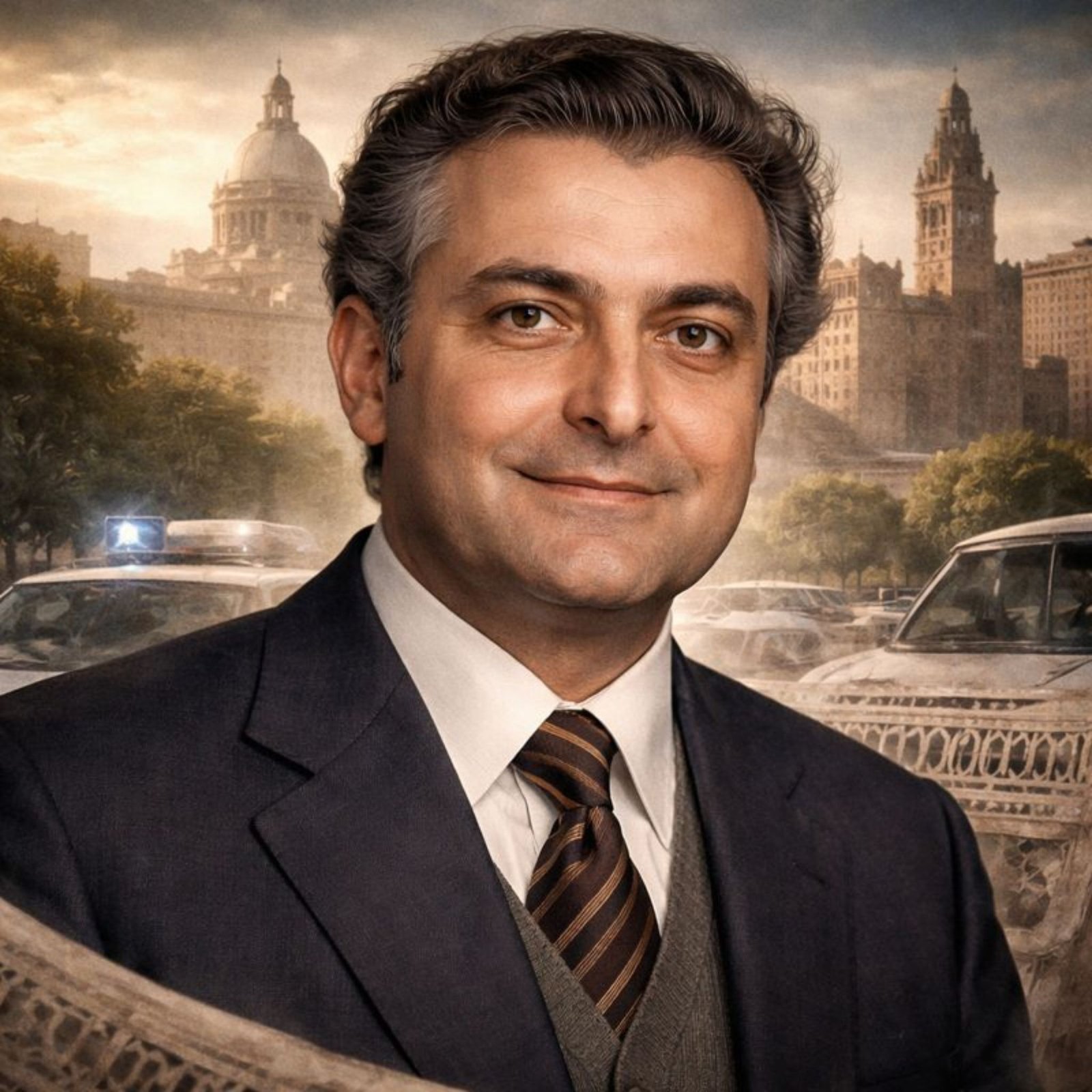
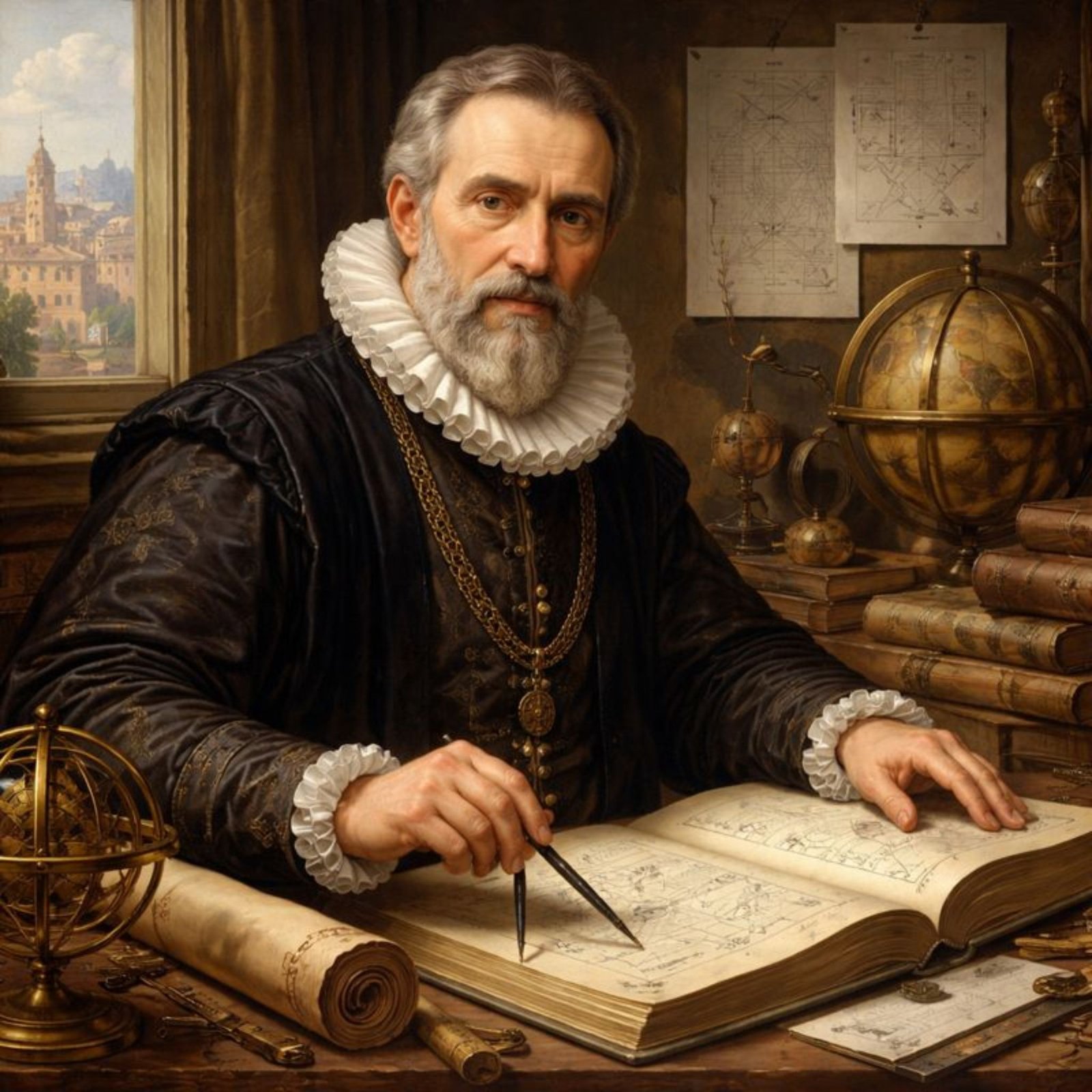
Guidobaldo del Monte
(1 January 1545, Pesaro — 6 January 1607, Mombaroccio)
Guidobaldo del Monte entered history as an Italian mathematician, mechanician, astronomer, and philosopher, as well as a close friend and patron of Galileo Galilei. The day of his death, 6 January 1607, became a symbolic date marking the conclusion of an era in which scientific knowledge still bore the structure of aristocratic Renaissance scholarship, yet was already preparing for a profound transformation tied to experimentation, the mathematization of nature, and the gradual abandonment of medieval scholasticism.
Born into a noble family in Pesaro, within the cultural sphere of the Duchy of Urbino, Guidobaldo del Monte embodied a distinctive model of the Renaissance scholar. His social status was not incidental to his intellectual life: it shaped his access to education, books, instruments, and political networks. Unlike many university professors bound to institutional traditions, del Monte operated at the intersection of courtly culture, engineering practice, and mathematical theory. This position allowed him to function as both a learned aristocrat and a scientific mediator between ancient knowledge and emerging modern science.

Del Monte’s education reflected the mature humanist ideal. He was deeply grounded in classical Greek mathematics, particularly the works of Euclid and Archimedes, and he treated these authors not as untouchable authorities but as sources to be critically reorganized and extended. For him, mathematics was not an abstract intellectual exercise detached from reality; it was the most reliable language for understanding physical phenomena. This conviction placed him among the thinkers who quietly prepared the conceptual framework of early modern physics.
His most influential work, Mechanicorum liber, stands as a landmark in the history of mechanics. In this treatise, del Monte systematically reinterpreted the theory of simple machines—levers, pulleys, wheels, and inclined planes—through rigorous geometric demonstration. While many contemporaries treated mechanics as a collection of practical rules for builders and engineers, del Monte insisted on its theoretical dignity. He argued that mechanical effects could and should be explained through mathematical relationships, not merely through experience or craft tradition.
What distinguished his approach was methodological clarity. Del Monte did not seek novelty for its own sake; instead, he aimed to establish a coherent theoretical structure. By grounding mechanical principles in geometry, he reinforced the idea that physical processes obey universal quantitative laws. This perspective profoundly influenced later developments, especially the shift toward viewing motion, force, and equilibrium as mathematically describable phenomena. In this sense, del Monte’s work formed an essential bridge between ancient statics and the emerging dynamics of the seventeenth century.
Beyond his written contributions, Guidobaldo del Monte played a crucial social and intellectual role as a patron and protector of scientific talent. His relationship with Galileo Galilei exemplifies this function. Recognizing Galileo’s exceptional abilities at an early stage, del Monte supported him both intellectually and practically. His recommendation was instrumental in securing Galileo a university position, granting him institutional legitimacy and financial stability. Their correspondence reveals mutual respect and sustained dialogue on problems of mechanics and mathematics.
At the same time, the contrast between their scientific temperaments highlights the transitional nature of del Monte’s position. He remained committed to geometrical proof as the highest standard of scientific certainty, whereas Galileo increasingly emphasized experimentation and observation. Yet these differences do not imply opposition. On the contrary, del Monte’s systematic organization of mechanical theory provided Galileo with a solid foundation upon which more radical innovations could be built. The scientific revolution did not arise from rupture alone, but from continuity supported by figures such as del Monte.
Del Monte’s interests also extended to astronomy, though his role in this field was more cautious than revolutionary. He was aware of contemporary debates concerning cosmology and celestial motion, including the challenges posed to traditional Aristotelian models. However, his primary concern lay in ensuring mathematical consistency rather than advocating speculative cosmological systems. This restraint reflects a broader intellectual attitude typical of late Renaissance science: a preference for methodological rigor over doctrinal confrontation.
Philosophically, Guidobaldo del Monte occupied a space between Aristotelian natural philosophy and Platonic mathematical idealism. He accepted many conceptual categories inherited from Aristotle, yet he increasingly viewed mathematics as the key to unlocking nature’s structure. This synthesis mirrored the intellectual climate of his time, when scholars sought to reconcile classical authority with new analytical tools. His belief in the rational order of nature anticipated the seventeenth-century conviction that the universe is governed by mathematical laws accessible to human reason.
The death of Guidobaldo del Monte on 6 January 1607 in Mombaroccio marked more than the end of an individual life. Symbolically, it closed a chapter in the history of science. Del Monte represented one of the last great figures of aristocratic Renaissance scholarship, where scientific inquiry was closely tied to noble status, courtly networks, and classical erudition. In the decades that followed, science would increasingly become institutionalized, professionalized, and contentious, shaped by public debates and conflicts with religious and philosophical authorities.
Today, Guidobaldo del Monte is often remembered as a secondary figure, overshadowed by the dramatic achievements of Galileo and other pioneers of modern science. Yet his historical importance lies precisely in his role as a stabilizing force during a period of transformation. He did not overthrow the old scientific order, but he strengthened its mathematical foundations, making it capable of supporting new ideas.
His legacy endures in the conceptual shift that redefined mechanics as a mathematical science and in the intellectual networks that nurtured the early modern scientific community. Guidobaldo del Monte stands as a reminder that scientific revolutions are rarely the work of isolated geniuses alone; they are also the result of careful systematization, mentorship, and continuity. Through his work and influence, he helped shape the conditions under which modern science could emerge.
2023 — the death of Gianluca Vialli and the end of a footballing era
Gianluca Vialli
(9 July 1964, Cremona, Lombardy — 6 January 2023, London)
Gianluca Vialli entered history as an Italian footballer and coach. He was one of only nine players to have won the Champions League, the UEFA Cup, and the Cup Winners’ Cup, and remains the only one to have been both finalist and winner in all three competitions. The day of his death, 6 January 2023, took on a symbolic meaning, marking the close of an era in which European football was still deeply shaped by personality, charisma, and human leadership.
Born in Cremona into a well-off family, Vialli represented an atypical figure in Italian football from the very beginning. He did not emerge from hardship or social struggle, nor did football serve as a means of escape. For him, the game was a conscious choice, approached with discipline, education, and a strong sense of personal responsibility. This background shaped his entire career: Vialli never relied on image or provocation, instead building authority through consistency, seriousness, and credibility.

Technically, Vialli established himself as a modern, complete forward. He combined physical power, coordination, and finishing ability with a refined understanding of the game. He was neither a static striker nor a purely instinctive scorer. He participated actively in build-up play, supported teammates, and adapted intelligently to different tactical systems. This versatility allowed him to remain decisive even as his role evolved over time, extending the longevity and depth of his career.
The most iconic chapter of his playing career is inseparably linked to Sampdoria. In Genoa, Vialli became the face of one of the most romantic periods in Italian football history. Alongside Roberto Mancini, he formed an attacking partnership that left a lasting mark on European football. Their connection was not only technical but also mental, built on mutual trust and shared intelligence. That Sampdoria side was not simply successful; it had a clear identity, and Vialli was one of its emotional and competitive pillars.
Winning the Scudetto represented the highest point of that experience. It was a triumph that went beyond sporting achievement, proving that organization, cohesion, and leadership could rival clubs with greater financial power and tradition. Within that team, Vialli was far more than a prolific scorer: he was a natural leader, capable of carrying responsibility in decisive moments and setting the tone through example rather than words.
His move to Juventus marked a radical shift in environment. In Turin, Vialli entered a club where winning was not an ambition but an obligation. He adapted by reshaping his role, becoming less focused on individual prominence and more oriented toward collective success. With Juventus, he completed his European journey, winning major continental trophies and firmly establishing himself among the elite figures of international football.
The English chapter of his career, at Chelsea, stands out as one of its most innovative phases. Vialli was among the early examples of the player-manager in a rapidly professionalizing football landscape. In a new cultural context, he earned respect through performance, balance, and intelligence. His impact was crucial in Chelsea’s transformation into an ambitious and competitive club, laying foundations that would shape its future identity.
As a coach, Vialli consistently rejected authoritarian methods. His leadership style was quiet and composed, based on dialogue, personal example, and shared responsibility. He believed trust to be a fundamental working tool and respect the true basis of authority. While common today, this approach was forward-looking at the time, emphasizing the human dimension of professional football rather than control through fear.
In the later years of his life, Gianluca Vialli acquired an even deeper significance beyond sport. His public battle with illness, faced with clarity and dignity, strengthened his bond with supporters worldwide. Without seeking pity, he transformed vulnerability into testimony, offering an example of inner strength and authenticity that resonated far beyond football.
His return to Italian football as a senior figure within the national team’s staff reached a symbolic peak with the European Championship victory. In that role, Vialli embodied memory, emotional balance, and continuity between generations. He was rarely in the spotlight, yet his presence was widely perceived as essential—a moral reference point within the group.
The death of Gianluca Vialli in London on 6 January 2023 was experienced as a collective loss. It marked the passing not merely of a former player or coach, but of a figure who had embodied values increasingly rare in contemporary football: restraint, loyalty, responsibility, and humanity. His passing genuinely signaled the end of an era in which football was still shaped as much by people as by numbers.
Today, Gianluca Vialli is remembered not only for trophies and statistics, but for the human and sporting model he represented. His legacy endures in the idea of a football where personality matters as much as talent, and where success is never separated from dignity.
1980 — the assassination of Piersanti Mattarella and the tragedy of Sicilian politics
Piersanti Mattarella
(24 May 1935, Castellammare del Golfo — 6 January 1980, Palermo)
Piersanti Mattarella was an Italian politician and President of the Sicilian Region from 1978 to 1980. He was assassinated while in office, in one of the most serious and symbolic political crimes in the history of the Italian Republic.
Piersanti Mattarella entered history as the embodiment of a concrete and rigorous attempt to reform the system of power in Sicily at a time when the region was deeply marked by clientelism, corruption, and the pervasive influence of organized crime. His murder on 6 January 1980 was not only the violent end of his life, but also a dramatic demonstration of how dangerous it was to challenge entrenched systems of illegal power from within democratic institutions.
Born in Castellammare del Golfo, Mattarella grew up in a family strongly involved in public life. His father, Bernardo Mattarella, was a prominent figure in Italian politics and a leading member of the Christian Democratic Party. This background exposed Piersanti early on to political responsibility and institutional culture. However, unlike many representatives of the Sicilian ruling class of the time, he developed a vision of politics based on legality, administrative discipline, and a clear separation between public interest and private advantage.
Trained as a lawyer, Mattarella approached politics with a strong legal and institutional mindset. He viewed the state and regional autonomy as systems governed by rules, not by informal agreements or personal mediation. This approach stood in sharp contrast to long-established practices in Sicily, where political power was often exercised through networks of favors, electoral exchanges, and tacit compromises with criminal organizations. His style was sober, methodical, and principled, qualities that earned respect but also generated growing hostility.
When he became President of the Sicilian Region in 1978, Piersanti Mattarella launched an ambitious program of reform aimed at restoring legality and transparency in regional administration. His declared objective was to “normalize” Sicily, aligning its institutions with the standards of the rule of law applied in the rest of Italy. This meant reforming procedures, strengthening oversight mechanisms, and enforcing stricter controls over public spending and administrative decisions.
One of the most sensitive areas of his intervention was public works and urban development, sectors historically dominated by mafia interests. Mattarella sought to dismantle the system that allowed criminal organizations and their political intermediaries to profit from public contracts and illegal construction. By imposing rigorous criteria and limiting discretionary power, he directly threatened the economic foundations of organized crime in the region.
It is crucial to note that Mattarella was not an outsider or a revolutionary figure acting against the system from the margins. He operated entirely within the framework of democratic institutions, using lawful and administrative tools. This made his actions particularly dangerous for the mafia and its allies: his reforms were legitimate, institutional, and therefore difficult to discredit. He represented a form of change that could not easily be dismissed as extremist or subversive.
His presidency took place during a deeply unstable period in Italian history. The late 1970s were marked by political violence, terrorism, and institutional crisis at the national level. In Sicily, these tensions were compounded by the structural presence of Cosa Nostra, which exercised significant influence over political and economic life. In this context, Mattarella’s efforts represented a serious attempt to reassert state authority in one of its most fragile territories.
The assassination of Piersanti Mattarella occurred on the morning of 6 January 1980 in Palermo, outside his home, as he was preparing to attend mass with his family. He was shot at close range, in a killing that immediately revealed its mafia nature. The brutality and visibility of the crime sent a clear message: institutional reformers who challenged established criminal interests could be eliminated.
Subsequent investigations and judicial findings confirmed that the murder was carried out within the strategy of Cosa Nostra to remove political figures considered dangerous to its power. Mattarella’s death became part of a broader sequence of high-profile assassinations that, in the following years, would claim the lives of magistrates, politicians, and public officials committed to legality and reform.
The historical significance of Piersanti Mattarella extends far beyond his short time in office. He came to symbolize the idea of “clean politics” — governance based on law, accountability, and service to the public. His experience demonstrated that meaningful change was possible, but also that it came at an extremely high cost in a context dominated by deeply rooted criminal structures.
Over time, Mattarella’s figure has acquired an even broader national significance. The later election of his brother, Sergio Mattarella, as President of the Italian Republic strengthened the symbolic value of his legacy, turning Piersanti Mattarella into a moral reference point for Italian institutional life.
Today, Piersanti Mattarella is remembered not only as a victim of the mafia, but as a statesman who attempted to transform Sicily through legality, institutional rigor, and personal integrity. His assassination on 6 January 1980 remains an open wound in Italian history, but also a lasting reminder of the price of reform and the importance of defending democratic institutions against criminal power.
January 13 — a date of power, disaster, and cultural rupture
January 12 — three events, three historical fractures
January 11 — dates that shaped Italy’s history

10 January — a date of remembrance in Italian history

January 9 – A Date of Memory, Culture, and Historical Turning Points