January 5 is more than a simple mark on the calendar; it is a point where human destinies, responsibility, and creative thought intersect. Across different years, this day has marked endings that became moments of collective reflection. The railway disaster near Arcore exposed the fragility of technological progress; the murder of Giuseppe Fava revealed the cost of truth and the power of words; the passing of Aldo Matteotti closed the quiet path of an artist for whom matter and form were modes of thinking. Different stories, different scales, yet united by one element: January 5 turns individual lives into shared memory and history.
1960 - Fog, construction works, and rails: the Sondrio–Milan express disaster near Arcore
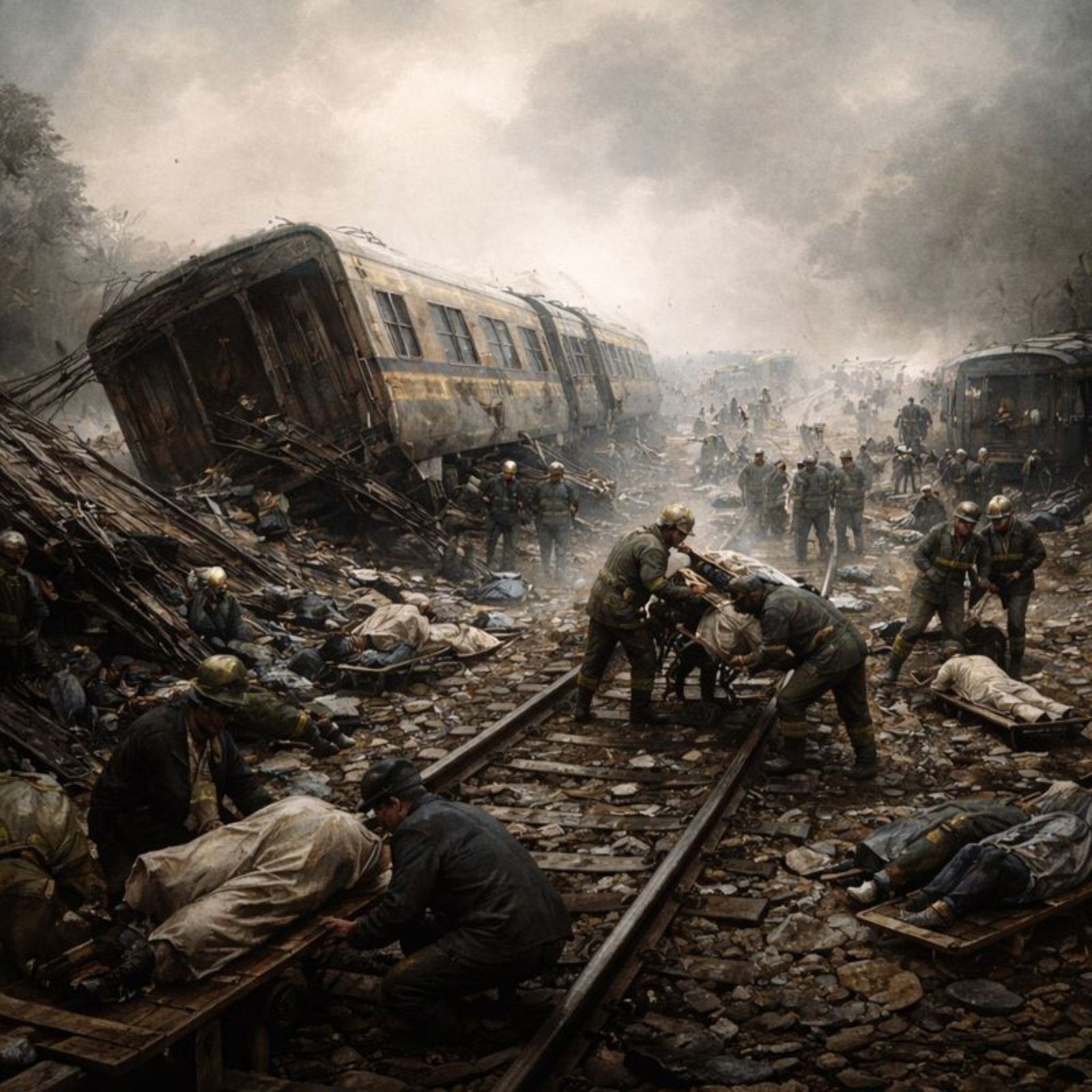
January 5, 1960 stands as a tragic date in the history of Italian railways. On that winter morning, the express train running from Sondrio to Milan derailed near Arcore, in Lombardy. The accident claimed 17 lives and left 139 people injured, turning an ordinary journey into one of the most serious railway disasters of post-war Italy.
The day began under a dense blanket of fog, a common feature of winter in the Po Valley. Visibility was extremely poor, with the landscape reduced to vague shapes and shadows. Yet daily life continued as usual. Trains ran on schedule, commuters traveled to work, and the railway remained the backbone connecting the alpine areas of Valtellina with Milan, the country’s economic heart. The Sondrio–Milan express was a familiar and trusted route, used by workers, students, and families alike.

At the time, Italy’s railway network was undergoing a broad phase of modernization. Increased speeds, infrastructure upgrades, and the need to adapt older lines to new standards meant that construction sites were common along many routes. Near Arcore, works were in progress, involving temporary changes to the track layout and operating conditions. On paper, these situations were regulated and monitored. In reality, however, they demanded a high level of coordination and clear visibility—conditions that were severely compromised that morning.
As the train approached the section affected by construction, the fog drastically reduced the margin for reaction. Signals, track references, and visual cues were difficult to perceive. Within moments, the express left the rails. Several carriages derailed violently; some overturned, others were crushed and twisted. What had been a controlled and predictable environment collapsed into noise, darkness, and panic, leaving passengers disoriented and injured among mangled metal.
Emergency services were alerted quickly, but rescue operations proved extremely challenging. The fog persisted, complicating access and coordination. Firefighters, medical teams, and railway personnel worked for hours to reach trapped passengers and secure the site. Many victims were pulled from deformed carriages, while others were assisted along the embankment, surrounded by debris and personal belongings scattered along the track.
The final toll was severe. Seventeen people lost their lives, and one hundred thirty-nine were injured, some with lasting consequences. Behind these figures were individual stories—journeys interrupted, families suddenly confronted with loss, and ordinary routines shattered in an instant. The tragedy resonated deeply because it was not caused by an extraordinary natural disaster, but by a convergence of known factors: fog, construction works, and the technological limitations of the era.
In the days that followed, newspapers across Italy devoted extensive coverage to the derailment. Public debate focused on railway safety, the management of construction sites, and institutional responsibility. Rail transport, long seen as a symbol of reliability and post-war progress, briefly lost its aura of unquestioned security. The accident near Arcore forced the country to confront uncomfortable questions about how modernization was being pursued and at what human cost.
The 1960 disaster contributed to a broader reassessment of railway operations. It highlighted the need for clearer signaling, stricter speed controls near worksites, and better communication between infrastructure managers and train crews. In the years that followed, lessons drawn from incidents like this one played a role in improving procedures and safety standards, gradually reducing the likelihood of similar catastrophes.
Decades later, the derailment of the Sondrio–Milan express is remembered not merely as a news event, but as a defining moment of a transitional period. It reflects an era in which ambition, speed, and modernization often advanced faster than safety systems could fully support. January 5, 1960 remains a reminder that progress, when not matched by adequate safeguards, carries a human price.
The fog that morning eventually lifted, but the memory of what happened near Arcore has endured. It stands as a quiet warning embedded in Italy’s railway history: behind every timetable, every infrastructure upgrade, and every routine journey, there are lives that depend on caution as much as on progress.
1984 - The Murder of Giuseppe Fava: Words Against the Mafia
Giuseppe Enzo Domenico Fava, known as Pippo,
(Palazzolo Acreide, September 15, 1925 – Catania, January 5, 1984)
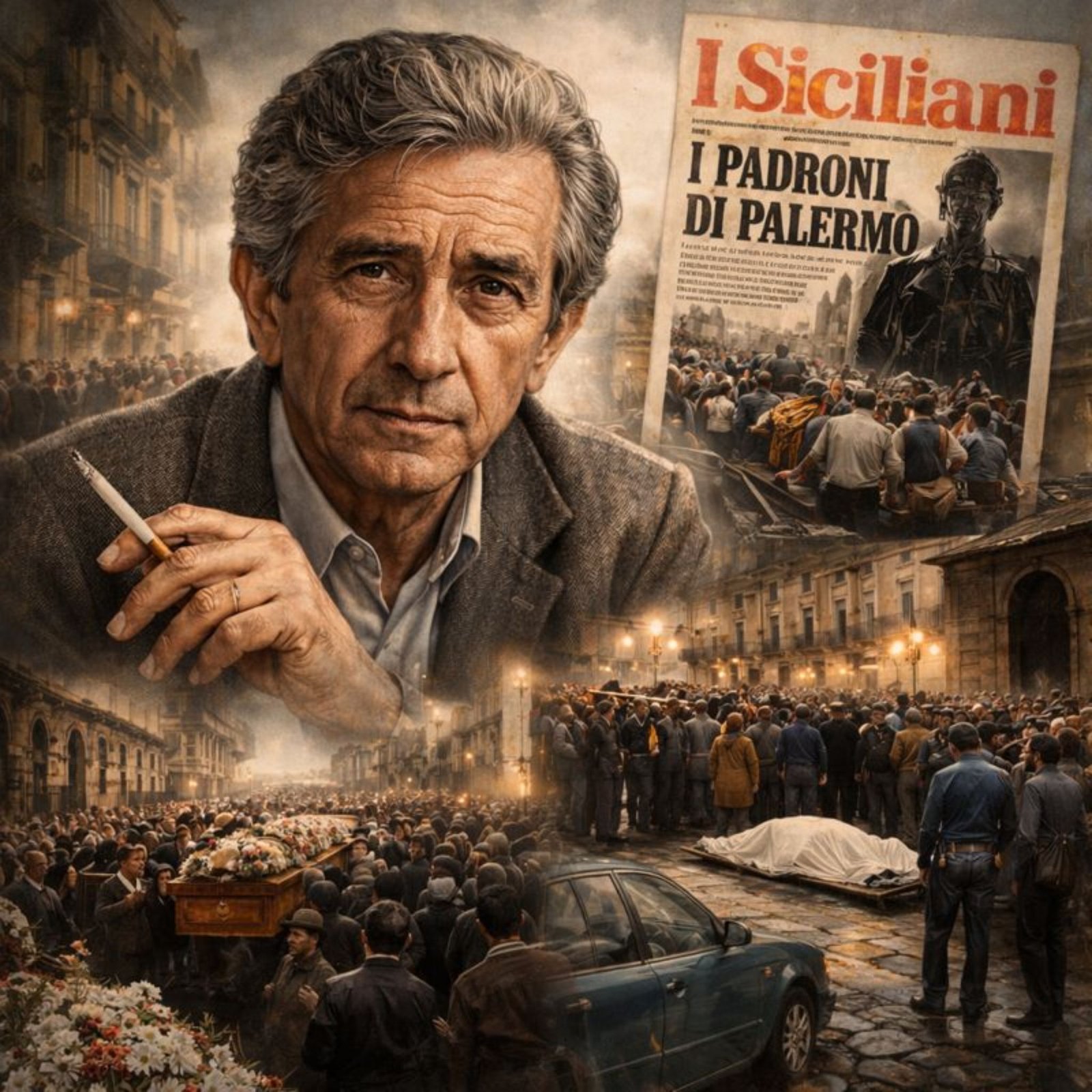
January 5, 1984 marked a turning point in Italy’s cultural and civic history. On that evening in Catania, the writer, journalist, and essayist Giuseppe Fava was murdered by the Cosa Nostra. He was shot at close range outside a theater in the city center—an execution carried out not in secrecy, but in public space. The message was unambiguous: a voice that explained too much, named too clearly, and refused to bend had to be silenced.
Giuseppe Fava did not hold political office, nor did he command police units or courts. His power lay in language. That power proved intolerable to an organization whose strength depended on obscurity, fear, and complicity. In early-1980s Sicily, the mafia was no longer a hidden force operating on the margins. It was embedded in the economy, connected to political decision-making, and normalized in everyday life. Many accepted this reality with resignation; others denied it outright. Fava did neither. He dissected it.of the most unresolved questions of twentieth-century Italy: exile and belonging, power and marginalization, memory and civic duty.

Through articles, essays, and investigations, Fava presented the mafia as a modern system of power rather than a folkloric remnant of the past. He explained how money, violence, and consensus were organized; how entrepreneurs, politicians, and criminal bosses intersected; how silence functioned as a tool as effective as intimidation. His writing avoided sensationalism. It relied on clarity. By making the mechanisms understandable, he stripped the mafia of its mystique—and that, more than denunciation, threatened its authority.
The clearest expression of this approach was the magazine I Siciliani, which Fava founded and directed. It was not merely a publication but a declaration of intent. At a time when many newspapers treated organized crime cautiously or euphemistically, I Siciliani published names, connections, and responsibilities. It rejected the idea that journalism should protect stability at the cost of truth. For Fava, the press existed to disturb power, not to accompany it. This position isolated him within the media landscape, but it also made his work unmistakable.
One of the most unsettling aspects of Fava’s thought was his critique of Sicily’s educated classes. He argued that the endurance of the mafia depended not only on fear among ordinary citizens, but also on the complicity—or quietism—of intellectuals, professionals, and opinion leaders. Lawyers, professors, journalists, business figures: many, he wrote, understood the system perfectly yet chose accommodation. By extending responsibility beyond the usual stereotypes, Fava challenged a comfortable moral division and forced a broader reckoning.
On the evening of January 5, 1984, Fava was going to the theater, an ordinary gesture that underscored the normality he insisted upon in his life. He was approached and shot multiple times. Death came almost immediately. The killing was efficient, calculated, and symbolic in its simplicity. There was no warning, no theatrical flourish—only the removal of a problem. In that sense, the murder followed the logic Fava had described for years.
The public reaction revealed the tensions he had long exposed. There was shock and mourning, official condemnation and commemorative language. At the same time, there were attempts to soften his profile, to portray him as isolated, excessive, or imprudent—someone who had gone “too far.” This reflex confirmed his central thesis: systems of power defend themselves not only through violence, but through narratives that neutralize dissent even after death.
The investigation into Fava’s murder was slow and obstructed. Only years later was the mafia responsibility definitively established, linked to Catania’s criminal clans. The delay itself spoke volumes about the depth of infiltration and the resistance to full accountability. The killing was not an aberration; it was a strategic act intended to restore opacity by eliminating a figure who rendered the system legible.
Yet the outcome was not the one intended. Instead of erasing Fava, the murder amplified his presence. His writings were reread and circulated. I Siciliani became a moral and professional reference point for younger journalists. His name came to signify a standard of civic integrity grounded not in heroics, but in precision, persistence, and refusal to compromise language.
Today, Giuseppe Fava is remembered as a foundational figure in Italy’s cultural resistance to organized crime. Not because he defeated the mafia, but because he revealed how it works. His legacy rests on a simple, unsettling insight: criminal power fears explanation more than accusation. When structures are understood, they lose their inevitability.
January 5, 1984 thus stands as more than the date of an assassination. It marks the moment when a society was forced to confront the cost of clarity. Fava’s life and death demonstrate that truthful writing can be an act of disruption, capable of provoking violence precisely because it undermines the narratives that sustain power. The bullets ended his voice, but they fixed his words in history—as warning, as measure, and as challenge.
1999 — Aldo Matteotti: Form, Silence, and Resistance to Time
Aldo Matteotti
(Milan, May 2, 1927 – Castagneto Carducci, January 5, 1999)
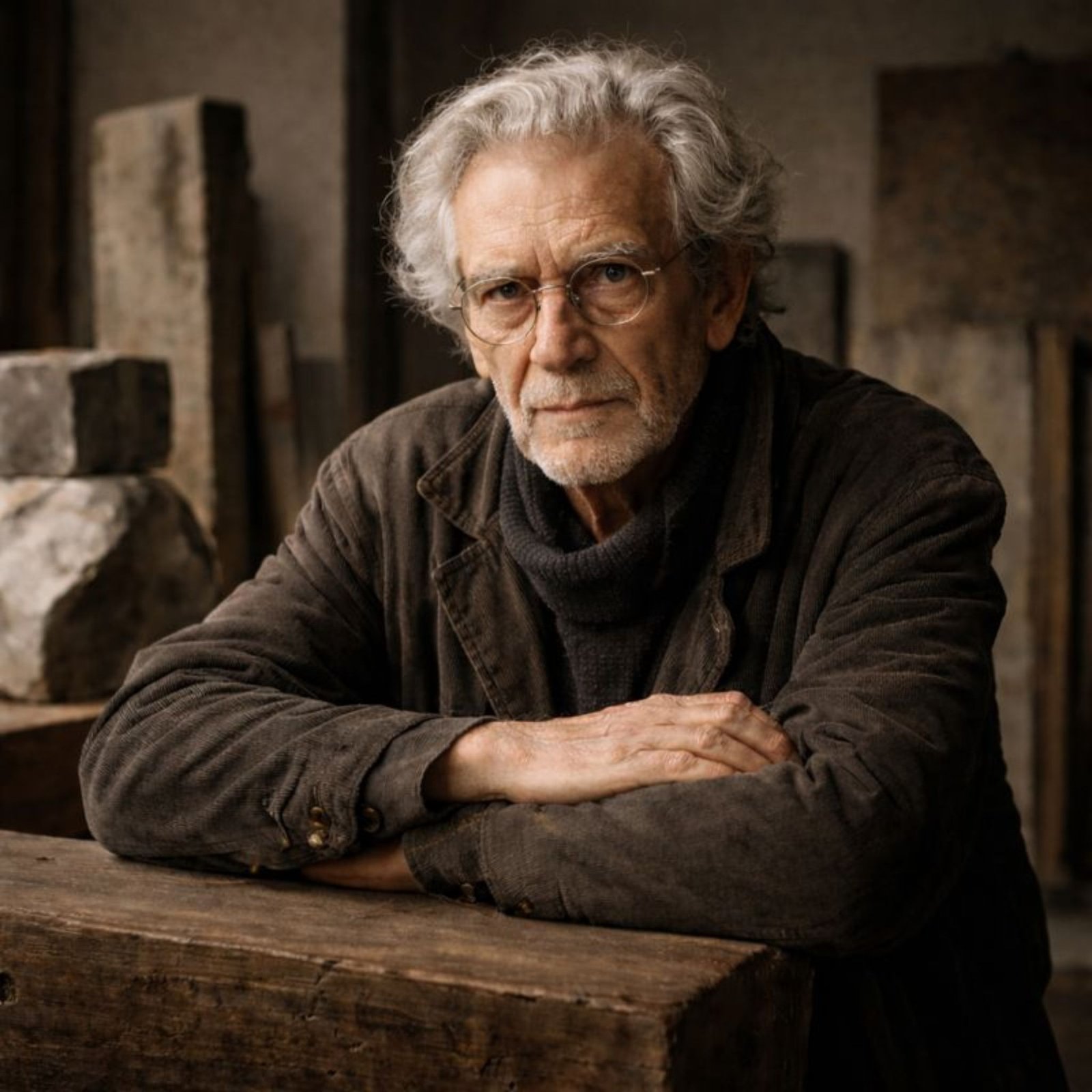
Aldo Matteotti, born in Milan on May 2, 1927, and deceased in Castagneto Carducci on January 5, 1999, was an Italian painter, sculptor, and photographer whose name rarely appears in mass cultural discourse, yet whose work occupies a significant place in the history of art in the second half of the twentieth century. His artistic path took shape as a form of silent resistance: not against ideologies or styles, but against the superficiality of vision and the habit of rapid, distracted viewing.
Matteotti’s formation unfolded within a complex historical context. Postwar Milan was a city in transformation, marked by reconstruction, industrial growth, and an intense confrontation between tradition and experimentation. It was an environment rich in artistic debate and competing movements, where many artists sought visibility through affiliation with recognizable trends. Matteotti, from the outset, chose a different direction. His work did not arise from a desire to belong, but from an internal necessity that was rigorous, consistent, and non-negotiable.

Painting was the first field in which he articulated his language. His canvases did not aim to represent the external world, nor to convey symbolic narratives. The pictorial surface became a space of confrontation between gesture, material, and time. Color was never decorative; it was structural. Each work presented itself as a fact rather than an image, as a presence that demanded attention without offering immediate interpretation. The viewer was not invited to decode meaning, but to remain before the work.
Over time, painting alone no longer satisfied his inquiry. The transition to sculpture marked a decisive deepening of his relationship with material. Wood, metal, and stone were not shaped to imitate recognizable forms, but approached through their resistance. Matteotti’s sculptures do not seek monumentality or dominance. They test space rather than occupy it, compelling the viewer to move, to shift perspective, and to engage physically with the object. In this way, perception becomes an active process rather than a passive act.
Within this constant dialogue between object and observer, sculpture loses any illustrative function. It does not narrate or explain. It exists. This autonomous existence constitutes the core of Matteotti’s work. Form is never an end in itself, but the result of a fragile balance between tension and control. The work holds together without asserting itself, maintaining a deliberate state of restraint.
Photography represents the third essential dimension of his practice and follows the same logic. Matteotti never used the camera as a documentary or narrative tool. His photographs are devoid of events, drama, or central subjects. Empty spaces, worn surfaces, marginal details become the focus. Photography, like painting and sculpture, serves to register the presence of time rather than to tell a story. Reality appears suspended, removed from chronology and urgency.
Time is, in fact, a key concept in understanding Matteotti’s work. His creations were never the result of sudden inspiration. They emerged through slow processes, continuous returns, and silent revisions. He worked through accumulation rather than rupture. In an era increasingly dominated by speed and the demand for novelty, this choice constituted a clear and deliberate stance.
Matteotti consciously avoided constructing a public persona as an artist. He showed little interest in theoretical statements, media exposure, or manifestos. This absence of self-promotion was not a limitation, but a coherent decision. For him, the artwork had to preserve its autonomy, unburdened by explanation or justification from its creator. Meaning was not imposed; it was allowed to emerge—or not.
His connection with Castagneto Carducci, the place of his maturity and death, marked a phase of further concentration. The Tuscan landscape never entered his work directly as subject matter, yet it profoundly influenced its rhythm and structure. Light, the relationship between fullness and emptiness, and spatial measure became increasingly essential. His work gradually shed all that was secondary, moving toward a form of quiet exactness.
The death of Aldo Matteotti on January 5, 1999, passed almost unnoticed by the broader public. There were no grand commemorations or late rediscoveries. This discretion was consistent with his life and work. Yet his oeuvre continues to question the present. In an age marked by visual saturation and diminishing attention, his work appears today with striking clarity. Not because it anticipates trends, but because it resists them.
Matteotti’s works offer neither consolation nor immediate messages. They require time, silence, and a willingness to remain. To engage with them means accepting suspension, renouncing the expectation of instant understanding. This is not art meant for consumption, but for coexistence. It does not demand interpretation; it demands presence.
January 5, 1999 marks not only the death of an artist, but the conclusion of a coherent journey that crossed painting, sculpture, and photography without yielding to fashion. Aldo Matteotti remains a discreet yet essential figure in Italian twentieth-century art: an artist who chose precision over noise, matter over narrative, and silence as a form of thought.
January 13 — a date of power, disaster, and cultural rupture
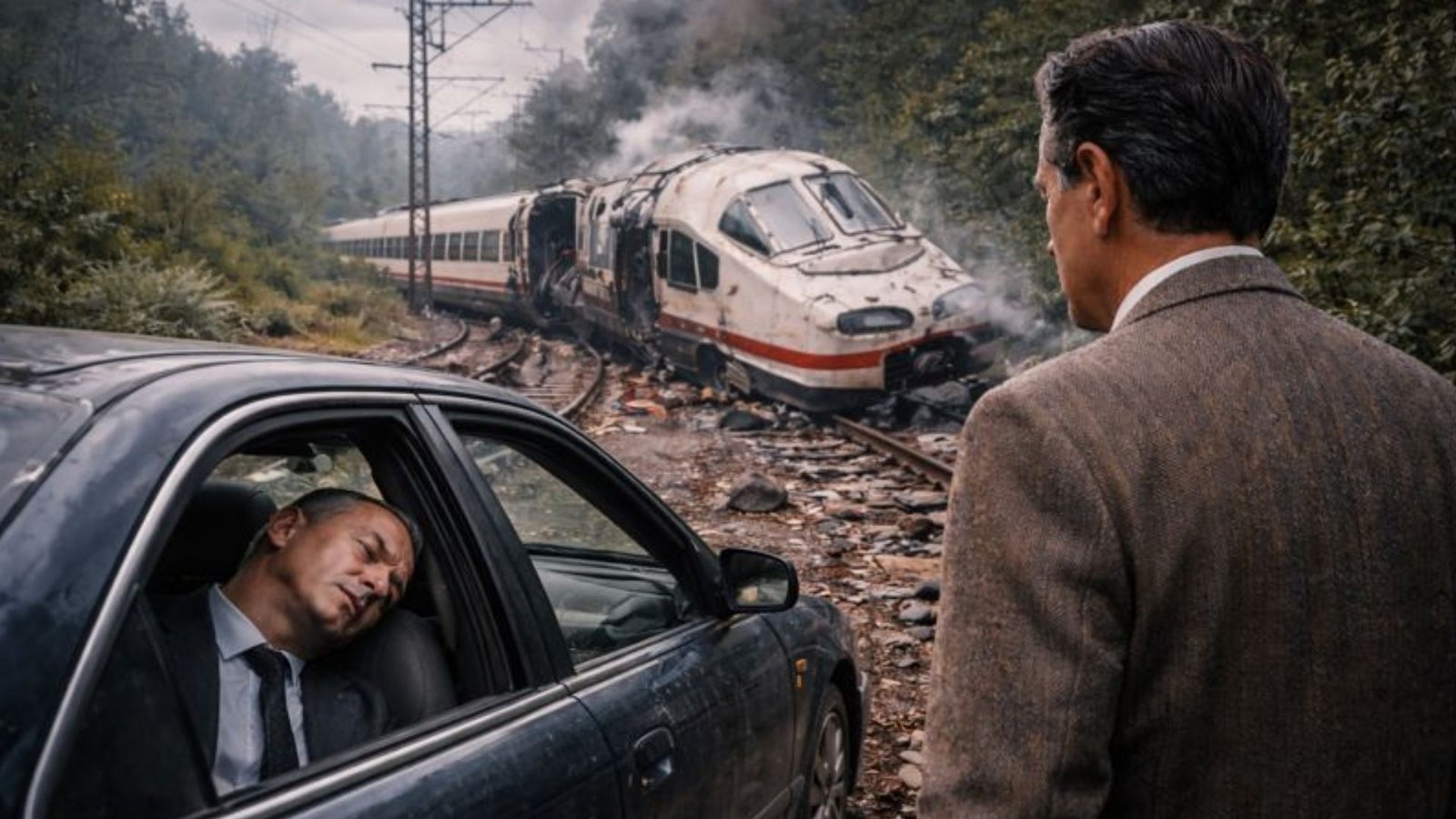
January 12 — three events, three historical fractures
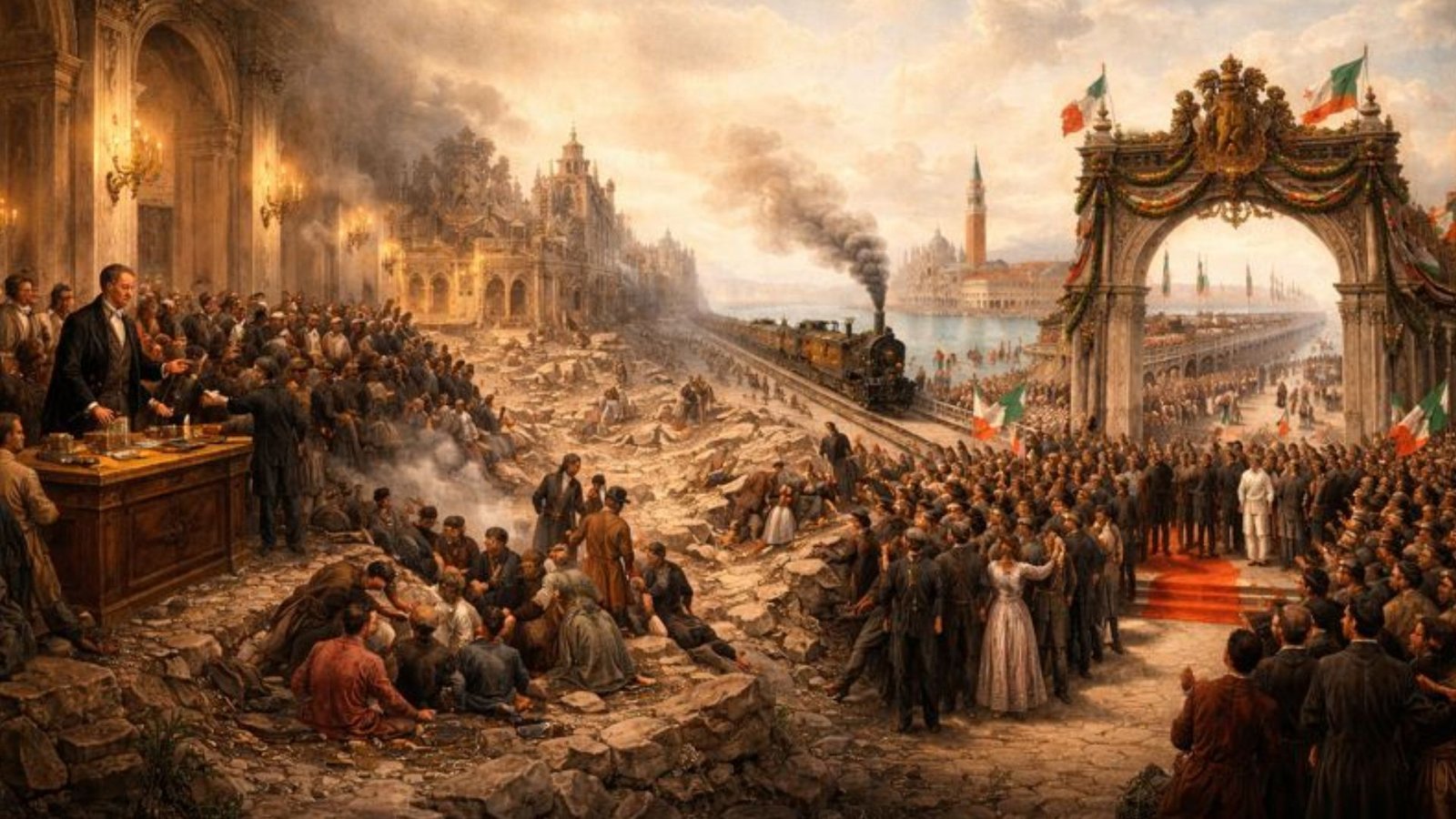
January 11 — dates that shaped Italy’s history
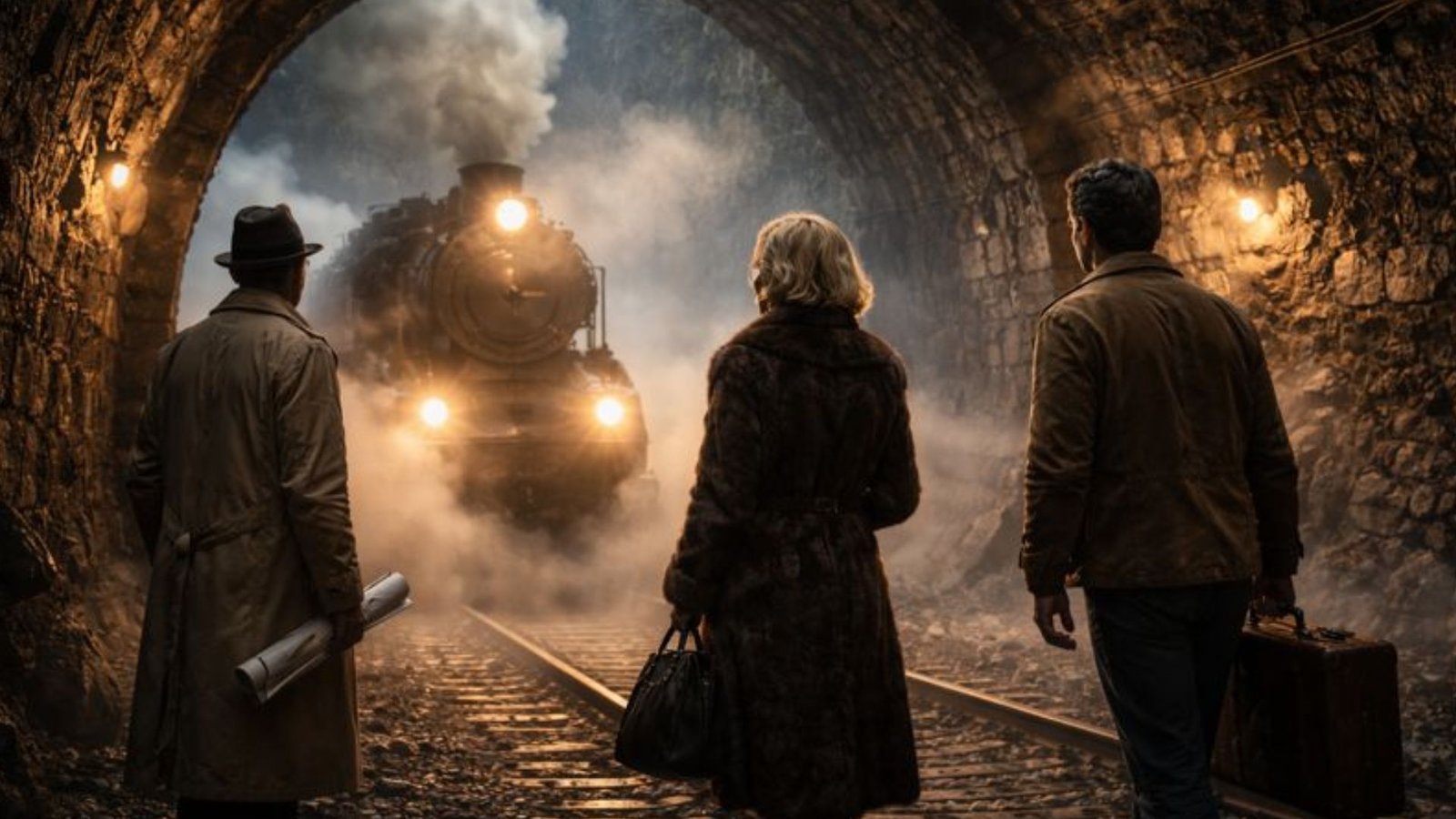
10 January — a date of remembrance in Italian history

January 9 – A Date of Memory, Culture, and Historical Turning Points