January 4 is a date that connects lives from different generations and artistic languages, united by a genuine contribution to Italian culture. On this day, in different years, a musician, a writer, and an actor passed away—figures who worked in distinct expressive fields yet addressed the same essential themes: humanity, time, and the responsibility of art. Their deaths on January 4 in 1951, 1975, and 2015 draw a symbolic line through theatre, cinema, literature, and music. This is not a date of celebration, but one of quiet reflection, where value lies not in fame, but in the depth of the legacy left behind. The articles that follow are bound by this shared date and return attention to those who shaped Italian culture without spectacle, leaving instead a lasting and meaningful trace.
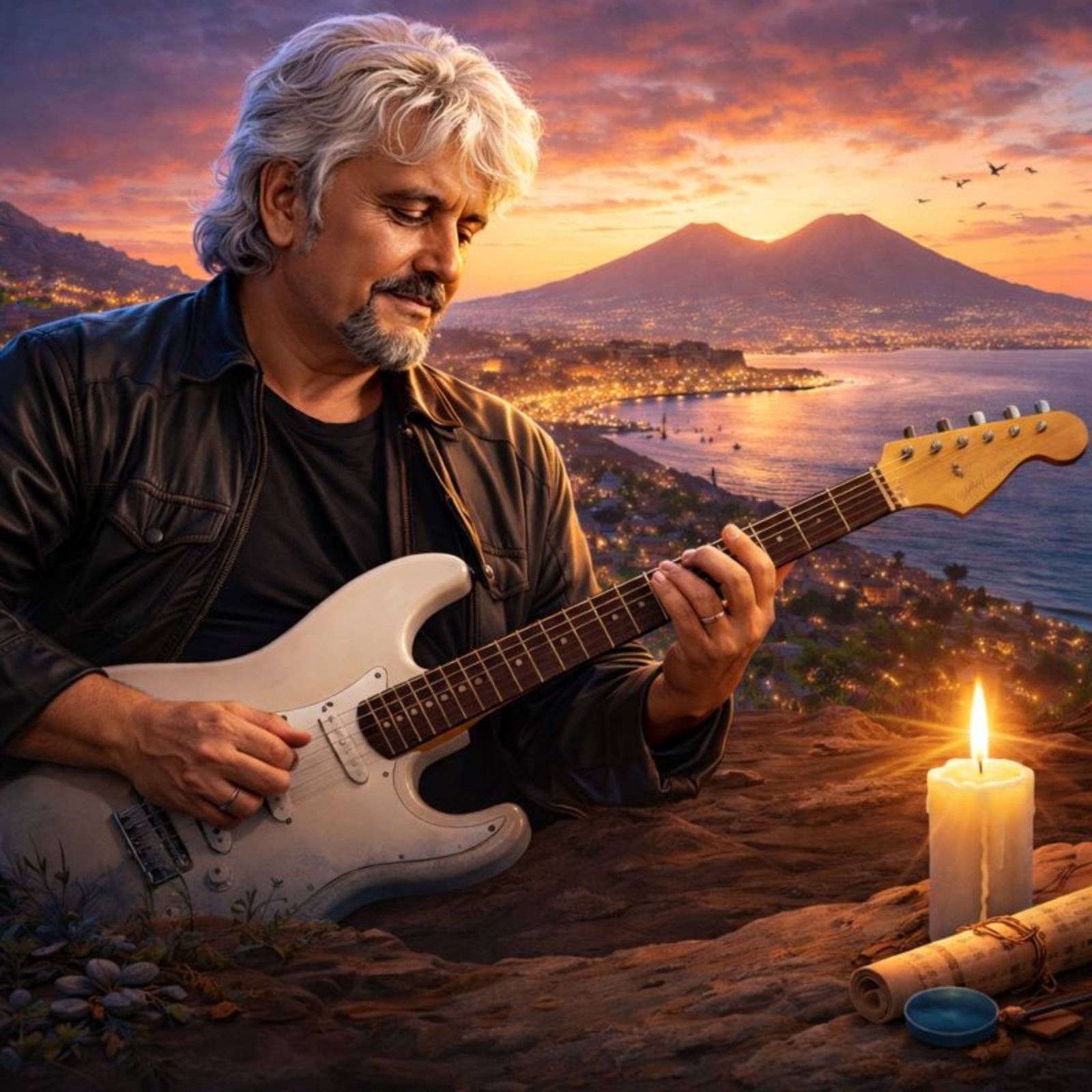
2015 - The Silence of Naples: In Memory of Pino Daniele
Pino Daniele, born Daniele Giuseppe Daniele
(Naples, March 19, 1955 – Rome, January 4, 2015)
January 4 is a date that carries a particular weight in Italian cultural memory. It marks the day in 2015 when Pino Daniele passed away, leaving behind not only a vast musical legacy but also a profound sense of absence. His death did not simply mean the loss of a celebrated musician; it signaled the end of an era in which music was still deeply tied to identity, place, and inner necessity rather than image or trend.

Naples as Origin and Destiny
Born in Naples on March 19, 1955, Pino Daniele never treated his city as a mere backdrop. Naples was the raw material of his artistic language, a living organism that shaped his voice, his melodies, and his worldview. In his songs, Naples is never romanticized or reduced to folklore. Instead, it appears in all its complexity: wounded and ironic, spiritual and disillusioned, tender and brutal at the same time.
The Neapolitan dialect, often considered a limitation in the national music scene, became in his hands a precise emotional instrument. Daniele used it to express nuances that standard Italian could not fully contain. Through his music, the dialect gained poetic authority, proving that authenticity can transcend linguistic boundaries.
A Musical Language Without Borders
From the very beginning, Pino Daniele made a radical choice: he refused to belong to a single genre. Blues became his spiritual home, jazz his space of freedom, rock his source of energy, while Mediterranean tradition provided the soul. The result was a sound that was entirely personal, immediately recognizable, and impossible to imitate without losing its essence.
His guitar was never just an accompaniment. It functioned as a second voice, often more sincere than words themselves. Daniele played with restraint, allowing silence and pauses to carry meaning. In those suspended moments, his music became intimate and reflective, revealing a depth that went beyond technique or virtuosity.
Songs as Reflections on Existence
Pino Daniele’s songs never aimed for easy impact. They spoke of love without sentimentality, faith without dogma, loneliness without self-pity. Each lyric felt like the result of an inner dialogue, shaped by lived experience rather than abstraction.
Pain, when present, was never dramatized or exploited. It was treated with clarity and awareness, becoming part of a broader reflection on human fragility. This balance is one of the reasons his music has aged so well. It does not belong to a specific decade; it belongs to a shared human condition.
International Recognition and Artistic Integrity
Over the course of his career, Pino Daniele gained recognition far beyond Italy. Collaborations with internationally renowned musicians, appearances at major festivals, and respect within the jazz and blues communities confirmed the universal nature of his language. Yet success never distanced him from his roots.
He never pursued the image of a conventional star. His public presence remained discreet, almost reserved, as if everything that mattered had to pass exclusively through music. In an industry often driven by excess and spectacle, this consistency became one of his defining traits and a key reason why his name still commands deep respect.
January 4, 2015
The news of his death in Rome on January 4, 2015, arrived suddenly and struck deeply. Italy seemed to pause, and Naples, in particular, fell into a rare, collective silence. In the hours that followed, his songs began to fill the streets again—coming from radios, cars, balconies, and public squares.
This was not a formal tribute but a spontaneous, almost instinctive reaction. People turned to his music not to say goodbye, but to recognize themselves within it. His voice became the space where grief could be shared without explanation.
A Legacy That Continues to Speak
Years after his passing, Pino Daniele’s influence remains strong. He changed the way Italian songwriting is understood, showing that musical fusion is not a trend but an act of truth. He demonstrated that roots do not confine an artist; they give strength and direction.
January 4 is therefore more than a date of death. It is a day of memory, listening, and respect. A day when the silence of Naples feels heavier, as if the city itself were pausing to listen to a guitar that no longer plays, yet continues to resonate through time.
Pino Daniele remains in that delicate space between word and sound, between pain and beauty, between city and sea. And from there, even now, he continues to speak.
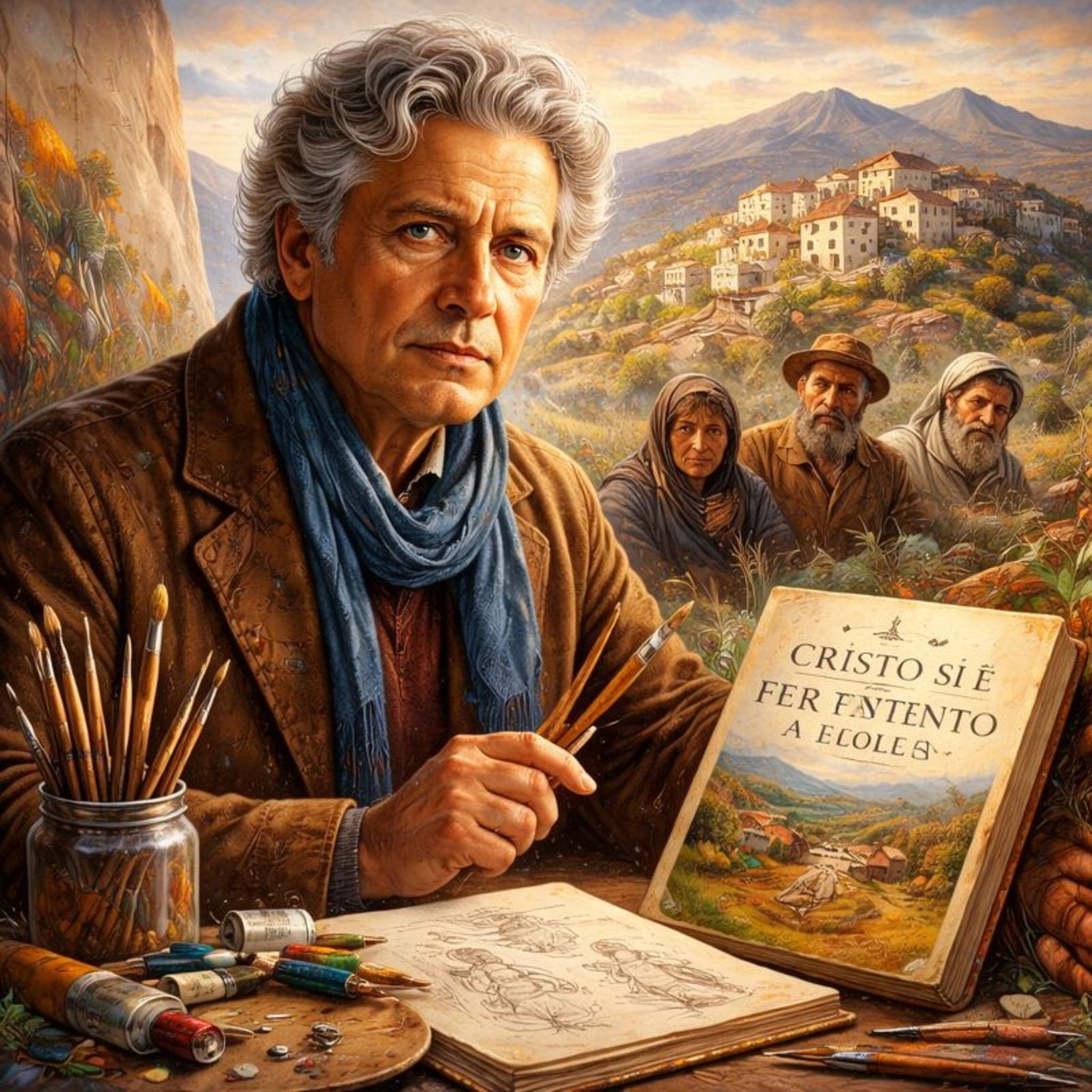
1975 - Memory and Exile: Carlo Levi Between Art and Resistance
Carlo Levi
(Turin, November 29, 1902 – Rome, January 4, 1975)
January 4 occupies a quiet yet powerful place in Italy’s cultural memory. On this day in 1975, Carlo Levi passed away—writer, painter, intellectual, and uncompromising antifascist. His life and work embody a rare unity between artistic creation and moral responsibility. Remembering Carlo Levi on the anniversary of his death means confronting some of the most unresolved questions of twentieth-century Italy: exile and belonging, power and marginalization, memory and civic duty.

Origins and Intellectual Formation
Carlo Levi was born in Turin into a cultivated Jewish family deeply connected to the intellectual life of the city. He studied medicine, graduating as a doctor, but quickly understood that his true vocation lay elsewhere. Painting and writing became the primary tools through which he interpreted reality. From a young age, Levi gravitated toward antifascist circles and avant-garde artistic environments, developing an independent and critical mindset.
His refusal to conform—either to academic conventions or to imposed ideological frameworks—defined his early path. In an Italy increasingly dominated by fascist authoritarianism, such independence was not tolerated. Levi’s opposition was not rhetorical or superficial; it was ethical, rooted in a fundamental rejection of violence, coercion, and the erasure of human dignity.
Antifascism and Political Exile
Levi’s antifascist commitment led to his arrest and political confinement under the Mussolini regime. He was sent to Lucania (today Basilicata), one of the poorest and most isolated regions of southern Italy. What was intended as a punishment became a transformative experience.
In Lucania, Levi encountered a part of Italy systematically excluded from national narratives: villages cut off from history, peasants living in extreme poverty, entire communities abandoned by the state. Rather than observing from a distance, Levi immersed himself in daily life. He listened, treated the sick as a doctor, painted faces and landscapes, and tried to understand the deep historical roots of this marginalization.
Exile did not break him. Instead, it sharpened his vision. Levi came to see that the South’s condition was not accidental or natural but the result of centuries of neglect, political indifference, and structural injustice.
Christ Stopped at Eboli
From this experience emerged Christ Stopped at Eboli, one of the most important works of twentieth-century Italian literature. The book is neither a political manifesto nor a simple memoir. It is a profound reflection on Italy itself—on its fractures, its internal borders, and its failure to recognize large portions of its own population.
The title is a powerful metaphor: Christ, civilization, and the state stopped at Eboli, never reaching Lucania. What Levi describes is a world suspended outside official history, governed by ancient customs and silent endurance. His writing is precise yet compassionate, analytical yet deeply human. He refuses both sentimentalism and ideological simplification, restoring complexity and dignity to people long reduced to stereotypes or invisibility.
Painting as a Parallel Language
Alongside writing, painting remained central to Carlo Levi’s life. His canvases—often portraying Lucanian peasants, barren landscapes, and worn faces—are inseparable from his literary work. They are not decorative images but acts of testimony.
Levi’s painting is intense and unfiltered. He does not aestheticize poverty or suffering. Instead, he confronts the viewer with gazes marked by fatigue, resilience, and silent resistance. In his work, writing and painting function as two expressions of the same ethical commitment: to bear witness without distortion.
Postwar Years and Public Engagement
After the fall of fascism, Carlo Levi became an influential public intellectual in postwar Italy. He wrote extensively for newspapers and journals, participated in political life, and served as a member of parliament. Yet he never surrendered his independence to party dogma or rigid ideological alignments.
Levi remained critical even of those political forces closest to his values. His attention stayed focused on marginalized regions, social inequality, and the fragile relationship between citizens and the state. He distrusted easy answers and rejected grand slogans, insisting instead on complexity, responsibility, and historical awareness.
January 4, 1975
Carlo Levi died in Rome on January 4, 1975. His passing was quiet, without spectacle, but it marked the disappearance of a figure who had embodied a rare balance between art and conscience. With him ended a generation of intellectuals for whom culture was not an ornament but a moral obligation.
Yet his voice did not fall silent. His books and paintings continue to speak, precisely because they address fundamental human questions that remain unresolved.
A Living Legacy
Carlo Levi’s legacy remains strikingly relevant. In a world still shaped by inequality, displacement, and selective memory, his work urges us to look at what lies on the margins. He reminds us that storytelling carries responsibility, and that art can be a form of resistance—quiet, persistent, and enduring.
January 4 is therefore more than a date of death. It is a day of critical remembrance. To remember Carlo Levi is to remember that history is unevenly lived, that silence is often imposed, and that the role of the intellectual—and the artist—is, above all, not to look away.
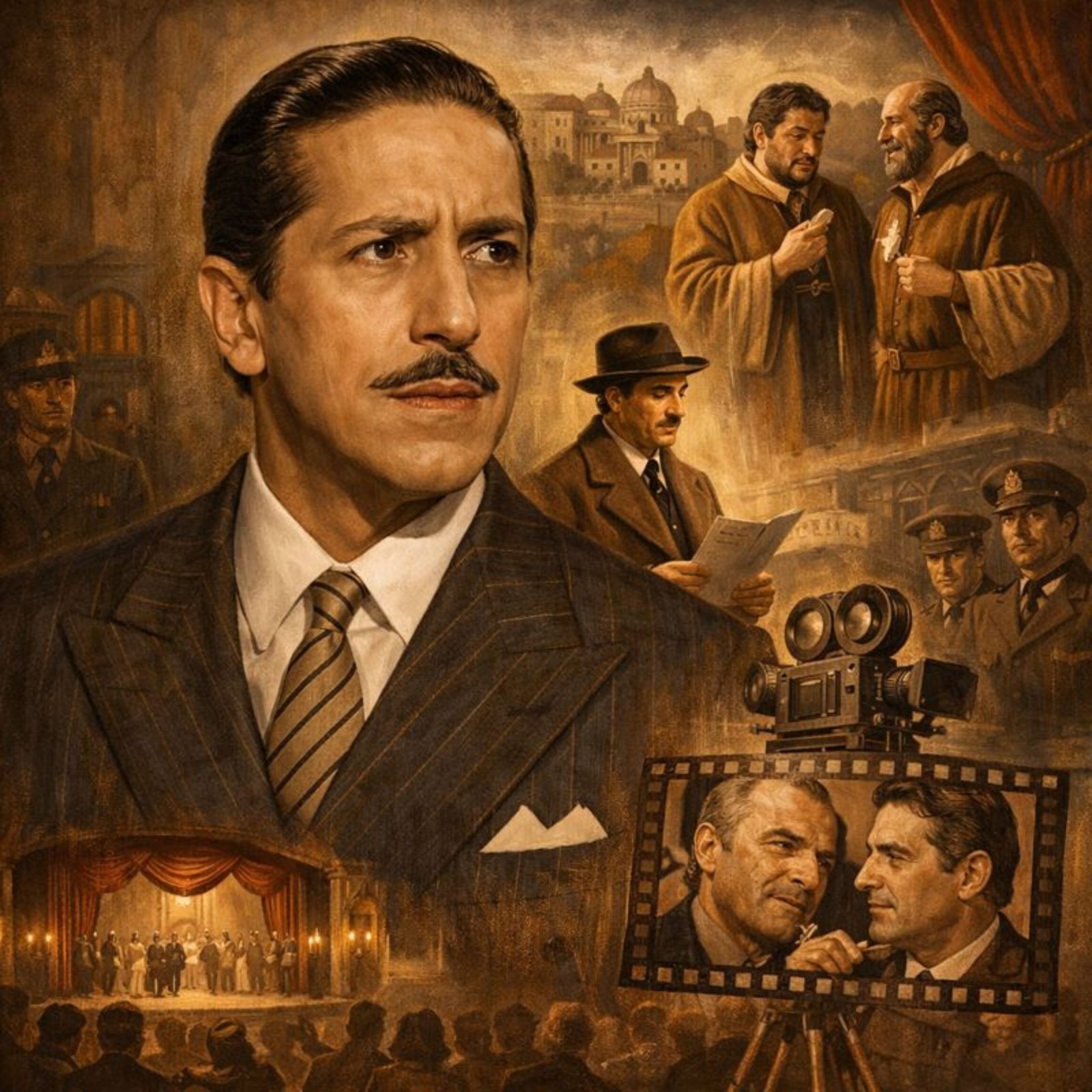
1951 - The Silence of the Stage: Guido Morisi Between Theatre and Cinema
Guido Morisi
(Bologna, February 8, 1903 – Rome, January 4, 1951)
January 4, 1951 marks the death in Rome of Guido Morisi, an Italian actor whose career unfolded between theatre and cinema during the first half of the twentieth century. His name does not belong to the canon of major stars, yet Morisi represents a crucial generation of performers who shaped Italian theatrical and cinematic culture through discipline, craftsmanship, and continuity. Remembering Guido Morisi means restoring visibility to an idea of acting grounded in professional rigor rather than celebrity.
Origins and Artistic Formation
Guido Morisi was born in Bologna, a city with a long-standing theatrical tradition and a vibrant cultural life. This environment played a decisive role in shaping his artistic sensibility. Theatre in Bologna was not merely entertainment but a space of cultural exchange and intellectual rigor, where the actor was expected to master language, presence, and interpretation.
From an early age, Morisi was drawn to the stage. His interest lay not in notoriety but in the craft itself: the study of voice, movement, and the psychological structure of characters. His training followed the classical principles of Italian theatre, emphasizing precision, discipline, and respect for the written text—values that would remain constant throughout his career.
Theatre as the Core of His Career
Theatre was the central pillar of Guido Morisi’s artistic life. He belonged to a generation for whom the stage was both workplace and school, demanding constant rehearsal, touring, and collaboration. The rhythm of theatrical life shaped his identity as an actor and refined his interpretive style.
Morisi did not pursue dramatic excess or flamboyant expressiveness. His acting was marked by restraint, balance, and a deep attention to character psychology. He was particularly effective in supporting and character roles, giving substance and credibility to figures that might otherwise have remained marginal. Such performances, often unnoticed by the broader public, are essential to the integrity of any theatrical production.
Work in Cinema
With the expansion of Italian cinema during the 1930s and 1940s, Guido Morisi extended his activity to film. Like many stage actors of his time, he brought theatrical discipline to the screen while adapting to the different expressive demands of cinema—greater subtlety, controlled gestures, and sensitivity to close-ups.
Over the course of his career, Morisi appeared in approximately 27 films, produced between 1938 and the early 1950s. His roles were most often secondary or character parts, contributing to narrative cohesion and realism rather than individual prominence. Although rarely a protagonist, his screen presence added depth and credibility to the films in which he participated.
Historical and Cultural Context
Morisi’s career developed during one of the most turbulent periods in Italian history: the fascist regime, the Second World War, and the challenging years of postwar reconstruction. Theatre and cinema operated under censorship, ideological pressure, and material scarcity. In such a climate, the actor’s profession required resilience, adaptability, and ethical consistency.
While Guido Morisi was not publicly known for political activism, his unwavering dedication to his craft during these years can be read as a form of quiet resistance. Continuing to work with seriousness and integrity helped preserve a cultural space essential to social continuity and reflection.
Acting Style and Professional Reputation
Guido Morisi exemplified the ensemble actor. His strength lay in his ability to integrate seamlessly into a production, enhancing the work without dominating it. His performances relied on nuance, timing, and vocal modulation, producing a sense of authenticity rather than spectacle.
Among colleagues and professionals, he was regarded as reliable and precise—an actor who could be trusted to deliver consistent, high-quality performances. In repertory theatre and studio cinema alike, these qualities were invaluable, particularly in an era when working conditions were often demanding and unstable.
Final Years and Death
In his later years, Morisi lived and worked primarily in Rome, the central hub of Italian theatre and cinema after the war. Despite the difficulties of the postwar period, he remained active, maintaining a steady presence on stage and screen.
His death on January 4, 1951 did not provoke large public ceremonies, yet it marked the loss of an actor who had devoted his entire life to performance. Within professional circles, his passing was felt as the disappearance of a figure defined by coherence and dedication.
A Quiet Legacy
Guido Morisi’s legacy is not measured by awards or lasting fame, but by the example of professional integrity he embodied. He stands for a generation of actors who understood their work as service—to the text, to their fellow performers, and to the audience.
January 4 thus becomes a day of remembrance not only for Guido Morisi, but for all those performers whose names may fade, yet whose contributions remain embedded in the history of Italian theatre and cinema. His life reflects an idea of art that is sober, disciplined, and profoundly respectful—an idea that continues to deserve recognition.
January 13 — a date of power, disaster, and cultural rupture
January 12 — three events, three historical fractures
January 11 — dates that shaped Italy’s history
10 January — a date of remembrance in Italian history
January 9 – A Date of Memory, Culture, and Historical Turning Points