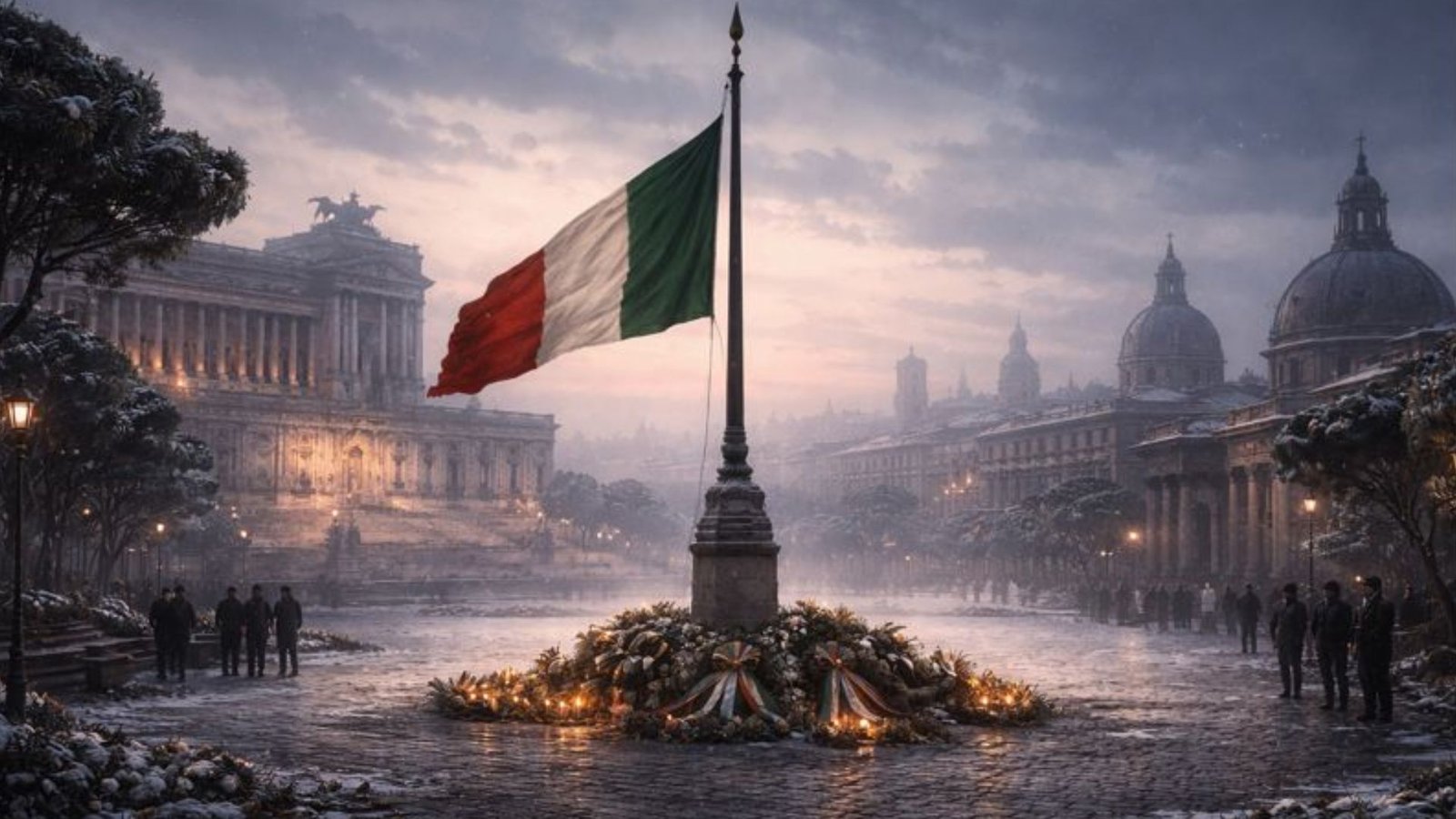
January 12, across different years, marked moments of rupture in seemingly distant spheres: politics, technology, and culture. The murder of former Palermo mayor Giuseppe Insalaco in 1988 revealed the extreme cost of truth when it emerges from within power itself. The 1997 railway disaster near Piacenza, the first accident involving Italy’s high-speed Pendolino ETR460, shattered the illusion of absolute technological safety. The death of actor Nerio Bernardi in 1971 quietly closed an era of Italian theatre and cinema built on discipline and craft. Three separate stories, connected by the same date and by a shared sense of an ending, where established certainties give way to change.
1988 — the Mafia murders former Mayor of Palermo Giuseppe Insalaco
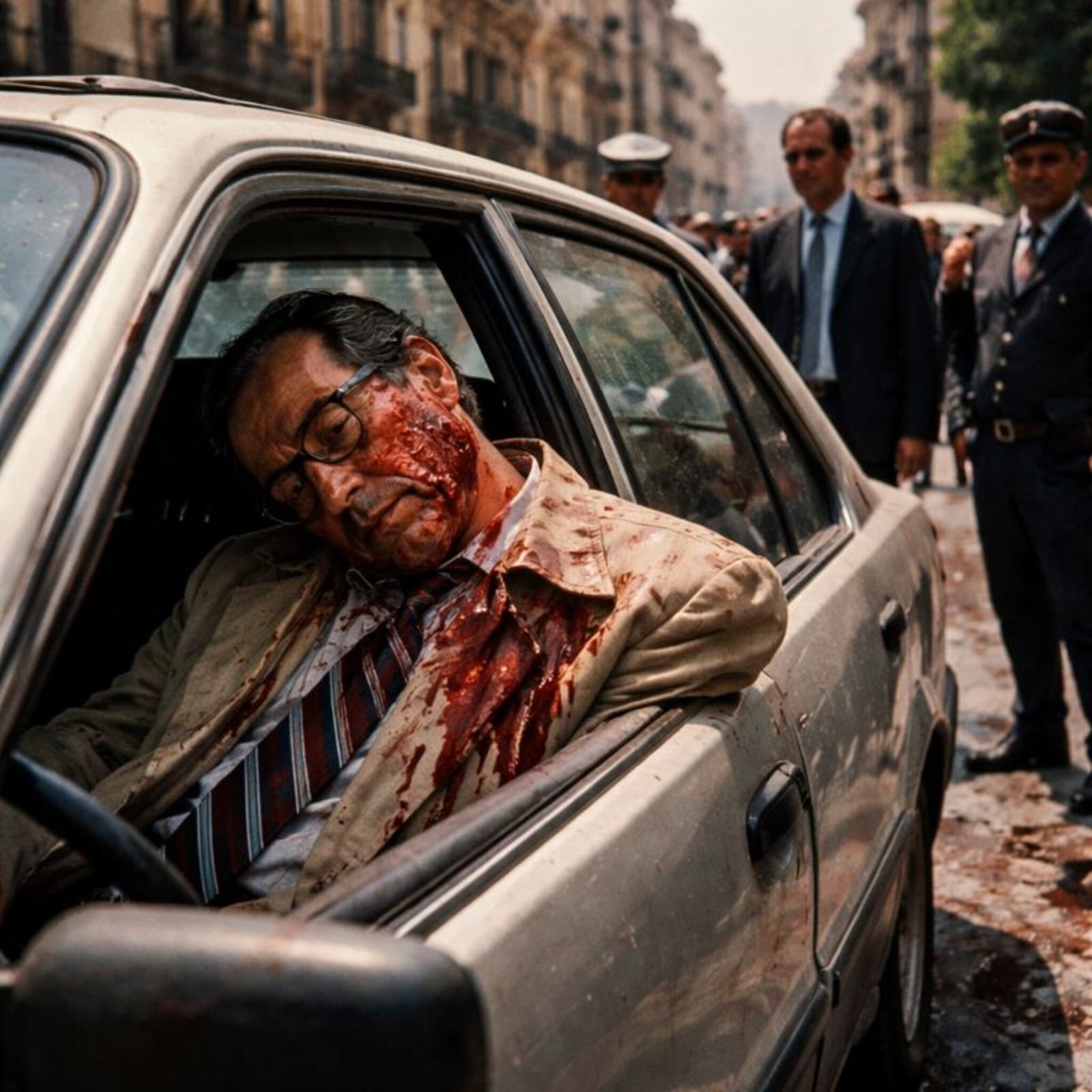
January 12, 1988 marks one of the darkest moments in the civic history of Palermo. On that day, the Mafia eliminated a man who had dared to break the silence from within the political system itself: Giuseppe Insalaco, former mayor of the city. His murder was not merely an act of criminal violence; it was a calculated and brutal message addressed to anyone who believed it was possible to speak openly about the links between political power and organized crime without paying a fatal price.
A mayor who became dangerous
Giuseppe Insalaco served as mayor of Palermo for only a short period in 1984, yet that brief mandate was enough to make him profoundly threatening to long-established balances of power. He took office at a time when the city was deeply suffocated by Mafia influence. Public contracts, urban planning, construction, and municipal finances had for years been shaped and controlled by criminal clans. Insalaco was not an outsider nor a romantic reformer. He came from the same political environment that had learned to coexist with the Mafia, and precisely for this reason his words later carried exceptional weight.

After leaving office, Insalaco chose to speak. Through interviews and public statements, he described pressures, compromises, and decision-making mechanisms that had long remained implicit. He openly accused members of his own political milieu of maintaining relationships with Cosa Nostra and stated clearly that key administrative decisions in Palermo could not be taken without Mafia approval. He avoided euphemisms and ambiguity, exposing a system built on silence. In doing so, he crossed a line that, in Mafia logic, could not be tolerated.
Sicily in the 1980s: violence and fear
To understand the meaning of Insalaco’s murder, it is necessary to place it within the broader context of Sicily in the 1980s. This was a decade marked by extreme violence. The Mafia waged internal wars between clans while simultaneously attacking the state. Judges, police officers, journalists, and politicians became targets. Assassinations were frequent and often spectacular, designed to intimidate and reaffirm criminal authority.
In this climate, speaking the truth was an anomaly. Magistrates like Falcone and Borsellino fought through the law; Insalaco spoke as a politician who knew the inner workings of power. He no longer held office and thus lacked institutional protection, yet he still possessed knowledge. That combination—lost authority and preserved memory—made him particularly vulnerable. From the Mafia’s perspective, he represented an unpredictable threat: a man who could no longer be controlled but still knew too much.
A murder as a warning
Insalaco was shot dead while sitting in his car, in broad daylight. The manner of the killing was deliberate and visible. It was not meant to be discreet or deniable. The Mafia intended it as a warning, not only to witnesses and informants, but also to politicians who might be considering a similar path of disclosure. Former positions offered no immunity; once silence was broken, there would be consequences.
Public reaction followed a familiar pattern: outrage, mourning, and official declarations of commitment to legality. At the same time, there was a widespread sense of helplessness. Many understood that Insalaco had spoken too openly and too late, and that the system he described was still intact and powerful. His death confirmed a painful truth: the Mafia feared words when they came from insiders who could not be dismissed as naïve or marginal.
Political meaning of Insalaco’s death
Over time, Insalaco’s figure has been reassessed with greater complexity. He was not a flawless hero, but rather a man who embodied an internal fracture within Italian politics of that era. His story shows that the Mafia does not strike only those who fight it openly, but also those who attempt to distance themselves from it after having been part of the system, willingly or not.
His assassination helped expose the structural relationship between local politics and organized crime. In this sense, his death contributed to a broader awakening of public awareness, paving the way for the more aggressive state response that would emerge in the early 1990s. While tragic, his fate became one of the elements that prepared the ground for major trials and a shift in public consciousness.
Memory, silence, and responsibility
Today, Giuseppe Insalaco’s name is less frequently mentioned than those of more famous Mafia victims, yet his story remains essential for understanding the depth of the Mafia phenomenon in Italy. It reminds us that organized crime fears truth most when it is spoken by those with credibility, experience, and direct knowledge of power.
January 12, 1988 is not only the date of a former mayor’s murder. It marks a boundary beyond which compromise collapses and the cost of speaking becomes life itself. Insalaco’s killing stands as a symbol of how systems of power destroy those who step outside their control, and of how, in Sicily at the end of the twentieth century, breaking silence demanded the highest possible price.
1997 — the Pendolino ETR460 disaster near Piacenza: the first tragedy of Italian high-speed rail
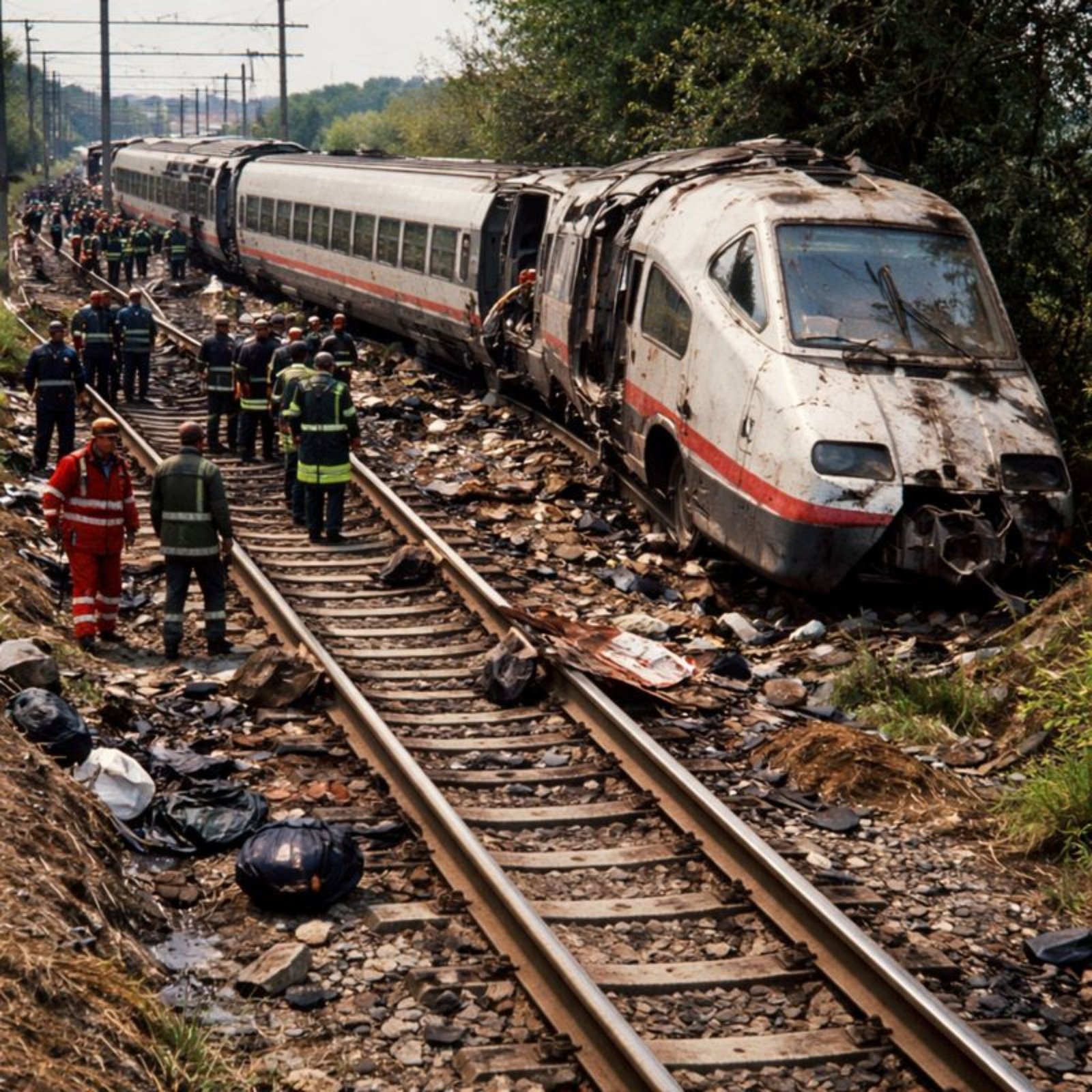
In 1997 Italy experienced one of the most dramatic moments in the modern history of its railway system. A Pendolino ETR460 train, operating on the Milan–Florence route, derailed near Piacenza, causing the deaths of eight people and injuring many others. The accident immediately assumed historical significance: it was the first major crash involving an Italian high-speed train, an event that shattered the widespread belief in the absolute safety of a new technological era.
The Pendolino as a symbol of progress
During the 1990s, the Pendolino represented a source of national pride. The ETR460 model embodied the cutting edge of Italian railway engineering. Its tilting technology allowed trains to negotiate curves at higher speeds on conventional lines, reducing travel times without the immediate need for newly built infrastructure. Comfort, speed, and innovation made the Pendolino a powerful symbol of an Italy moving confidently toward a modern, European future.

The Milan–Florence corridor was one of the most important routes in the country, linking economic and industrial centers with cultural and administrative hubs. Thousands of passengers used this line daily, trusting a system that appeared efficient and technologically advanced. The Pendolino was not simply a train; it was a promise that speed and safety could coexist seamlessly.
The day of the derailment
On the day of the accident, the train was running according to schedule. Weather conditions were not considered exceptional, and no serious technical problems had been reported before departure. Yet, near Piacenza, on a section of traditional railway line, the train suddenly left the tracks. Several carriages violently derailed, some overturning or suffering severe structural damage.
Within minutes, an ordinary journey turned into a scene of devastation. Emergency services arrived quickly, but rescue operations were complicated by the extent of the damage and the condition of the carriages. Eight passengers lost their lives, while many others were injured, some seriously. For Italy, this was a profound shock: high-speed rail, long associated with efficiency and safety, had revealed its vulnerability.
A national shock
The derailment dominated headlines across the country. Newspapers and television broadcasts emphasized not only the human toll but also the symbolic weight of the disaster. This was not a routine railway accident; it involved a train that had been marketed as one of the safest and most advanced in Europe.
Public confidence in technological progress was deeply shaken. Questions quickly emerged about responsibility, maintenance, and oversight. Was the infrastructure adequate for such advanced rolling stock? Were safety standards sufficient? The tragedy sparked intense public debate and political discussion, forcing authorities to confront uncomfortable realities about the pace of innovation and the limits of existing systems.
Investigations and underlying causes
Subsequent investigations examined multiple factors. Attention focused on the condition of the tracks, maintenance procedures, and the interaction between the Pendolino’s tilting system and conventional railway infrastructure. Experts analyzed how small irregularities in the track, tolerable at lower speeds, could become critical under high-speed conditions.
The accident highlighted a systemic issue: technological innovation had advanced more rapidly than the infrastructure designed to support it. The Pendolino was a sophisticated train, but it often ran on lines that were never fully adapted for the stresses generated by high-speed travel. This imbalance between innovation and infrastructure proved to be a dangerous combination.
A turning point for Italian railways
The 1997 disaster marked a decisive turning point. In its aftermath, Italian railway authorities were forced to rethink their approach to high-speed travel. Safety moved to the forefront, no longer treated as a secondary consideration to speed or efficiency. Maintenance standards were strengthened, operational protocols revised, and greater emphasis placed on risk assessment.
The accident also accelerated investment in dedicated high-speed lines, designed specifically to handle the demands of modern trains. The lesson was clear: true progress required not only advanced vehicles, but also infrastructure, regulation, and oversight capable of matching that level of innovation.
Remembering the victims
Behind the technical analyses and policy reforms lay the human cost of the tragedy. The eight victims of the derailment near Piacenza became a painful reminder that every system, no matter how advanced, ultimately serves people. Their deaths transformed a technical failure into a collective wound, one that demanded accountability and lasting change.
Over time, public attention shifted to newer developments in high-speed rail, but the memory of the 1997 accident continued to influence safety culture within the Italian railway system. Many of the standards now considered essential were shaped by the lessons learned from that disaster.
Historical significance
The derailment of the Pendolino ETR460 stands as more than a tragic accident. It represents the moment when Italy confronted the risks inherent in technological ambition. The crash marked the end of an era of uncritical faith in innovation and the beginning of a more mature approach, one that recognized the inseparable link between speed, safety, and responsibility.
The year 1997 remains a defining point in Italian transport history—a reminder that progress is never purely technical, and that every advance carries with it an obligation to protect human life above all else.
1971 — the death of Nerio Bernardi, a quiet pillar of Italian stage and cinema
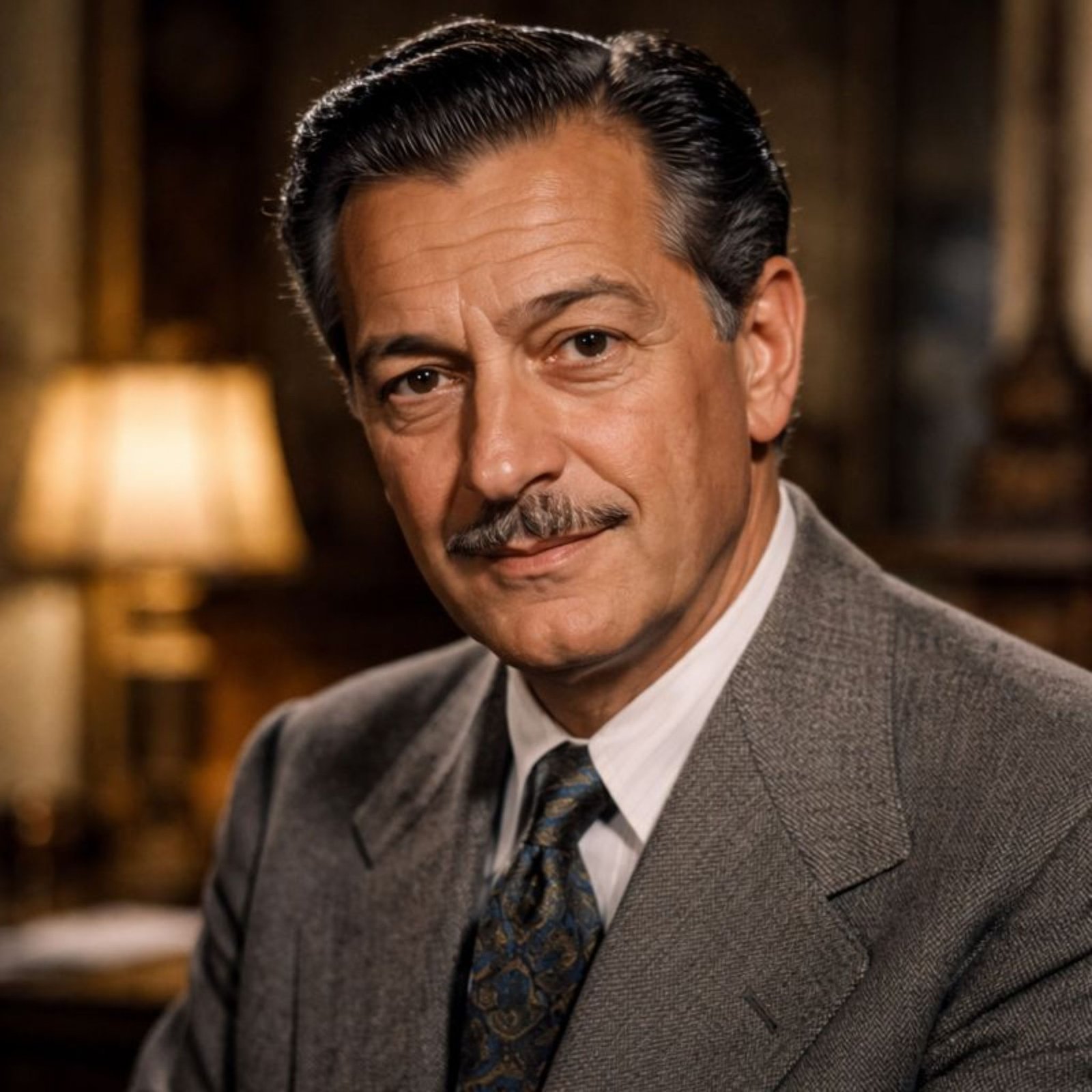
Nerio Bernardi, born Nerino Aristide Gaetano Vincenzo Bernardi
(Bologna, July 23, 1899 – Rome, January 12, 1971)
On January 12, 1971, in Rome, Nerio Bernardi passed away—an actor whose name may not dominate popular memory, yet whose presence is deeply woven into the fabric of twentieth-century Italian theatre and cinema. Born in Bologna on July 23, 1899, under the full name Nerino Aristide Gaetano Vincenzo Bernardi, he built a long and disciplined career that spanned multiple artistic eras. His life tells the story of an actor devoted to craft rather than fame, to continuity rather than spectacle.
Origins and early formation
Bernardi grew up in a cultural environment where theatre still held a central role in public life. Early twentieth-century Bologna was marked by strong dramatic traditions, touring companies, and an audience educated to listen carefully to language and gesture. In this context, acting was not improvisation or personality-driven display; it was a profession rooted in study, vocal control, and precision of movement.

His formative years coincided with a turbulent period in Italian history—World War I, social unrest, and profound political change. For many artists of his generation, the stage became a place of order and discipline, a structure that resisted the instability of the outside world. Bernardi embraced this approach fully, shaping his artistic identity around rigor and reliability.
Theatre as a foundation
Before cinema became central to his career, theatre defined Bernardi’s artistic DNA. The stage was his primary training ground, demanding absolute control over voice, posture, and rhythm. He performed in dramatic and character roles, approaching both classical and contemporary texts with restraint rather than excess.
He was not an actor who sought applause through flamboyance. His performances were built on internal coherence and clarity, allowing the character to exist without exaggeration. This made him particularly valuable within ensembles: a stabilizing presence who gave structure to the performance as a whole. His contribution often worked quietly, but without it the balance of the production would have been weakened.
Transition to cinema
With the rise of sound cinema, Bernardi gradually moved toward film while maintaining his theatrical discipline. He brought to the screen a style marked by containment and precision, qualities that translated well to close-ups and dialogue-driven scenes. In an industry increasingly shaped by star systems and strong screen personalities, Bernardi occupied a different but essential space—that of the character actor.
He appeared in numerous films, often in secondary yet decisive roles. Authority figures, professionals, bourgeois fathers, administrators—these were characters he embodied with natural credibility. Audiences might not always remember his name, but they recognized the solidity he brought to the screen. His acting did not seek attention; it supported the world of the film.
Crossing multiple cinematic eras
One of the most remarkable aspects of Bernardi’s career is its historical breadth. He worked through the pre-war years, the constraints of fascist-era cinema, the devastation of World War II, and the cultural renewal that followed. As Italian cinema shifted toward realism and social observation in the postwar period, his understated style proved particularly effective.
Although he was not a leading figure of neorealism, his approach aligned naturally with its values: restraint, authenticity, and human scale. He did not impose ideology through performance; instead, he offered a credible human presence that allowed stories to unfold with sincerity. This adaptability enabled him to remain relevant even as cinematic language evolved.
An actor without a myth
Unlike many celebrated figures of Italian cinema, Nerio Bernardi was never surrounded by a public myth. His private life remained discreet, his career free from scandal or grand declarations. Over time, this contributed to a certain marginalization of his memory within popular narratives of film history.
Yet this absence of myth is precisely what makes his figure important. Bernardi represents a class of actors who ensure continuity within cultural systems. They are not icons, but pillars—professionals whose consistency allows institutions like theatre and cinema to function across generations. Without such figures, artistic traditions would fracture more easily.
Final years and death
In the later stages of his life, Bernardi continued to work, though at a slower pace. Italian cinema was entering another period of transformation, opening itself to more radical experimentation and new expressive forms. His style, rooted in classical discipline, belonged to an earlier era, yet it never felt obsolete. It remained a reference point for seriousness and control.
He died in Rome on January 12, 1971, closing a career that had spanned more than fifty years. His passing did not provoke major public reaction, but it marked the quiet end of a long interpretative tradition—one built on respect for text, audience, and professional ethics.
Cultural legacy
Today, Nerio Bernardi is remembered mainly by scholars and attentive cinephiles, but his legacy deserves broader recognition. His contribution cannot be measured by awards or iconic roles. It lies instead in the quality and consistency of his work, in the trust he inspired among directors and fellow actors, and in the stability he brought to countless productions.
January 12, 1971, is therefore more than the date of an actor’s death. It marks the closing of a trajectory defined by craft, discipline, and responsibility. Bernardi stands as a reminder that the history of art is not shaped only by stars and revolutions, but also by those who quietly uphold its foundations, role after role, year after year.
January 13 — a date of power, disaster, and cultural rupture
January 11 — dates that shaped Italy’s history
10 January — a date of remembrance in Italian history

January 9 – A Date of Memory, Culture, and Historical Turning Points

January 8 — a date of remembrance for those who changed the future