11 January emerges in Italian history as a moment of transformation, linking events that reshaped society, territory, and identity across different centuries. On this date in 1822, the foundation of the Cassa di Risparmio di Venezia marked the birth of modern savings culture and a new relationship between citizens and finance. In 1693, the catastrophic earthquake in the Val di Noto devastated eastern Sicily, leaving tens of thousands dead while redefining its architectural future. In 1846, the opening of the railway bridge connected Venice to the mainland, symbolizing the city’s entry into the modern industrial age.

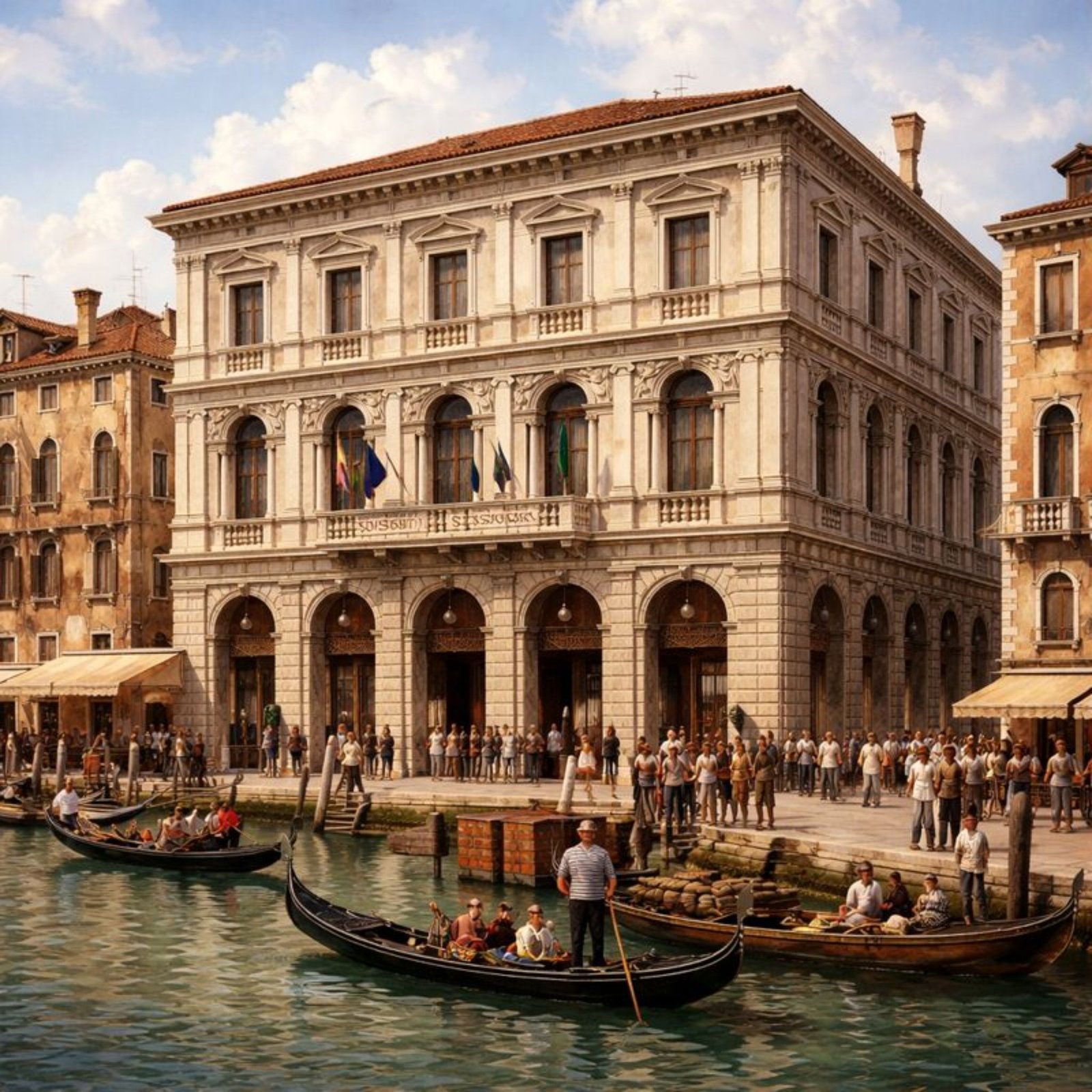

1822 — the birth of Italy’s first savings bank
The Cassa di Risparmio di Venezia, also known as Carive, holds a unique and foundational position in the history of Italian banking. Established on 11 January 1822, it became the first savings bank founded in Italy, marking a decisive step toward a modern, socially oriented financial system. The institution was based in Venice, a city whose long-standing commercial and financial traditions made it a natural setting for such an innovation.
At the beginning of the nineteenth century, Italy was still a fragmented territory, divided into different states with uneven economic development and limited financial coordination. Banking activity existed, but it was largely reserved for merchants, aristocratic families, and large trading houses. Ordinary citizens had few reliable instruments to protect their savings or to cultivate a long-term relationship with financial institutions. In this context, the creation of a savings bank represented not only an economic innovation but also a social reform.

The founding mission of the Cassa di Risparmio di Venezia was clear: to encourage saving among the broader population and to offer a secure place for small deposits. Unlike traditional commercial banks of the period, which focused on large-scale credit and international trade, Carive was designed to serve artisans, workers, small entrepreneurs, and families. By promoting thrift and financial responsibility, the bank aimed to strengthen social stability and reduce economic vulnerability.
Venice played a decisive role in this process. Although the city had lost its political independence by the end of the eighteenth century, it remained a major financial and cultural center. Centuries of mercantile activity had shaped a population familiar with contracts, credit, and institutional trust. This environment allowed the concept of a savings bank to take root quickly and to gain public confidence. The city’s urban fabric, administrative structures, and economic mentality supported the emergence of a new type of financial institution.
Throughout the nineteenth century, the Cassa di Risparmio di Venezia gradually expanded its operations. It became a stable pillar of the local economy, supporting small businesses, craftsmen, and commercial activities that formed the backbone of Venetian society. By collecting deposits and redistributing resources through prudent lending, the bank contributed to economic continuity in a region often exposed to political changes and external shocks.
The bank’s evolution closely followed the broader transformation of Italy. As the country moved toward unification and later industrialization, Carive adapted its services to new economic realities. It maintained its original emphasis on savings while expanding its capacity to support productive investment. This balance between tradition and adaptation proved essential to its longevity.
During the twentieth century, the Italian banking system underwent profound changes. Economic crises, two world wars, and shifting regulatory frameworks reshaped the financial landscape. In this challenging environment, the Cassa di Risparmio di Venezia demonstrated resilience. Its deep local roots and conservative approach to risk management helped it navigate periods of instability while preserving the trust of its customers.
Over time, however, increasing competition and regulatory demands encouraged consolidation within the banking sector. Smaller and medium-sized institutions were gradually integrated into larger groups in order to remain competitive and technologically up to date. Within this process, Carive became part of Intesa Sanpaolo, one of Italy’s largest and most influential banking groups.
This integration marked the end of Carive’s independence as a standalone institution, but it did not erase its historical identity. At the time of its incorporation into the Intesa Sanpaolo group, the Cassa di Risparmio di Venezia operated 96 branches in the Venice area, reflecting a dense and well-established local presence. For many residents, the name Carive continued to symbolize reliability, proximity, and continuity with the past.
The significance of the Cassa di Risparmio di Venezia lies not only in its chronological primacy. As Italy’s first savings bank, it embodied a new conception of banking as a public-oriented institution. Its focus on small savers helped foster financial inclusion and contributed to the gradual formation of a savings culture that would become central to the Italian economic model.
By encouraging ordinary citizens to deposit their money and by safeguarding those funds with institutional discipline, Carive helped build a relationship of trust between society and the financial system. This trust would later prove essential for the development of national credit markets, public investment, and economic modernization.
The date 11 January 1822 therefore represents more than the founding of a single bank. It marks the beginning of a structural change in Italian financial history, in which banking institutions began to assume a broader social responsibility. The Cassa di Risparmio di Venezia stands as a historical milestone in this transition, linking the mercantile traditions of Venice with the foundations of modern Italian banking.
In this sense, Carive remains a symbol of continuity between past and present. Its legacy reflects how local initiatives, rooted in specific communities, contributed decisively to shaping the national financial system. Even after its integration into a major banking group, the historical importance of the Cassa di Risparmio di Venezia continues to define its place in Italy’s economic memory.
1693 — the devastating earthquake of the Val di Noto
The earthquake of 1693 stands as one of the most destructive natural disasters in Italian and Mediterranean history. It struck the eastern part of Sicily, with catastrophic consequences for the region known as the Val di Noto. Contemporary estimates and later historical reconstructions indicate that around 60,000 people lost their lives, while entire cities and towns were destroyed or left in ruins. The scale of devastation permanently altered the social, urban, and cultural landscape of southeastern Sicily.
At the end of the seventeenth century, Sicily was under Spanish rule and was one of the most densely populated and economically active regions of the Mediterranean. The cities of the Val di Noto area were characterized by compact urban layouts, narrow streets, and buildings constructed without any understanding of seismic resistance. Although earthquakes were not unknown on the island, the magnitude and intensity of the 1693 event exceeded anything previously experienced by the local population.

The catastrophe unfolded through a dramatic seismic sequence. Strong foreshocks occurred on 9 January 1693, already causing significant damage and numerous casualties. These initial tremors destabilized buildings and weakened structures across a wide area. The most destructive shock, however, struck on the evening of 11 January 1693. Modern studies estimate its magnitude at approximately 7.4, making it one of the strongest earthquakes ever recorded in Italy. The tremors were felt across eastern Sicily and beyond, triggering widespread collapses, landslides, and ground fractures.
The cities of the Val di Noto suffered unprecedented destruction. Noto, located at a different site from the present-day city, was almost completely obliterated. Churches, monasteries, noble palaces, and private homes collapsed within moments. Catania experienced near-total devastation: the majority of its buildings fell, and thousands of inhabitants were buried beneath rubble. Ragusa, Modica, and Syracuse also endured massive damage, with entire districts reduced to ruins and their populations decimated.
The human toll of the disaster was immense. Many victims died instantly as buildings collapsed, often while they were asleep. Others succumbed in the days and weeks that followed, due to untreated injuries, lack of clean water, food shortages, and the spread of disease. The earthquake destroyed roads, aqueducts, and storage facilities, making rescue operations and the distribution of aid extremely difficult. In many areas, survivors were forced to live in makeshift shelters amid the ruins.
Beyond the immediate physical destruction, the earthquake caused profound social and economic disruption. Entire communities were wiped out, family networks were broken, and local economies collapsed. Agricultural production was interrupted, trade routes were severed, and administrative structures ceased to function effectively. Local authorities were overwhelmed by the scale of the disaster and were unable to respond without external assistance.
The Spanish Crown intervened directly, sending officials, soldiers, and resources to restore order and coordinate relief efforts. Emergency measures were introduced to prevent looting, manage population displacement, and plan the reconstruction of the affected cities. These interventions marked the beginning of a long and complex recovery process that would span several decades.
From this immense tragedy emerged a remarkable cultural and architectural transformation. The reconstruction of the Val di Noto cities during the eighteenth century followed new urban and architectural principles. Instead of rebuilding the old medieval layouts, planners designed wider streets, open squares, and more regular building patterns. This reconstruction gave rise to what is now known as Sicilian Baroque, a distinctive architectural style characterized by dramatic façades, elaborate decorations, sculpted balconies, and a strong sense of theatricality.
The new cities of the Val di Noto were not merely rebuilt; they were reimagined. Architecture became a symbolic language of rebirth, resilience, and collective identity after destruction. The elegance and harmony of the rebuilt towns stood in stark contrast to the devastation that had preceded them. Today, the late Baroque towns of the Val di Noto are recognized as a UNESCO World Heritage Site, admired worldwide for their artistic and historical value.
The earthquake of 1693 also had a lasting impact on the perception of seismic risk in Italy. Although scientific understanding of earthquakes was limited at the time, the scale of the disaster influenced building practices and urban planning in seismic regions. The experience highlighted the vulnerability of densely built environments and encouraged more rational approaches to construction, even if true earthquake-resistant engineering would only develop centuries later.
In historical memory, the 1693 earthquake represents a clear dividing line between a “before” and an “after” in the history of eastern Sicily. It marked the end of an urban and social order rooted in medieval structures and the beginning of a new phase defined by Baroque aesthetics and planned reconstruction. The disaster reshaped not only the physical appearance of the region but also its cultural identity.
Remembering the earthquake of the Val di Noto means acknowledging both the fragility of human settlements in the face of natural forces and the extraordinary capacity of societies to rebuild. The tragedy claimed tens of thousands of lives, yet it also led to one of the most significant architectural renaissances in Italian history. The events of 1693 remain deeply embedded in the collective memory of Sicily, a testament to suffering, loss, and renewal that continues to define the region to this day.
1846 — the ceremonial opening of the railway bridge connecting Venice to the mainland
The date 11 January 1846 marks a decisive turning point in the history of Venice. On that day, the ceremonial opening of the railway bridge linking the city to the mainland took place, establishing for the first time a permanent land-based connection between Venice and continental Europe. This event was far more than a technical achievement: it symbolized the end of centuries of physical isolation and the entry of Venice into the modern age of industrial transport.
For hundreds of years, Venice had existed as a city apart. Built on islands within a lagoon, it was accessible only by water. This geographical condition had been the foundation of its power during the centuries of the Venetian Republic, when maritime trade dominated the Mediterranean world. Ships, canals, and ports shaped every aspect of Venetian life. Yet by the nineteenth century, this same uniqueness began to act as a constraint rather than an advantage. As Europe embraced railways and land-based infrastructure, Venice risked being left behind.

The rapid spread of rail transport across Europe was transforming economies and societies. Railways reduced distances, accelerated commerce, and reshaped political and economic relations between regions. Cities connected to railway networks flourished, while those excluded faced stagnation. In this context, the absence of a direct rail link threatened Venice’s relevance within the evolving economic geography of northern Italy and beyond.
The idea of building a railway bridge across the Venetian Lagoon emerged as a response to these challenges. The project aimed to connect Venice with the mainland settlement of Mestre, thereby integrating the city into the growing railway system. This ambition raised significant technical, environmental, and symbolic questions. Crossing the lagoon meant confronting unstable seabed conditions, tidal movements, and the long-term durability of a structure exposed constantly to water and wind.
Engineering such a bridge in the first half of the nineteenth century was an extraordinary challenge. Construction techniques were still developing, and materials had to be carefully selected to withstand the harsh lagoon environment. The project required extensive planning, financial investment, and political support. Despite skepticism and opposition, work progressed steadily, demonstrating the determination to modernize Venice without abandoning its historical character.
The completed railway bridge was not merely a functional structure; it was a statement of intent. It represented the willingness of Venice to adapt to the industrial age and to redefine its relationship with the mainland. When the bridge was officially inaugurated on 11 January 1846, the event was marked by ceremonies attended by civil authorities, engineers, and representatives of economic and political institutions. The first train crossing the lagoon symbolized a profound transformation: modern technology entering a city shaped for centuries by water and tradition.
The economic consequences of the bridge were immediate and significant. Venice gained faster and more reliable access to inland markets. Goods could now be transported directly by rail, reducing costs and transit times. This strengthened commercial activity and enhanced the city’s role within regional trade networks. The bridge also facilitated the movement of people, making Venice more accessible to merchants, workers, and visitors.
Social life in Venice began to change as well. The railway altered perceptions of distance and mobility. Journeys that once required complex combinations of boats and roads became simpler and faster. Daily interactions between Venice and the mainland increased, encouraging cultural exchange and economic integration. The city was no longer an isolated enclave but part of a broader territorial system.
At the same time, the bridge provoked debate and concern. Many contemporaries feared that easier access would undermine the unique identity of Venice. There were anxieties about uncontrolled growth, environmental impact, and the loss of the city’s distinctive relationship with water. These concerns reflected a deeper tension between preservation and progress—a tension that continues to define discussions about Venice today.
Over time, the railway bridge became a permanent and essential element of the city’s infrastructure. Its presence paved the way for further connections, including the later construction of a parallel road bridge. Together, these links reinforced Venice’s integration with the mainland, but the railway bridge remained the original and most transformative connection.
Historically, the opening of the bridge in 1846 represents a point of no return. After this moment, Venice could no longer exist solely as an insular maritime city. It became part of the continental transport network, subject to the rhythms and pressures of industrial modernity. This transition reshaped the city’s economy, demographics, and long-term development.
Today, the railway bridge is crossed daily by trains carrying commuters and travelers, often without a second thought. Yet behind this apparent normality lies a revolutionary change in the city’s history. What was once a bold and controversial project is now an accepted and indispensable feature of Venetian life.
The significance of 11 January 1846 extends beyond engineering and transportation. It represents the moment when Venice physically and symbolically connected its past with its future. The railway bridge did more than link the city to the mainland; it connected a centuries-old urban civilization to the forces of modern Europe.
In this sense, the bridge stands as a powerful historical marker. It embodies the challenge of balancing continuity and change, heritage and innovation. By embracing the railway, Venice acknowledged the necessity of transformation while striving to preserve its unique identity. The opening of the railway bridge remains a defining chapter in the city’s long and complex history, illustrating how even the most tradition-bound places must eventually confront and adapt to the demands of a changing world.

January 13 — a date of power, disaster, and cultural rupture

January 12 — three events, three historical fractures

10 January — a date of remembrance in Italian history

January 9 – A Date of Memory, Culture, and Historical Turning Points

January 8 — a date of remembrance for those who changed the future