January 9 is a date that may initially appear unremarkable, yet upon closer examination reveals itself as a dense point of historical memory. Across different centuries, this day has been marked by events and lives that are not directly connected, but are united by the depth of their consequences. It brings together global history and local cultural life, moments of expanding human horizons and the completion of personal journeys that left lasting traces within their communities.
January 9 reminds us that history is shaped not only by wars and revolutions, but also by quieter, decisive transitions. It is a day associated with the beginnings of long processes that transformed the understanding of the world, and at the same time a day of remembrance for individuals who dedicated their lives to culture, theatre, and civic responsibility. Through such dates, the continuity of historical time becomes visible, where major discoveries and the steady, often unseen work on stage or behind the scenes form a single fabric of human experience.
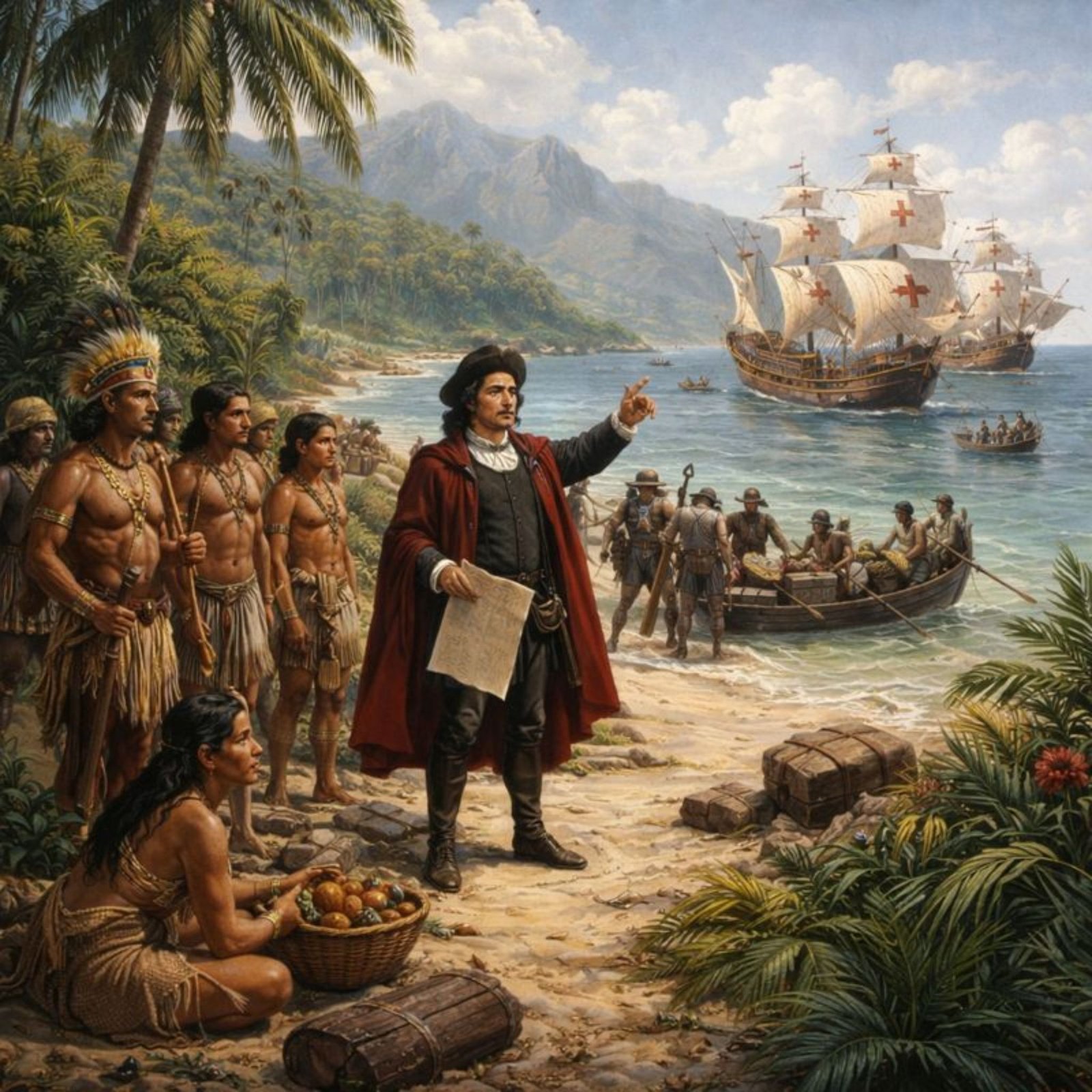
1493 - Christopher Columbus and the Discovery of Puerto Rico During the Second Voyage to the New World
January 9, 1493 is not among the most frequently cited dates of the Age of Exploration, yet it holds a meaningful place in the history of the Caribbean. On this day, during his second voyage across the Atlantic, Christopher Columbus reached the island that would later become known as Puerto Rico. This moment marked the island’s first recorded contact with Europe and initiated a long process of transformation that would profoundly reshape its society, culture, and historical trajectory.
The Second Voyage: A New Phase of Expansion
Columbus’s second voyage, launched in September 1493, differed fundamentally from his first expedition. The initial journey had been exploratory, aimed at verifying the existence of lands west of Europe. The second voyage, by contrast, was explicitly colonial in nature. Supported directly by the Spanish Crown, Columbus commanded a fleet of seventeen ships carrying more than a thousand people, including soldiers, settlers, clergy, and administrators.

The mission was no longer limited to discovery. Its goals included establishing permanent settlements, asserting political control, and organizing the exploitation of newly encountered territories. Within this broader strategy, the identification of new islands in the Caribbean was essential. Puerto Rico’s discovery should therefore be understood not as an isolated event, but as part of a deliberate effort to extend Spanish influence throughout the region.
Borikén Before European Contact
Before the arrival of Europeans, the island was known to its inhabitants as Borikén. It was home to the Taíno people, an Indigenous society with a well-developed agricultural system, maritime skills, and a complex social structure. The Taíno cultivated crops such as cassava and maize, fished the coastal waters, and maintained trade networks with neighboring islands.
Taíno society was organized around local chiefs, or caciques, and deeply rooted in spiritual beliefs connected to nature and ancestral forces. Life on Borikén was shaped by a close relationship with the environment, and the island functioned as part of a wider Caribbean cultural world. This long-established balance would soon be disrupted by European arrival.
January 9, 1493: First Recorded European Encounter
On January 9, 1493, Columbus reached the shores of the island during his navigation through the Lesser Antilles. His stay was brief, as the expedition’s main focus remained Hispaniola, where Spain sought to consolidate its first colonial foothold. Nevertheless, the act of observing, describing, and recording the island in European accounts was historically decisive.
Columbus named the island San Juan Bautista, following the European custom of assigning Christian names to newly encountered lands. Over time, the name Puerto Rico, meaning “rich port,” came to designate the island, while San Juan became the name of its principal city. This shift in naming reflects a broader process of cultural and political domination, in which Indigenous identities were gradually replaced by European ones.
Strategic Importance for the Spanish Empire
In the early sixteenth century, Puerto Rico gained increasing importance within the Spanish imperial system. Its geographical position made it a key point for controlling maritime routes across the Caribbean. The island developed into a military and commercial outpost, serving as a defensive barrier against rival European powers and as a logistical hub for transatlantic navigation.
Colonization brought permanent settlements, new administrative structures, and an economy based on forced labor. Puerto Rico became an integral component of Spain’s American empire, contributing to the consolidation of European dominance in the Caribbean basin.
Impact on the Taíno Population
For the Taíno people, the arrival of Europeans marked the beginning of a devastating period. Exposure to unfamiliar diseases, combined with forced labor and violence, led to a dramatic demographic collapse. Within a few decades, Taíno society was nearly destroyed as an independent cultural and political entity.
Despite this near-erasure, Taíno heritage did not vanish entirely. Elements of their language, food traditions, and cultural practices remain embedded in Puerto Rican identity today, serving as reminders of a pre-colonial past that predates European rule.
A Moment in Global History
The discovery of Puerto Rico on January 9, 1493, forms part of the broader narrative of the Age of Exploration. These voyages connected continents that had long existed in relative isolation, creating a global system of exchange that reshaped economies, cultures, and populations. Alongside the transfer of goods and ideas came conflict, exploitation, and profound human suffering.
Columbus acted within the worldview of his era, driven by ambitions of expansion, wealth, and religious mission. His arrival in Puerto Rico, like his other voyages, helped lay the foundations of the modern global order, characterized by unequal power relations and lasting historical consequences.
January 9 and Historical Memory
Today, January 9, 1493, is rarely commemorated as a formal anniversary, yet it remains a significant reference point in Puerto Rican history. It represents the island’s entry into European historical records and the beginning of a complex colonial experience that continues to shape its identity.
Remembering this date requires acknowledging both its historical significance and its human cost. The discovery of Puerto Rico during Columbus’s second voyage was not merely a navigational achievement; it marked the start of a profound transformation whose effects are still felt. As such, January 9, 1493, stands as a reminder of how a single moment of contact can alter the course of history for an entire people and region.
2018 - Michele Del Grosso — A Life Devoted to Italian Theatre
Michele Del Grosso
(Pozzuoli, September 15, 1940 – Naples, January 9, 2018)
On January 9, 2018, in Naples, the life of Michele Del Grosso came to an end. He was an Italian theatre director, playwright, and impresario whose work, carried out over more than five decades, left a quiet but enduring mark on the cultural life of southern Italy. His passing did not close a chapter of public spectacle or celebrity, but rather concluded a long and coherent professional journey built on discipline, continuity, and a deep sense of cultural responsibility.
Roots in Pozzuoli and Early Sensibilities
Michele Del Grosso was born in Pozzuoli, a city shaped by layers of ancient history, volcanic landscapes, and a strong communal identity. Growing up in Campania in the years following the Second World War meant living amid economic hardship while being surrounded by an extraordinarily rich cultural heritage. In this environment, theatre functioned not merely as entertainment, but as a shared language through which collective experiences could be expressed.

From an early age, Del Grosso developed a sensitivity to spoken language, gesture, and the social dimension of performance. For him, theatre was never an escape from reality. It was a place where reality could be examined, shaped, and returned to the audience with honesty and clarity. This outlook would remain central to his artistic identity throughout his life.
Naples and Artistic Formation
Naples played a decisive role in Del Grosso’s development as an artist. The city’s theatrical tradition, both popular and literary, provided a powerful framework within which he forged his own path. Naples was not simply a location; it was a living theatrical organism, where everyday life, dialect, humor, and tragedy constantly intersected with the stage.
Del Grosso did not attempt to replicate the giants of Neapolitan theatre who preceded him. Instead, he positioned himself within a continuum, respecting tradition while avoiding imitation. His work demonstrated a strong commitment to textual integrity, linguistic precision, and emotional truth. Directing, for him, was less about imposing a vision and more about listening—to the text, to the actors, and to the audience.
The Director’s Craft
As a theatre director, Michele Del Grosso was known for a rigorous yet deeply human approach. The actor stood at the center of his productions, regarded not as a performer executing instructions, but as an active interpreter. His staging avoided unnecessary ornamentation and visual excess, favoring narrative coherence and psychological depth.
Recurring themes in his productions included family dynamics, social tension, marginalization, and moral responsibility. These were not abstract ideas, but lived realities, particularly resonant in the social fabric of Naples and southern Italy. Whether working with contemporary material or established texts, Del Grosso sought to make theatre a mirror of the present, capable of engaging audiences without simplifying complexity.
Playwright and Adapter
Alongside his work as a director, Del Grosso was also active as a playwright and adapter. His writing reflected a belief that theatre should be accessible without being superficial. He aimed for clarity and precision, ensuring that stories remained intelligible and emotionally grounded.
His approach to writing emphasized restraint. Dialogue was carefully shaped, silences were meaningful, and every element served the dramatic structure. This discipline allowed his texts to integrate seamlessly with performance, creating a balanced relationship between spoken word and physical presence on stage.
The Impresario and Cultural Organizer
A crucial aspect of Michele Del Grosso’s career was his role as a theatre impresario and organizer. Particularly in southern Italy, where cultural institutions often face chronic financial and structural challenges, his organizational work proved indispensable. He managed productions, coordinated companies, secured venues, and maintained relationships with audiences, ensuring continuity where fragility was the norm.
Del Grosso viewed theatre as a public service rather than a commercial commodity. His efforts helped sustain independent theatrical initiatives and provided stability for actors and collaborators who relied on the stage as their primary means of expression. This behind-the-scenes labor was as significant as his artistic achievements.
Later Years and Passing
In his later years, Michele Del Grosso remained closely connected to the theatrical world, even when his presence became less visible to the general public. He served as an advisor, mentor, and reference point for younger practitioners, offering experience rather than authority.
His death on January 9, 2018, in Naples, carried a symbolic weight. The city that had shaped his artistic life also marked its conclusion. It was not an abrupt ending, but the natural close of a consistent and deeply rooted career devoted entirely to the stage.
Legacy and Memory
Michele Del Grosso’s legacy cannot be measured by awards or international fame. It lives on in the productions he directed, the texts he wrote or adapted, the actors he guided, and the audiences he addressed with seriousness and respect. His contribution lies in a vision of theatre grounded in ethical commitment, artistic discipline, and cultural continuity.
January 9 stands as a day of remembrance for Italian theatre, particularly in Naples. Remembering Michele Del Grosso means remembering a form of theatre that values substance over noise, continuity over spectacle, and responsibility over visibility. His life demonstrates how lasting influence is often built quietly, through sustained dedication to the craft and to the community it serves.
2018 - Novello Novelli — Actor and Theatre Manager of the Tuscan Stage
Novello Novelli
(Novello Novelli - Novellantònio Novelli, Poggibonsi, March 2, 1930 – Poggibonsi, January 9, 2018)
On January 9, 2018, in the Tuscan town of Poggibonsi, Novello Novelli passed away. He was an Italian actor and theatre manager whose life was inseparably tied to the cultural fabric of his hometown and the surrounding region. His career did not unfold under national spotlights or through widespread media recognition, yet his contribution represents a foundational dimension of Italian theatre: continuity, responsibility, and deep engagement with the local community.
Early Life and Historical Context
Novellantònio Novelli was born on March 2, 1930, in Poggibonsi, a provincial Tuscan town shaped by strong civic traditions and a close relationship between culture and everyday life. His formative years coincided with some of the most difficult moments in modern Italian history: the final years of Fascism, the Second World War, and the long process of postwar reconstruction.

In this context, theatre was not a luxury. It functioned as a communal space where people could gather, reflect, and restore a sense of shared identity. Novelli’s early exposure to local theatrical initiatives fostered a vision of theatre as a collective act rather than an individual pursuit of fame. This understanding would guide his entire professional life.
The Choice of a Stage Name
The adoption of the stage name Novello Novelli marked a defining step in shaping his artistic identity. The name was neither ornamental nor distancing; it was direct, memorable, and firmly rooted in Italian theatrical tradition. Under this name, he became known within the regional theatre circuit as a reliable, disciplined, and deeply committed professional.
His identity on stage was built on restraint and clarity. Novelli did not seek attention through exaggeration or spectacle. Instead, he focused on credibility, internal coherence, and respect for the dramatic text. For him, theatre was not self-display but service—to the work, to the ensemble, and to the audience.
The Actor
As an actor, Novello Novelli developed within the tradition of repertory theatre, where consistency, adaptability, and long-term collaboration are essential. His performances were characterized by precision of speech, attentive listening, and a strong sense of human realism. He favored roles grounded in everyday experience, often portraying characters shaped by moral dilemmas, social responsibility, and quiet resilience.
Novelli’s strength lay in his ability to inhabit a role without drawing attention to technique. His acting was never demonstrative; it was convincing. Audiences recognized in him a familiar presence—someone who did not “perform” emotions, but lived them within the structure of the play.
Theatre Manager and Organizer
Alongside his acting career, Novello Novelli played a crucial role as a theatre manager. In provincial contexts such as Poggibonsi, the survival of theatre often depends on individuals capable of balancing artistic vision with organizational discipline. Novelli embodied this dual competence.
He was involved in programming, company coordination, institutional dialogue, and the economic sustainability of theatrical activities. His managerial work was informed by direct stage experience, allowing him to understand the practical needs of actors and productions. Management, in his view, was not an administrative burden but a necessary extension of artistic responsibility.
Commitment to Poggibonsi
Unlike many artists who seek recognition in major cultural centers, Novello Novelli made a conscious decision to remain in Poggibonsi throughout his life. This choice was not the result of limitation, but of conviction. He believed in the cultural value of local theatre and its ability to shape civic identity.
By staying rooted in his hometown, Novelli maintained a direct relationship with audiences and contributed to the cultural continuity of the area. His work reinforced the idea that theatre does not exist only in capitals and major cities, but thrives wherever commitment, structure, and dialogue with the community are present.
Later Years and Passing
In his later years, Novello Novelli gradually reduced his onstage activity but never fully withdrew from the theatrical world. He remained a point of reference—someone whose experience, memory, and ethical approach continued to influence younger generations of actors and cultural workers.
His death on January 9, 2018, in Poggibonsi marked the end of a coherent and complete life path. Passing away in the same town where he was born symbolically closed a circle defined by loyalty to place, profession, and community.
Legacy and Cultural Significance
Novello Novelli’s legacy cannot be measured through awards or national visibility. It exists in the stability of the cultural institutions he helped sustain, in the professional standards he upheld, and in the collective memory of those who worked with him or watched him perform.
His life demonstrates that Italian theatre depends not only on celebrated figures, but on individuals who quietly ensure continuity, seriousness, and civic engagement. January 9, 2018, remains a day of remembrance for Tuscan theatre, marking the loss of a man for whom the stage was a form of work, responsibility, and shared cultural life.
Remembering Novello Novelli means remembering a theatre grounded in dedication rather than spectacle—a theatre built patiently over time, within the daily reality of a community.
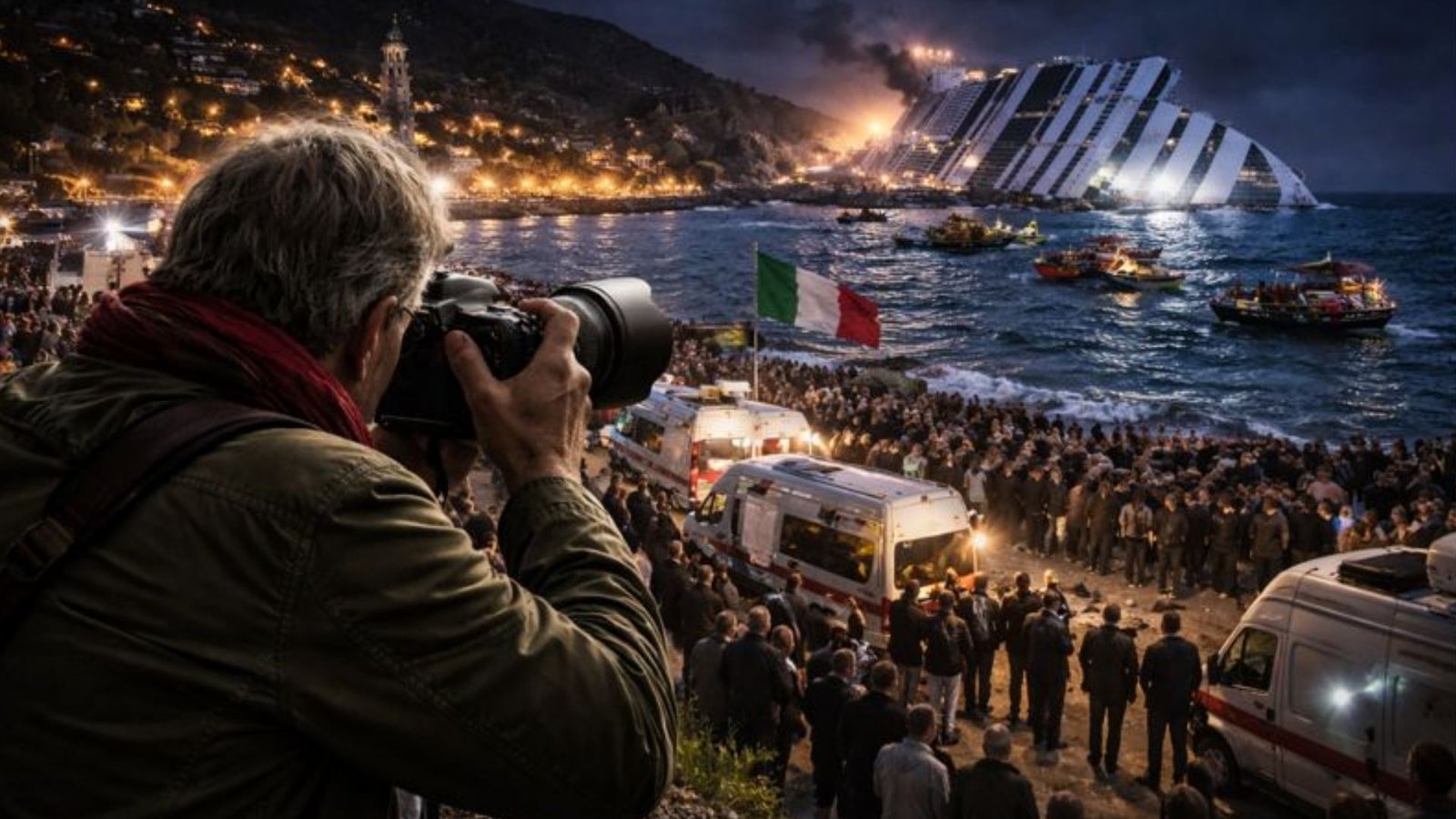
January 13 — a date of power, disaster, and cultural rupture
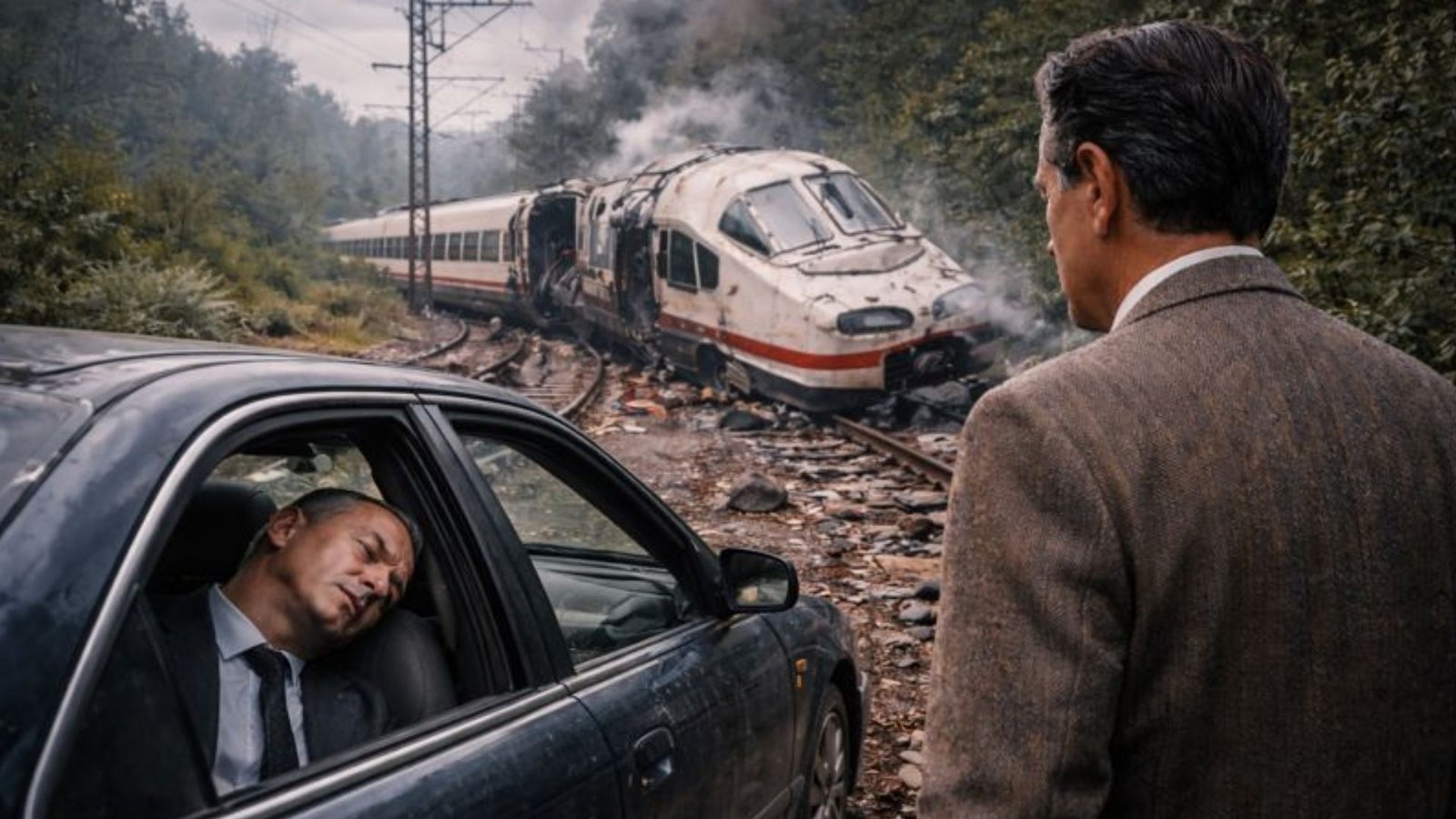
January 12 — three events, three historical fractures
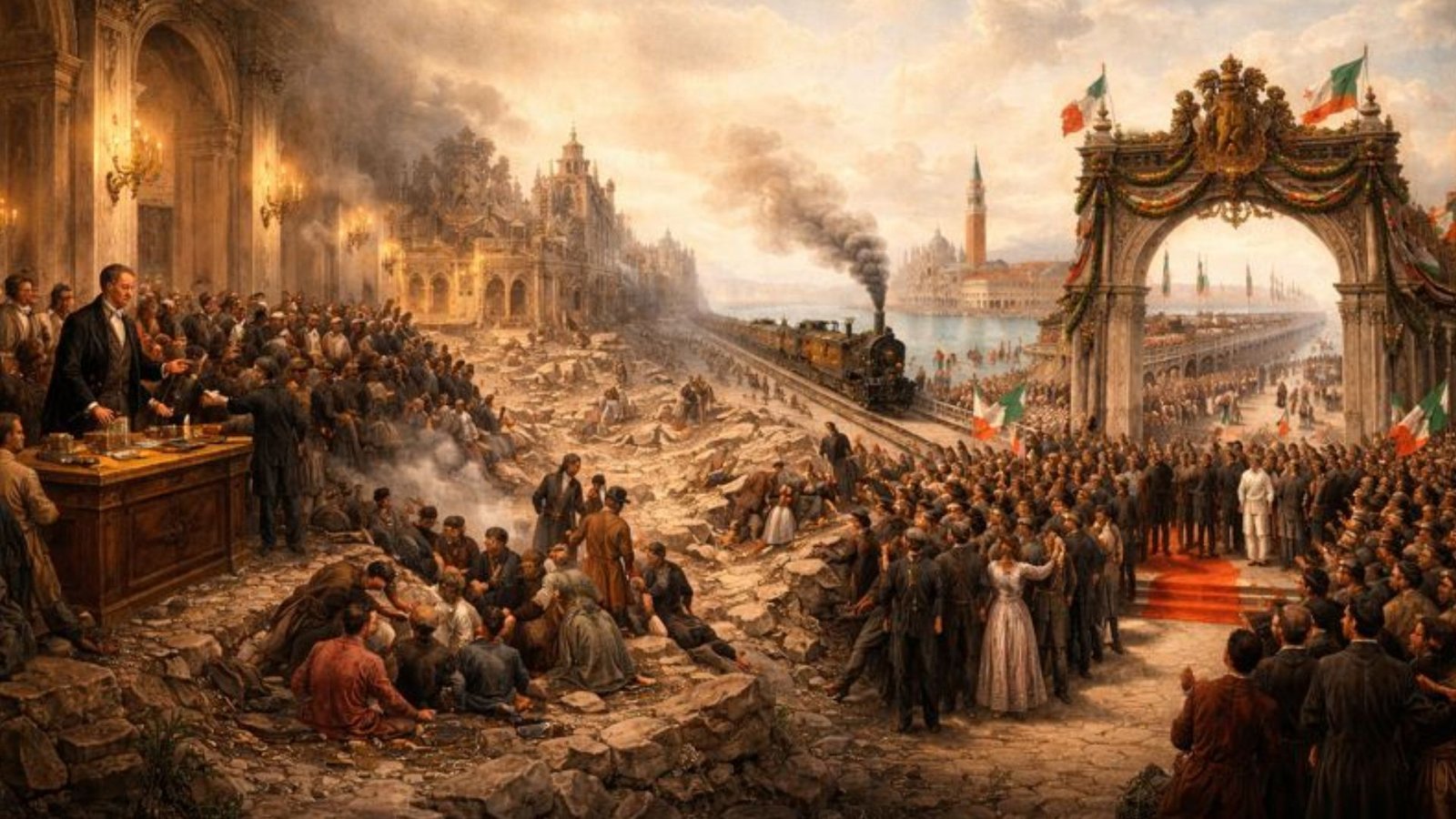
January 11 — dates that shaped Italy’s history
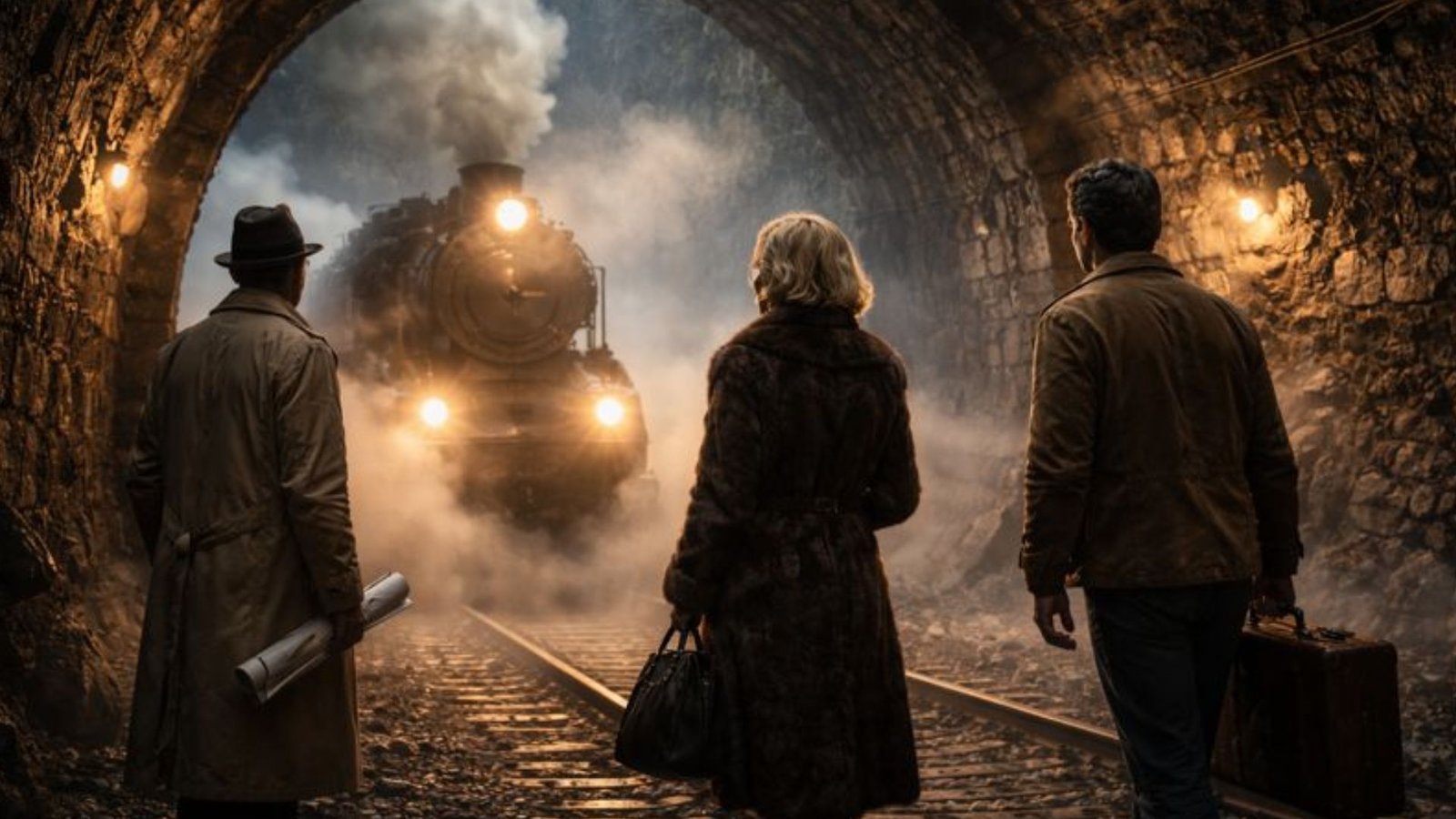
10 January — a date of remembrance in Italian history
January 8 — a date of remembrance for those who changed the future