Buying or selling property in Milan rarely comes down to signatures, numbers, and keys exchanged at the end of a transaction. Behind every deal, three stories tend to emerge — real, everyday events that belong more to daily life than to the real estate market itself. These stories involve agents who confuse professional service with entitlement, misunderstandings with neighbors that take on exaggerated meanings, and former owners who struggle to emotionally let go of a home long after it has been sold.
These three stories are not about strategies or investments, but about the human factor that accompanies every property transaction: misplaced expectations, blurred boundaries, disproportionate reactions, and the moment when reality has to be firmly put back in order. It is through such everyday events that real estate in Milan reveals its true nature — far from brochures and polished narratives, and much closer to real life.



Five Thousand Euros for the Road and for the Nerve
We were looking for an apartment calmly, without anxiety and without that nervous rush that often surrounds big decisions. We were already living in Genoa, used to the sea, to the hills, to a rhythm that doesn’t try too hard to impress. Moving was not an escape and not a gamble. It felt like a natural next step. Milan seemed logical: work opportunities, services, transport, an active real-estate market. On paper, everything made sense.

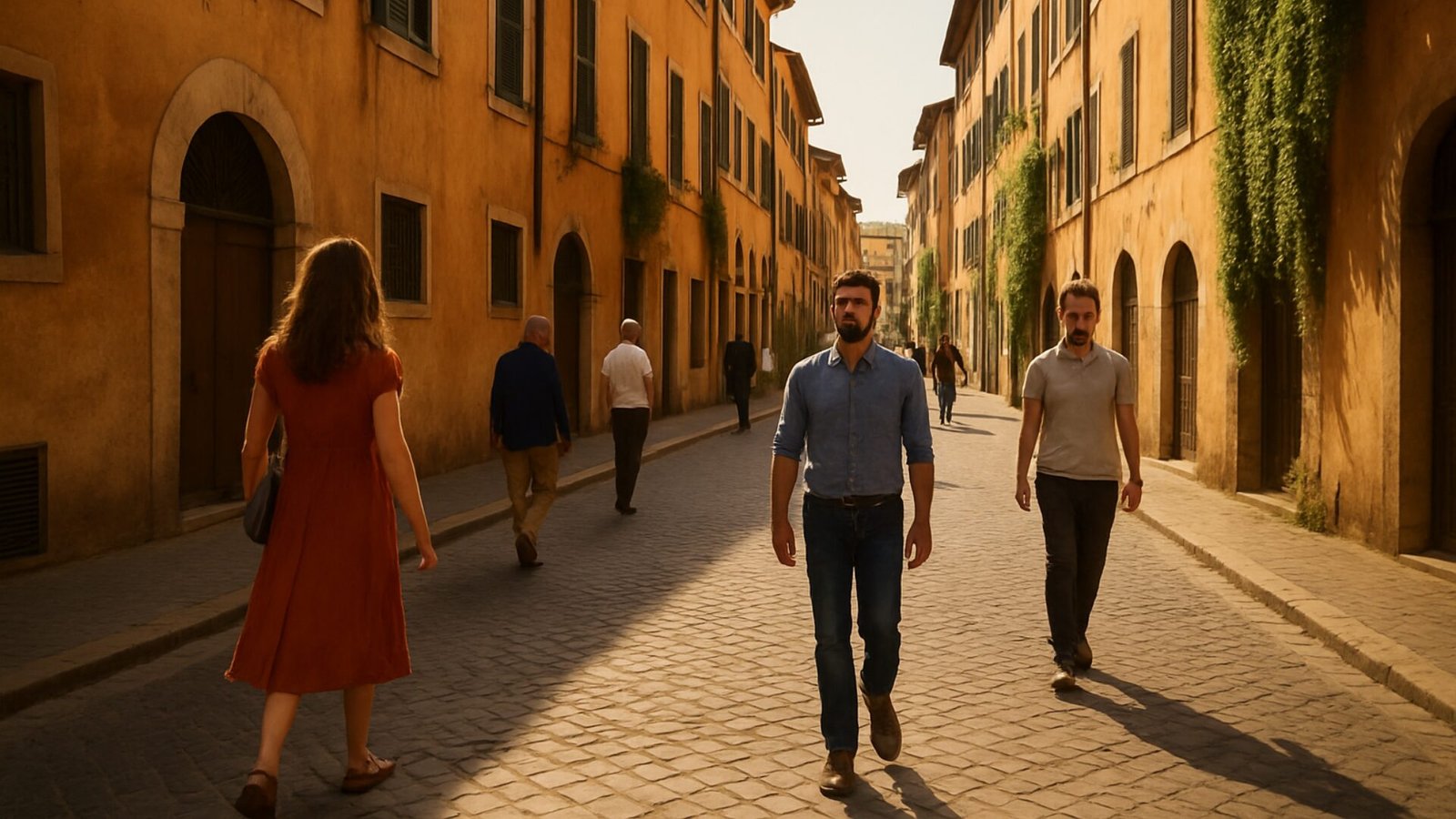
We traveled from Genoa to Milan specifically for the viewing. Not a short trip, but not a heroic one either. Early departure, train, the city welcoming you already awake, tense, efficient. We were focused and clear-headed. No exhaustion, just attention. This was business, not a romantic adventure.
In front of the building we were met by the agents: a guy and a girl. A classic duo. He spoke, she supported. He had that confident look of someone who believes he controls the situation. She held a folder, smiled politely, stayed half a step behind him. We exchanged greetings, a few standard phrases, and went upstairs.
The apartment was exactly what we expected. Not bad, not good. A typical Milanese place: functional, correct, anonymous. No surprises, no character. We walked through the rooms, looked at the layout, asked normal questions. The guy answered confidently, sometimes with a slight tone of superiority, as if he already knew the ending of the story.
When the visit was over, the key moment arrived. He stopped, straightened up slightly, and started listing the numbers. First, the price of the apartment. High, but consistent with Milan. Then, without changing tone, without hesitation:
— Our commission is five thousand euros.
Just like that. No percentage, no complex package of services, no long-term assistance. Five thousand euros. For what exactly, he didn’t say.
There was a brief pause in my head. That moment when your brain checks whether it heard correctly. Five thousand euros. For opening a door and repeating information that was already available online.
I looked at him. Then at her. They were waiting. They expected the usual reaction: mild irritation, maybe bargaining, maybe polite resignation. Milan often works like that — people pay because “that’s how it is.”
— Then you should start singing, — I said, looking at him.
It took him a second to process it.
— And you can start dancing, — I added, turning to her. — Five thousand euros isn’t a commission, it’s a performance.
The silence that filled the apartment wasn’t awkward, it was heavy. He blinked, clearly searching for words that weren’t there. She froze, gripping her folder tighter, as if it were the only solid thing left in the room.
— Are you serious? — he finally asked.
— Completely, — I replied calmly. — We came from another city. At that price, one expects more than a memorized speech.
He began to explain. The Milan market. The rules. The work behind the scenes. Time, responsibility, professionalism. She nodded along, reinforcing every sentence. It was a familiar monologue, heard many times before, always vague, always abstract.
The truth was simple: they were rarely asked to justify the number. Most people pay out of fatigue, out of fear of losing an opportunity, out of pressure. Milan thrives on urgency and automatic agreement.
— A service makes sense when it’s proportional, — I said, without irony. — Five thousand euros can’t be “just for being there.”
We said goodbye without raising our voices. No drama, no slammed doors. We walked out, and that door closed behind us for good — not only physically, but mentally.
Some time later we found another option. Not in Milan, and not in Genoa. An apartment between Como and Milan. Less noise, more air. Green spaces, water, silence. And, not a small detail, less money. Lower price, more honest costs, zero theater.
There, no one tried to sell importance. No one charged for atmosphere. Everything was simpler, clearer, more real.
In the end, we didn’t just buy an apartment. We bought a better way of living. The nature was more beautiful, the rhythm more human, and our money stayed where it belonged — with us, not as a tribute to someone else’s sense of entitlement.
Sometimes the trip from Genoa to Milan is only needed to understand that it’s better to stop before you get there.
The Flowers Left Behind and Selective Memory
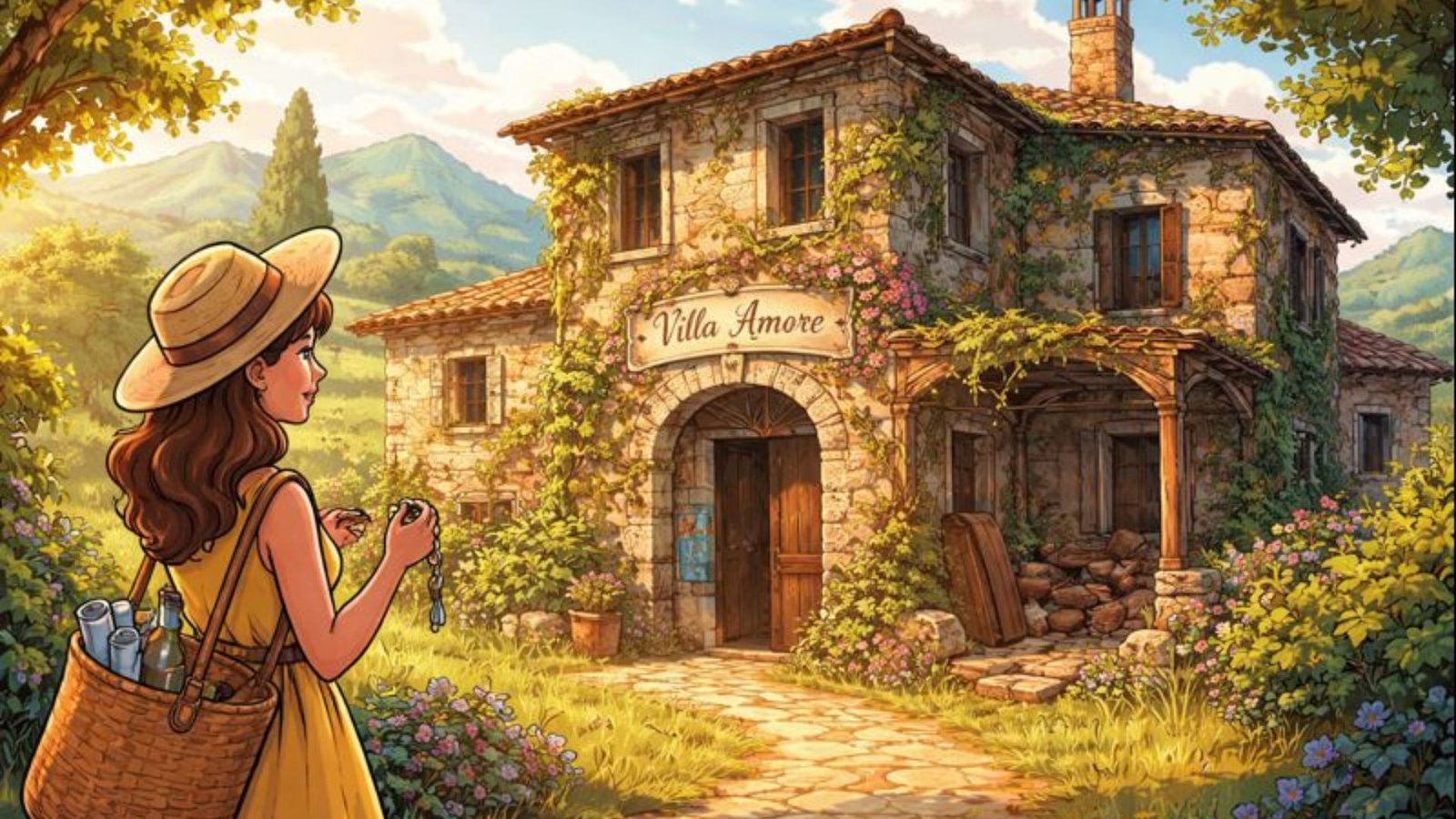
When I bought an apartment in Milan, the transaction itself was completely straightforward. Documents signed, keys handed over, everything clearly defined. No loose ends, no vague agreements. As she was leaving, the former owner pointed out a few things that would remain in the apartment: some potted plants, a few jars of homemade preserves, small everyday items with no particular value. She said it plainly and without hesitation: “You can do whatever you want with them.”
It wasn’t a phrase said out of politeness or distraction. It was clear, final, and adult. The apartment had been sold. Everything that wasn’t explicitly excluded from the deal no longer belonged to her life, but to mine.

At the time, I didn’t give it a second thought. I nodded, thanked her, and closed the chapter. When you buy an apartment in Milan, your mind is occupied with other things: paperwork, taxes, renovations, bureaucracy, adjusting to a new space. Flowers and jars were the last thing on my list.
More than four years passed. Not four weeks. Not a few months. Four full years. In that time, the apartment became truly mine—not just legally, but mentally. I changed the layout, the rhythm, my habits. Everything that belonged to someone else’s life either found a new place or simply disappeared.
The plants, for example. I’m not a fan of indoor plants. Not out of dislike, just by nature. I don’t enjoy caring for them, tracking watering schedules, light, seasons. So I did something completely normal: I gave them to my mother. She likes plants, she takes care of them, they’re doing well. A simple, practical, human decision.
And then, unexpectedly, the phone rang.
It was the former owner. After more than four years.
The conversation started politely, almost warmly. Then came the question, without much buildup:
— What happened to the flowers?
The question itself was already strange, but not yet absurd. People can be nostalgic. I answered calmly, without defensiveness, simply explaining that I don’t like houseplants and that I gave them to my mother. Just a fact.
Then came the sentence that changed everything:
— You could have called and asked me if I wanted to take them back.
At that moment, I didn’t feel angry. I felt genuine surprise. Deep, almost philosophical surprise.
What has to be going on in someone’s mind for them, four years after selling an apartment, to feel entitled to comment on the fate of objects they explicitly left behind and renounced?
Four years is time. Distance. Life moving forward. In four years, people change jobs, cities, relationships. And yet, for some, a flowerpot remains an unresolved emotional tie, almost a moral right.
The strangest part wasn’t the curiosity. It was the implication. The idea that I had some unspoken obligation: to call, to consult, to ask permission. As if the property had been sold, but a symbolic form of control had somehow remained.
In moments like that, you briefly wonder whether the problem is you or the world around you. Whether you’ve broken an unwritten rule that everyone else knows. Then you stop and realize: no. That rule doesn’t exist.
Still, I did something very simple. I called my lawyer. Not out of fear, not for conflict, but for clarity. I prefer knowing exactly where responsibility ends and where other people’s projections begin.
His response was calm, almost amused. He explained, very clearly, that:
the apartment was sold legally and correctly;
items left behind without specific agreements are considered transferred;
after four years, there is absolutely no basis for any claim;
I have no obligation to inform, consult, or justify anything.
He finished with one simple sentence:
— You have nothing to worry about.
That was enough. Not legally—the legal side was already obvious—but mentally. Sometimes it takes a calm, professional voice to remind you that you’re not the one out of place.
This story isn’t really about flowers. Or jars of preserves. It’s about some people’s inability to let go of what no longer belongs to them. About the need to maintain symbolic control over the past. About the belief that a decision made years ago can be emotionally renegotiated, one-sided.
But reality is much simpler. The apartment is mine. The flowers are with my mother. Time has passed. And unspoken expectations do not create obligations.
In Milan, I bought a home. Not a collection of unfinished attachments.
Meat with Prunes
We walked into the restaurant without great expectations.
Not because it wasn’t a good place — quite the opposite — but because Amalfi is one of those towns where everything already feels like a promise: the sea below, the stairs, the pale façades, the tourists looking around as if they know they’re somewhere special. And in places like that, food can sometimes end up being just scenery.
We were there almost by accident.
We had come from Trento to Salerno for work — meetings, schedules, obligations. One of those trips where time is neatly divided into blocks. Then, suddenly, a window opened. Not half an hour stolen here and there, but real time. And instead of staying in the city or returning to the hotel, we decided to move, explore the surroundings, breathe something different.

That’s how we ended up in Amalfi.
The restaurant was excellent. Not flashy, not loud, not designed to impress tourists. Solid, calm, confident. Tables well spaced, service unhurried, a menu that didn’t rely on unnecessary words. A place that knew exactly what it was.
We ordered.
And then we waited.
We waited.
And waited some more.
At a certain point, the waiting started to feel long. Not annoying, not frustrating — just longer than expected. In Italy, you’re used to dishes arriving fairly quickly, especially when the order isn’t complicated. We looked around, sipped our water, commented on the place.
Eventually we called the waitress over, calmly, without complaint. Just to understand.
She looked at us as if the answer were obvious and said:
— Your meat with prunes is still cooking.
And that’s when something unexpected happened.
A friend of mine burst out laughing. Not a polite laugh — a real one, sudden and contagious. And she said:
— Ah, now I see! At home, I usually start preparing prunes a day in advance. Are we going to wait that long too?
For a second, the table froze.
The waitress blinked.
So did we.
And at that moment, without any irritation, almost talking to myself, I said:
— I’m starting to think they went to slaughter the lamb just now.
It wasn’t a complaint.
It was an ironic observation.
Because we already knew what we had ordered.
Not generic meat.
Not an abstract “meat with prunes.”
We had ordered lamb with prunes.
We chose it deliberately, reading the menu. And we knew it wasn’t a fast dish. Lamb can’t be rushed. It needs time, patience, slow cooking that allows the prunes to become part of the dish — not a sweet distraction, but depth.
While we waited, everyone around us was eating fish.
Fish everywhere.
Sea bream, calamari, seafood, pasta scented with the sea.
For a brief moment, we wondered if we’d made the wrong choice. Maybe, in a place like this, it would have been more logical to order what everyone else did. But the thought passed quickly. The waiting had already become part of the experience.
When the dish finally arrived, conversation stopped on its own.
It was lamb.
Tender, structured, fragrant. Not dry, not falling apart. The prunes didn’t overpower the flavor — they supported it. The sauce was thick, warm, deep. A dish made with intention, not haste.
We tasted it, and immediately it was clear:
it was worth the wait.
We ate slowly. Not out of politeness, but by choice. Because we wanted to remember the taste, the texture, the exact moment. This was one of those dishes that makes you understand that waiting isn’t just justified — it’s necessary. That dish could not have arrived sooner, and now it was obvious why.
And that’s when we understood everything.
In a town where everyone orders fish, we chose meat.
In a tourist destination, we chose something that wasn’t the obvious choice.
On a work trip, we found a moment of genuine pleasure.
We didn’t regret anything.
Not the time.
Not the jokes.
Not the idea that maybe someone really did go “to get the lamb.”
Amalfi stayed with us not just for the views or the sea.
It stayed for a flavor that refused to rush.
And for lamb with prunes that was worth every minute of waiting.
MILANO - AFFITTO E VENDITA
Here you’ll find real listings, discussions, and personal experiences related to renting and selling property in Milan. This community brings together offers from private owners and agencies, practical advice on renting or buying, and questions about contracts, neighborhoods, prices, and everyday living in the city. Members share real experiences, highlight potential issues, discuss the market, and support those searching for apartments, rooms, houses, or commercial properties in Milan. A space focused on practical information and genuine exchange, without unnecessary advertising—where real experience matters more than promotion.