January 2 holds a distinctive place in Italian historical memory as a date on which politics, violence, and art intersect in a dramatic way. It is closely associated with the bloody events of sixteenth-century Genoa: the Fieschi conspiracy, the death of Giannettino Doria, and the failure of an attempt to overturn the balance of power within the Republic. At the same time, January 2 also marks a fundamental loss for the history of Italian art, with the burial of Jacopo Pontormo, a central figure of Florentine Mannerism. This date brings together different yet equally decisive destinies, each of which left a deep mark on Italy’s politics, culture, and collective memory.
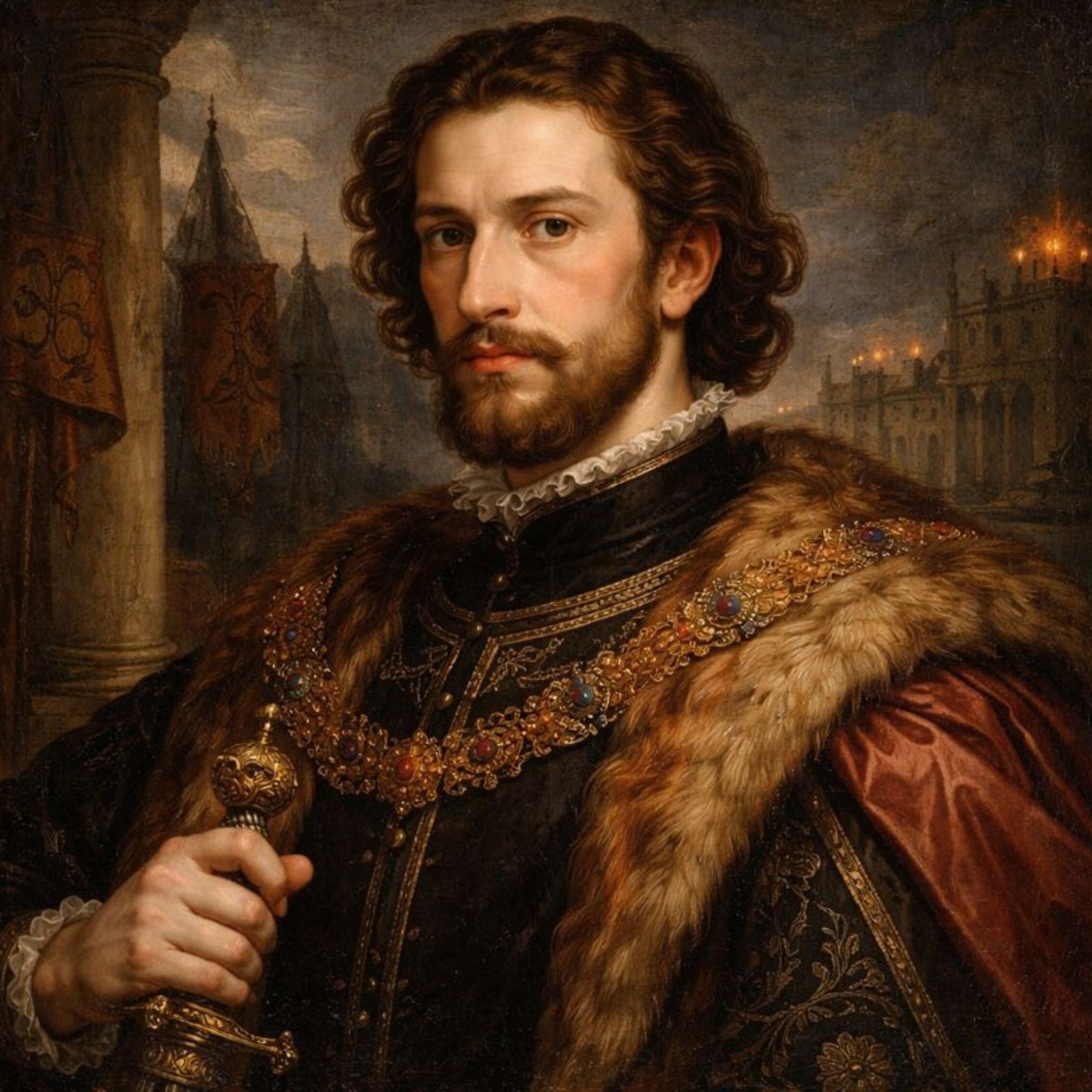
1547 - Gian Luigi Fieschi (1522–1547) — ambition, power, and tragedy in Renaissance Genoa
Gian Luigi Fieschi the Younger (also known as Fiesco; Italian Gian/Giovanni Luigi Fieschi), born in Genoa in 1522 and killed on January 2, 1547, was one of the most dramatic and controversial figures in the political history of sixteenth-century Genoa. A nobleman of ancient lineage and Count of Lavagna, Fieschi is remembered above all as the organizer of the famous conspiracy against Andrea Doria. His failed revolt became a turning point in Genoese politics and later inspired one of the most celebrated political dramas of European literature.
Fieschi’s life was brief, but his actions left a deep mark on the history of the Republic of Genoa. Charismatic, ambitious, and daring, he embodied both the hopes of political renewal and the dangers of unchecked ambition in an age when power was inseparable from violence.

Noble origins and social standing
The Fieschi family was among the oldest and most powerful noble houses in Liguria. For generations, it had competed with the Doria family for influence over Genoa and its surrounding territories. Gian Luigi inherited not only wealth and titles, but also a tradition of rivalry and political aspiration. As Count of Lavagna, he controlled strategic lands and commanded significant loyalty among local elites.
Young, cultivated, and socially gifted, Fieschi quickly became a central figure within Genoese aristocratic circles. His popularity extended beyond the nobility to segments of the urban population who resented the concentration of power in the hands of a few families. In a city that prided itself on republican institutions, such resentment carried explosive potential.
Genoa under Andrea Doria
By the mid-sixteenth century, Genoa was formally a republic but in practice dominated by Andrea Doria, admiral, statesman, and reformer. After restructuring the government in the 1530s, Doria established a stable but highly oligarchic system. Power was concentrated within a narrow ruling class, and opposition was tightly controlled.
Particularly controversial was the rise of Giannettino Doria, Andrea’s nephew, widely seen as his intended successor. Many Genoese perceived this as the transformation of a republic into a hereditary regime. This climate of discontent created fertile ground for conspiracy.
Motives behind the conspiracy
Gian Luigi Fieschi positioned himself as a challenger to the Doria order. His motives were complex and cannot be reduced to a single cause. On one level, he spoke the language of republican freedom, promising to restore balance and limit the dominance of one family. On another, his personal ambition was undeniable: success would have placed him at the center of Genoese power.
Fieschi succeeded in attracting a coalition of disaffected nobles, military supporters, and foreign interests eager to weaken Doria’s influence. The plan was bold and carefully prepared, relying on speed, surprise, and decisive action.
The Fieschi Conspiracy of 1547
The conspiracy reached its climax on the night between January 1 and January 2, 1547. Fieschi’s followers moved to seize key positions in Genoa, including the port and strategic strongholds. In a dramatic turn, Giannettino Doria was killed, removing the most visible symbol of dynastic succession.
For several hours, it appeared that the uprising might succeed. Yet fate intervened in a sudden and tragic way. Gian Luigi Fieschi himself died during the operation. According to contemporary accounts, he fell from a gangway into the harbor and drowned, weighed down by heavy armor. Whether accidental or the result of confusion, his death proved decisive.
Leaderless and disoriented, the conspirators lost momentum. By dawn, Andrea Doria had regained control, and the revolt collapsed.
Aftermath and political consequences
The failure of the conspiracy triggered harsh reprisals. Supporters of Fieschi were executed, imprisoned, or forced into exile. Properties were confiscated, and the Fieschi family was stripped of much of its power. Far from weakening the regime, the uprising ultimately strengthened Andrea Doria’s authority and reinforced Genoa’s oligarchic structure.
Fieschi’s death transformed him from an active political player into a tragic symbol. His near-success highlighted how fragile Genoa’s political equilibrium had been—and how easily chance could determine the fate of entire states.
Fieschi in literature and cultural memory
The dramatic nature of Fieschi’s story ensured its survival beyond historical chronicles. In the late eighteenth century, The Conspiracy of Fiesco at Genoa by Friedrich Schiller made him the protagonist of a powerful political tragedy. Schiller portrayed Fieschi as a complex and conflicted character, torn between ideals of freedom and a thirst for power.
Through this work, Fieschi entered European cultural memory not merely as a conspirator, but as a timeless figure representing the moral ambiguity of political action. The play ensured that his name would be remembered far beyond Genoa.
Historical interpretations
Modern historians view Gian Luigi Fieschi as a product of Renaissance politics, an era in which noble rivalry, personal ambition, and ideological claims were inseparable. He was neither a pure republican hero nor a simple opportunist. His conspiracy reflected the contradictions of a republic struggling to reconcile tradition with power realities.
The events of January 1547 demonstrate how a single moment—an accident, a misstep—can redirect history. Fieschi’s fall revealed the limits of conspiracy as a tool of reform and the enduring strength of entrenched power.
Conclusion
Gian Luigi Fieschi died on January 2, 1547, but his story did not end with his death. His failed revolt became one of the defining episodes of Genoese history, symbolizing both the possibility of change and the cost of ambition. Remembered by historians and immortalized by literature, Fieschi remains a figure of tragedy and fascination—a man who nearly reshaped the destiny of his city, only to be undone by fate at the decisive moment.
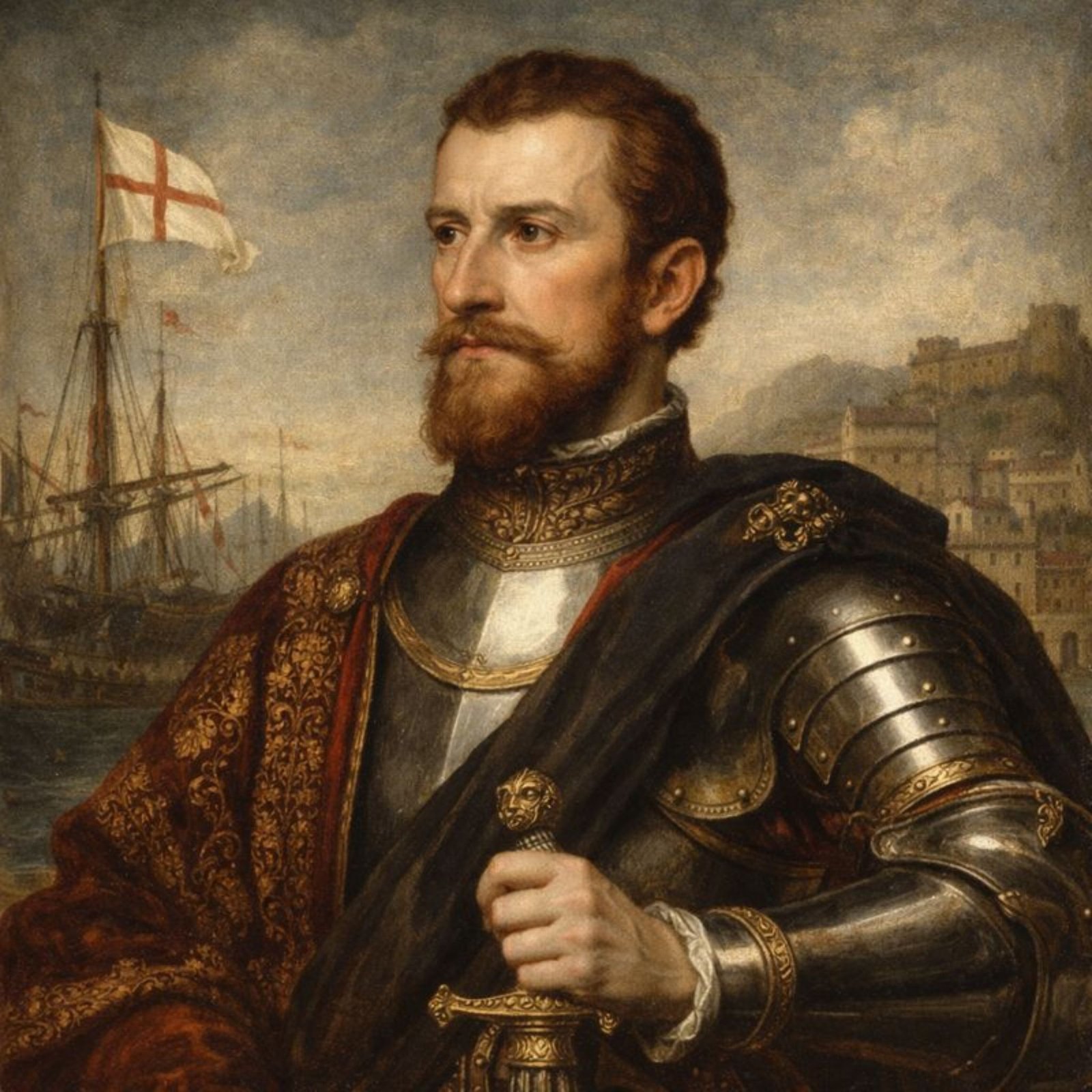
1547- Giannettino Doria (1510, Genoa — 2 January 1547, Genoa)
Giannettino Doria was one of the most controversial and decisive figures in the political life of the Republic of Genoa during the first half of the sixteenth century. An Italian nobleman, admiral of the Genoese fleet, and lieutenant of his uncle, he embodied the project of dynastic continuity conceived by Andrea Doria, the dominant political architect of Genoa in the age of Emperor Charles V. Giannettino’s rapid rise to power and his violent death in 1547 made him a central symbol of the tensions that shook the Genoese republic at a crucial moment in its history.
The Doria family had long been one of the most influential aristocratic houses of Genoa, with deep roots in maritime trade, naval warfare, and finance. By the early sixteenth century, however, it was Andrea Doria who elevated the family’s power to an unprecedented level. After breaking with France and aligning Genoa with the Habsburg Empire, Andrea reshaped the political system of the republic. Although Genoa formally remained a republic, real authority was concentrated in the hands of a narrow oligarchy loyal to him. Within this structure, Giannettino was raised and trained as the natural successor, destined to safeguard the continuity of the Dorias’ dominance.

From a young age, Giannettino received a rigorous education suited to a future military commander and political leader. He was trained in naval warfare, strategy, and administration, and he took part in military and maritime operations that strengthened Genoa’s position in the Mediterranean. His appointment as admiral, followed by his elevation to lieutenant of Andrea Doria, placed him effectively at the summit of power, second only to his uncle. Many contemporaries regarded him not merely as an official of the republic, but as the future ruler of Genoa in all but name.
This perception soon became a source of deep resentment. Unlike Andrea Doria, who carefully balanced alliances among Genoa’s noble families, Giannettino was known for his arrogance and authoritarian manner. He openly asserted his superiority over rival houses, interfered in the work of republican institutions, and showed little respect for the traditional mechanisms that had long regulated Genoese political life. For many members of the old aristocracy, he represented the transformation of the republic into a hereditary lordship controlled by a single family.
By the 1540s, opposition to the Dorias had grown steadily. The concentration of military command, political offices, and economic privileges in Giannettino’s hands intensified fears that Genoa’s republican freedoms were coming to an end. These tensions crystallized in the conspiracy led by Giovanni Luigi Fieschi, a member of one of Genoa’s most prestigious rival families. The plot aimed to eliminate the key figures of the Dorias’ regime and restore a more balanced political order.
The conspiracy of the Fieschi erupted during the night of 1–2 January 1547. In the chaos that unfolded near the harbor of Genoa, Giannettino Doria became one of the first targets. He was killed during the fighting, his death marking a dramatic turning point in the events. According to contemporary accounts, his body was left on the quay, a powerful symbol of the sudden collapse of the Dorias’ dynastic project.
The impact of Giannettino’s death was profound. On a personal level, it was a devastating blow to Andrea Doria, who lost not only a nephew but also the cornerstone of his plans for succession. Politically, it forced Andrea to reconsider the structure of power in Genoa. Although the conspiracy ultimately failed and Fieschi himself perished, the idea of a direct hereditary transition within the Doria family was effectively abandoned. Andrea Doria reinforced the oligarchic nature of the republic rather than attempting to impose a personal dynasty.
Historians continue to debate Giannettino Doria’s legacy. On one hand, he was a capable naval commander and a determined administrator who contributed to the strengthening of Genoa’s maritime power and to the stability of its alliance with the Habsburg Empire. On the other hand, his inflexible and domineering approach to politics alienated large segments of the Genoese elite and accelerated the internal crisis of the republic. His inability to reconcile authority with consensus proved fatal in a political environment that depended on delicate balances.
In the broader context of Genoese history, Giannettino Doria is remembered less for his military achievements than for the role he played in one of the republic’s most dramatic political crises. His life and death illustrate the dangers inherent in the excessive concentration of power within a single family and highlight the fragility of republican institutions under oligarchic pressure. The fall of Giannettino marked the end of a specific political vision and underscored the limits of dynastic ambition in sixteenth-century Genoa.
Through his brief but intense career, Giannettino Doria became a tragic figure of transition, standing at the intersection of republican tradition and emerging princely power. His fate remains inseparable from the story of Genoa’s struggle to preserve its political identity in an era dominated by great empires and powerful individual leaders.
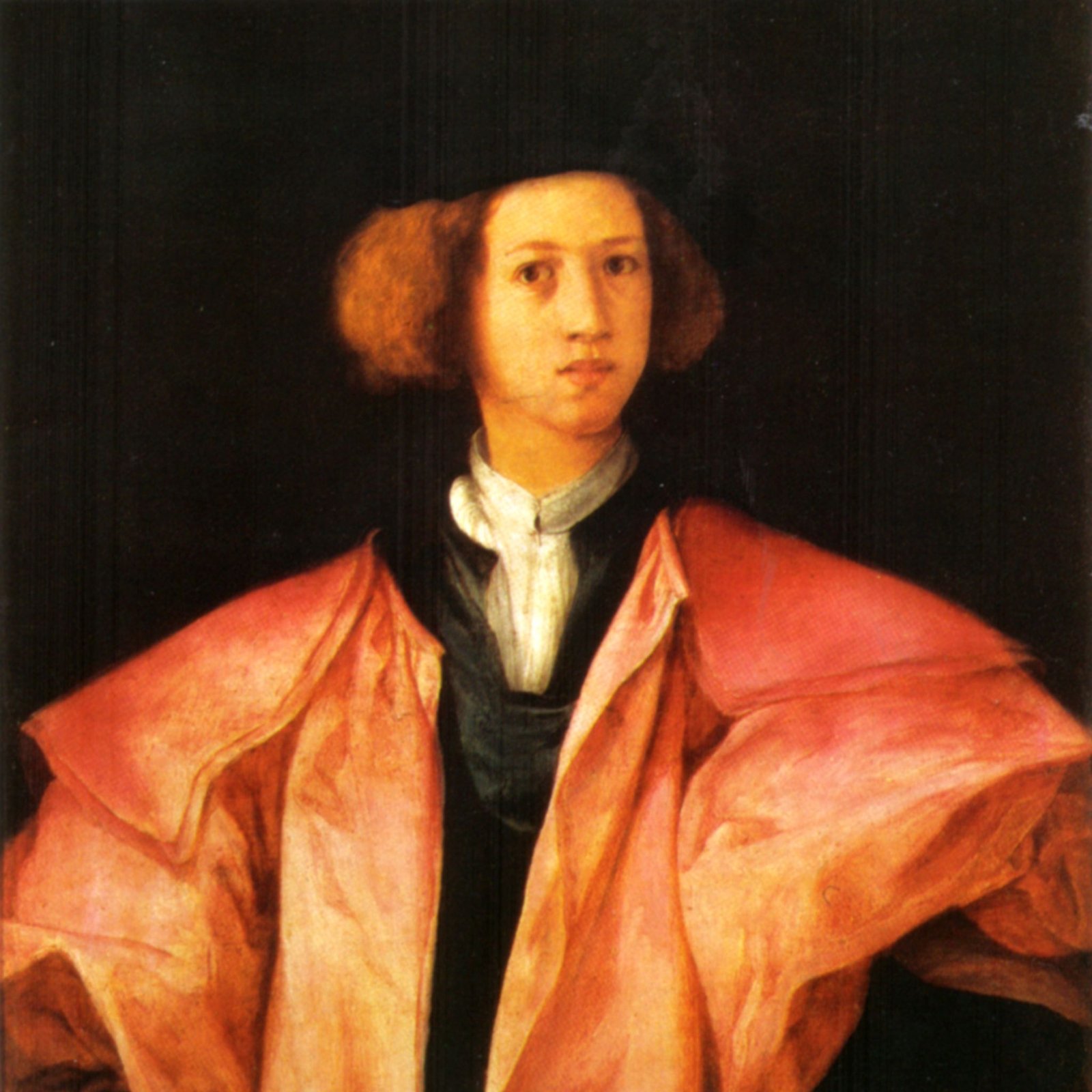
1557 - Jacopo Pontormo (1494–1557) — the restless founder of Florentine Mannerism
Jacopo Carucci, known to history as Jacopo Pontormo, was born on May 24, 1494 in Pontorme, today a suburb of Empoli, and died in Florence on January 2, 1557, where he was buried the same day. He is recognized as one of the founders of Florentine Mannerism and as one of the most original and psychologically complex artists of the sixteenth century. Pontormo’s work marks a decisive break with the balance, harmony, and ideal proportions of the High Renaissance, introducing a visual language defined by tension, emotional instability, and expressive distortion.
Pontormo was not simply an innovator of style. He was an artist who transformed painting into a space of inner conflict, where form, color, and movement reflect a world that had lost its classical certainties.

Early life and artistic training
Pontormo’s early life was marked by loss. Orphaned at a young age, he grew up withdrawn and introspective, traits that would accompany him throughout his life. He moved to Florence, the artistic capital of the time, where he trained in the workshops of several major masters. Among them were Leonardo da Vinci, Piero di Cosimo, and above all Andrea del Sarto, whose refined sense of color and draftsmanship strongly influenced Pontormo’s early work.
Despite this prestigious training, Pontormo quickly developed an independent artistic personality. Even in his first commissions, his compositions reveal unease and experimentation. He was never fully comfortable within the rules of classical harmony and soon began to challenge the very foundations of Renaissance aesthetics.
Breaking with Renaissance ideals
Pontormo’s importance lies in his conscious rejection of the ideals that had dominated Italian art for decades. Where Renaissance painters sought clarity, proportion, and stable space, Pontormo introduced ambiguity, imbalance, and emotional intensity. His figures often appear elongated, twisted, or suspended in unnatural poses. Space becomes uncertain, stripped of architectural logic or clear perspective.
Color plays a central expressive role in his paintings. Pontormo favored cold, artificial tones—pinks, pale blues, acidic greens—that detach the scene from natural reality. These choices were not decorative but psychological. They express anxiety, vulnerability, and spiritual dislocation, reflecting the broader crises of the early sixteenth century: political instability, religious upheaval, and the collapse of humanist confidence.
The “Deposition” of Santa Felicita
Pontormo’s most celebrated masterpiece is the Deposition (also known as the Transport of Christ) in the Capponi Chapel of the church of Santa Felicita in Florence. Painted between 1525 and 1528, this work is widely considered a manifesto of Mannerism.
In the painting, traditional elements are deliberately absent. There is no cross, no defined landscape, no solid ground. Figures appear to float, bound together by delicate gestures and intense gazes. The composition seems weightless, almost dreamlike, creating a sense of emotional suspension rather than physical action.
The color palette heightens this effect. Soft yet unsettling hues replace naturalistic tones, transforming the religious scene into a vision of collective grief and spiritual uncertainty. This work represents a radical rethinking of religious imagery and stands among the most influential paintings of sixteenth-century Europe.
Pontormo as a draftsman
Alongside painting, Pontormo was an exceptional draftsman. His drawings are characterized by nervous, expressive lines and a strong sense of movement. For him, drawing was not merely preparatory but an autonomous form of exploration.
His studies of the human body reveal figures under tension, often isolated and contorted. These drawings expose Pontormo’s deep interest in psychological states rather than idealized anatomy. The immediacy and intensity of his line anticipate later artistic sensibilities, making his graphic work particularly compelling to modern viewers.
Isolation and the final years
As he grew older, Pontormo became increasingly isolated. He avoided social contact, distrusted others, and lived a highly regulated and solitary life. This withdrawal is documented in his personal diary, a rare and extraordinary text in which he meticulously recorded daily meals, illnesses, moods, fears, and dreams.
This diary offers an intimate portrait of an artist’s inner world during the Renaissance, revealing a man deeply anxious, self-analytical, and profoundly sensitive. It also sheds light on how closely his psychological condition was tied to his artistic vision.
During his final years, Pontormo worked on the frescoes for the choir of San Lorenzo in Florence. This ambitious project remained unfinished at his death, and much of it was later destroyed. Even in fragmentary form, however, these works demonstrate an increasingly radical approach to form and space.
Death on January 2, 1557
Pontormo died in Florence on January 2, 1557. His passing did not provoke major public ceremonies, yet it marked the symbolic end of the most experimental and emotionally charged phase of Florentine Mannerism. With Pontormo’s death, a period defined by artistic anxiety and bold innovation came to a close, gradually giving way to more controlled and academic expressions of the style.
Critical reception and legacy
For centuries, Pontormo’s art was regarded as eccentric or even disturbing. His rejection of classical norms puzzled critics who favored harmony and order. It was only in the nineteenth and twentieth centuries that his work was fully reassessed and recognized as a fundamental turning point in European art.
Today, Pontormo is seen as a precursor to modern artistic concerns. His emphasis on subjective experience, emotional tension, and expressive distortion resonates strongly with later movements that questioned realism and ideal beauty. His influence extends beyond Mannerism, shaping the broader evolution of expressive painting.
Conclusion
Jacopo Pontormo was the painter of instability and transformation. His death on January 2, 1557 closed a crucial chapter in Italian art, but his legacy continues to speak to later generations. By abandoning classical certainty in favor of emotional truth, Pontormo expanded the boundaries of artistic expression. His work remains a powerful testament to the capacity of art to reflect inner crisis and to transform historical uncertainty into enduring visual language.
January 13 — a date of power, disaster, and cultural rupture
January 12 — three events, three historical fractures
January 11 — dates that shaped Italy’s history
10 January — a date of remembrance in Italian history
January 9 – A Date of Memory, Culture, and Historical Turning Points