10 January is not merely a point on the Italian calendar, but a date marking the end of life journeys that left a tangible imprint on the country’s history. Across different years, Italy has bid farewell on this day to individuals who shaped its identity in lasting ways: engineers who transformed European infrastructure, fashion designers who helped define national style, and actors whose careers bridged Italian culture with the international stage.
What unites these stories is not a single historical event, but the idea of continuity across time. 10 January connects the nineteenth, twentieth, and twenty-first centuries through biographies that speak of work, discipline, cultural migration, and professional responsibility. It is a date that emphasizes legacy rather than spectacle, substance rather than momentary recognition.
Remembering 10 January means reading Italian history through individual lives, understanding how the evolution of the country is reflected in personal paths that, while different in nature, converge in their lasting contribution to Italy’s cultural and social memory.

1892 — the death of Sebastiano Grandis. The engineer who opened the Alps to the railway
Sebastiano Grandis
(San Dalmazzo di Tenda, 6 April 1817 – Turin, 10 January 1892)
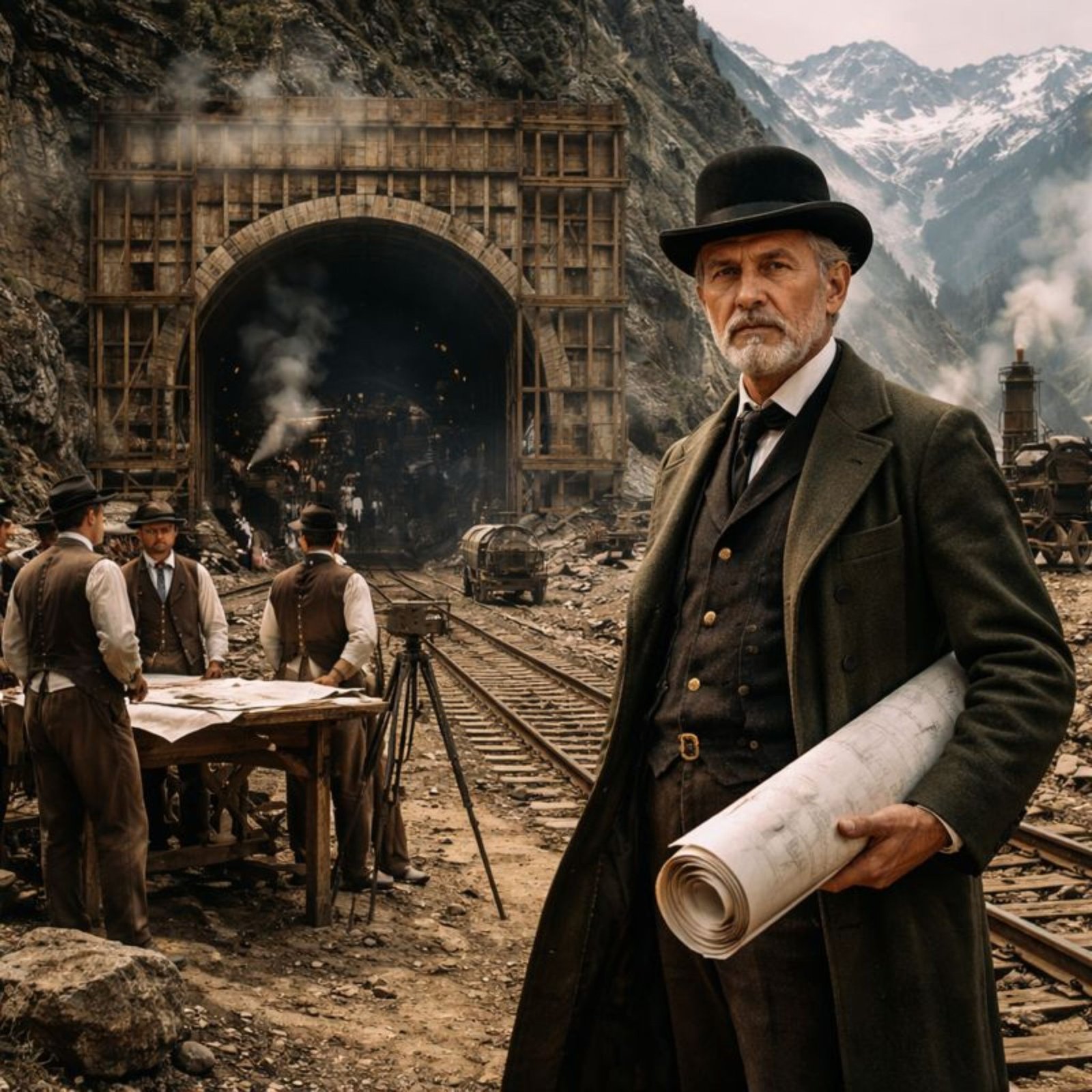
Sebastiano Grandis was an Italian engineer whose name is inseparably linked to one of the greatest technical achievements of the nineteenth century: the design and supervision of the Fréjus railway tunnel, the first truly large-scale Alpine tunnel, which permanently connected Italy and France beneath the mountains.
On 10 January 1892, with his death in Turin, ended the life of a man who helped reshape the geography of European transport. By the late nineteenth century, railways had already become the backbone of economic and industrial development, yet the Alps still stood as a formidable natural barrier. Crossing them safely, quickly and year-round was a strategic challenge. The Fréjus tunnel represented a decisive answer to that challenge and marked a turning point in continental mobility.

Grandis was trained as an engineer in Piedmont, a region at the forefront of technical and military engineering in Italy. From the early stages of his career, he showed a clear aptitude for complex infrastructure projects, where mathematical precision had to coexist with organisational discipline and long-term vision. The idea of driving a railway tunnel beneath the Moncenisio massif had circulated for decades, but it remained largely theoretical due to its scale and risks. It was under Grandis’s leadership that the concept became a concrete, executable project.
The difficulties were unprecedented. A tunnel longer than twelve kilometres had to be excavated through hard Alpine rock, under conditions of high temperature, humidity and limited ventilation. Geological uncertainty, water infiltration and the sheer logistical complexity of working deep inside a mountain made the undertaking extremely hazardous. Financially and politically, failure was not an option. In this context, Grandis emerged as the figure capable of coordinating calculations, technology, workforce and timing into a coherent whole.
One of the most significant aspects of the Fréjus project was its technological innovation. Under Grandis’s direction, pneumatic drilling machines were introduced on a large scale, dramatically increasing excavation speed compared to manual methods. This mechanisation marked a revolution in tunnel construction and set a new standard for underground engineering. The Fréjus tunnel thus became not only an infrastructure project but also a testing ground for technologies that would later be adopted worldwide.
Equally critical was the decision to excavate the tunnel simultaneously from the Italian and French sides. This required extraordinary geodetic precision. Even a minor error in alignment could have resulted in a catastrophic mismatch after years of work. The successful meeting of the two tunnel sections, with only negligible deviation, was widely recognised as a triumph of nineteenth-century engineering and a testament to the rigour of Grandis’s methods.
Working conditions for the labourers were extremely harsh. Men spent long hours underground in environments filled with dust, heat and constant danger of collapse. In an era when occupational safety was still in its infancy, the human cost of such projects was high. Nevertheless, Grandis paid closer attention than many of his contemporaries to site organisation and risk reduction, seeking to impose order and discipline in a context that was inherently dangerous.
The opening of the Fréjus tunnel had consequences far beyond engineering circles. It dramatically reduced travel times between Italy and France, strengthened commercial routes and facilitated political and cultural exchange. For Italy, recently unified and striving to assert itself among Europe’s modern nations, the tunnel became a symbol of technical maturity and industrial ambition.
After the completion of the works, Grandis remained a respected authority in the engineering world. His experience was studied and cited in connection with other major tunnel projects, and his name became associated with a new type of engineer: not merely an executor of plans, but a strategist capable of managing projects whose impact extended across borders and generations.
The death of Sebastiano Grandis on 10 January 1892 did not mark the end of his influence. The Fréjus tunnel continues to function more than a century later, fulfilling the purpose for which it was conceived: to connect territories, economies and people across what was once considered an insurmountable natural barrier. That continuity is the most tangible measure of his legacy.
Remembering Grandis means recognising an idea of engineering as historical responsibility. In a time when mountains seemed to define the limits of human movement, he demonstrated that knowledge, discipline and technical courage could turn the impossible into permanent infrastructure.
1989 — the death of Jole Veneziani. Elegance, industry, and the identity of Italian fashion
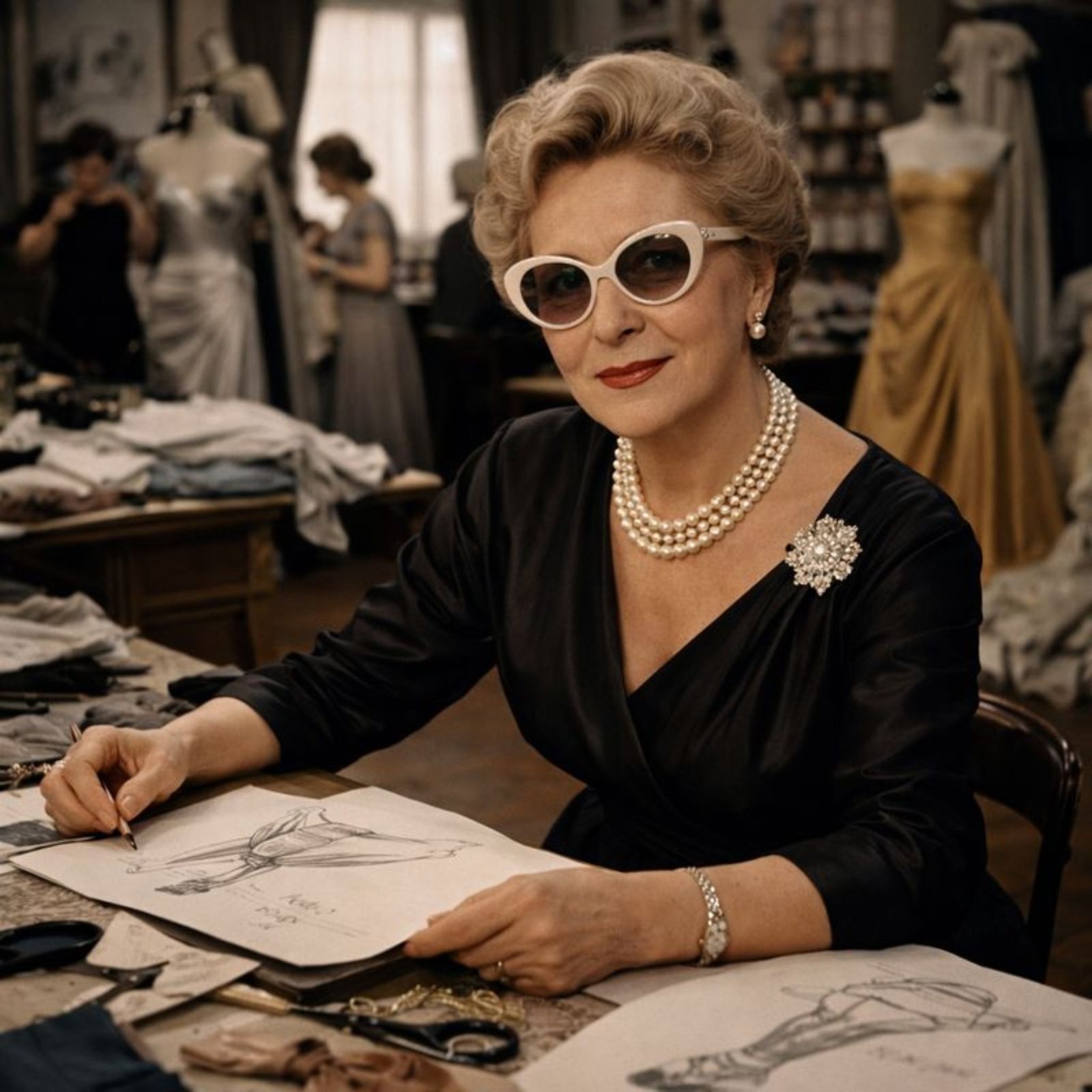
Jolanda Anna Maria Veneziani, known as Jole Veneziani
(Leporano, 11 July 1901 – Milan, 10 January 1989)
Jole Veneziani was an Italian fashion designer and one of the most representative figures in the construction of national fashion during the twentieth century. Her work combined taste, design discipline, and industrial vision at a decisive moment for the identity of Made in Italy.
On 10 January 1989, with her death in Milan, a long and coherent season of Italian fashion came to an end. This was not merely the conclusion of an individual career, but the symbolic closing of a historical cycle that began in the early decades of the century and matured after the Second World War, when Italy transformed artisanal knowledge into a modern, competitive, and internationally recognisable system. Jole Veneziani was a quiet yet rigorous protagonist of this transformation.

Born in southern Italy, in Apulia, Jole Veneziani developed her professional identity far from the traditional centres of haute couture. Her move to Milan was a strategic and cultural decision. The city was becoming the heart of textile production, design, and a new conception of fashion as a structured project rather than pure decoration. In this environment, Veneziani shaped a stylistic language based on precision, material quality, and respect for the practical role of clothing in women’s everyday lives.
Her rise occurred at a time when Italian fashion was seeking independence from the French haute couture model. Veneziani neither imitated Paris nor pursued spectacle. Her distinctive signature was a structured elegance, built on clean lines, balanced proportions, and a deep understanding of textiles. Her work with knitwear and industrial materials marked a crucial turning point: fabrics once considered secondary or purely functional became, under her direction, vehicles of refined and authoritative style.
In the post-war years, as Italy rebuilt its economy and redefined its international image, fashion assumed a strategic role. Jole Veneziani contributed to an aesthetic that expressed sobriety, solidity, and modernity. Her collections were not conceived for a restricted elite, but for an expanding urban middle class and for women who were active, independent, and present in public life. Clothing, in her vision, was no longer a symbol of social distance, but a tool of identity.
A recurring element of Veneziani’s public image, documented in numerous archival photographs, was her use of bold, oversized eyeglass frames, often light-coloured or white. This was not a casual detail, but a recognisable component of her personal style: functional, assertive, and modern. In a professional environment still largely dominated by men, this image conveyed authority and control without sacrificing elegance.
Jole Veneziani’s work occupied a space between the atelier and the factory. She understood the demands of larger-scale production while maintaining rigorous design standards. This approach contributed directly to the development of Italian prêt-à-porter, conceived not as a lesser form of fashion, but as an advanced expression of design culture applied to everyday clothing. Her influence was structural rather than media-driven.
Milan, the city of her professional maturity and final years, became the natural stage for her activity. There she participated in building an ecosystem of designers, manufacturers, technicians, and artisans, in which fashion emerged as the result of a disciplined collective process. She never sought the spotlight, but established a reputation based on reliability, coherence, and competence.
During the 1960s and 1970s, as fashion embraced more experimental languages and increasingly aggressive communication, Jole Veneziani maintained a clear and consistent line. Her vision did not resist change, but filtered it through a personal grammar attentive to durability and function. In this sense, her work stands out for a modernity that does not depend on trends, but on a profound understanding of the body, movement, and social context.
The death of Jole Veneziani on 10 January 1989 marks a date of remembrance for Italian fashion. With her passing, the generation that laid the foundations gave way to a system that was by then global and highly mediatised. Yet many of the unwritten rules that still guide Italian design today—attention to materials, respect for form, balance between industry and style—originate in the work of figures like her.
Today, Jole Veneziani’s name may not always occupy the centre of contemporary narratives, but her legacy is embedded in the very structure of Italian fashion. It lives on in an idea of elegance that does not need to be declared, in quality that speaks quietly, and in the conviction that clothing should accompany life rather than dominate it.
To remember Jole Veneziani is to remember a season of slow, conscious construction. A fashion without clamour, but with deep roots. A professional who crossed much of the twentieth century with coherence, rigour, and a clear understanding of her role. Her story remains a fundamental testimony to how Italian identity was shaped also through fabric, line, and the everyday gesture of elegance.
2021 — the death of Antonio Sabàto. An Italian actor between identity, migration, and international cinema
Antonio Sabàto
(Montelepre, 2 April 1943 – Hemet, 10 January 2021)
Antonio Sabàto was an Italian actor whose career unfolded between Europe and the United States, spanning decades, genres, and production systems. His professional path reflects a generation of performers for whom acting was less about instant fame and more about continuity, discipline, and the ability to adapt to different cultural contexts.
On 10 January 2021, with his death in California, came the end of a life shaped by movement—geographical, cultural, and professional. Sabàto’s story is emblematic of the second half of the twentieth century, when actors increasingly crossed national borders and learned to navigate multiple cinematic languages. He was never the symbol of a single season or trend, but a steady presence whose work bridged eras and industries.
Born in Montelepre, Sicily, Antonio Sabàto grew up in a region marked by strong local identity and a deeply rooted sense of character. Postwar Sicily was a place of contrasts—tradition and change, restraint and intensity—and these elements would later surface in his screen presence. From the beginning of his career, Sabàto demonstrated a restrained acting style, built more on internal tension than on overt expressiveness. This quality made him particularly effective in dramatic roles and psychologically defined characters.
He entered the acting profession at a time when Italian cinema was undergoing transformation. After the peak of neorealism, the industry expanded into new genres, international co-productions, and more commercially oriented narratives. Within this evolving landscape, Sabàto found his place as a versatile performer, capable of adjusting to different formats while maintaining a recognizable identity. His masculine image—solid, reserved, and grounded—lent itself to roles that required credibility rather than spectacle.
A decisive turning point in his life was his move to the United States. For many Italian actors of his generation, America represented either an unreachable dream or a brief detour. For Sabàto, it became a second professional home. Integrating into the American film and television industry was far from simple. Accent, physical type, and European background often limited casting possibilities. Yet this same “outsider” quality became one of his strengths.
In the United States, Sabàto worked primarily as a character actor, a role essential to the functioning of the audiovisual industry but often overlooked in public narratives. He appeared in numerous films and popular television series, embodying characters that demanded reliability, consistency, and presence rather than star status. His acting style proved well suited to serialized storytelling, which requires discipline, precision, and the ability to serve a collective narrative structure.
His American career illustrates a different notion of success. Sabàto did not pursue the transformation into a leading celebrity; instead, he chose professional stability and longevity. In a highly competitive system, maintaining regular work over decades is a significant achievement. His extensive and varied filmography reflects a pragmatic approach to the profession, one that valued substance over visibility.
An important dimension of his biography is the theme of family and continuity. His son, Antonio Sabàto Jr., also became an actor and achieved recognition primarily in the American media landscape. This generational passage highlights a less discussed aspect of the profession: the transmission of practical knowledge—discipline, adaptability, and understanding of industry mechanisms. Sabàto Sr. embodied a model of professionalism rooted in experience rather than self-promotion.
In his later years, Antonio Sabàto lived in California, far from the European film sets of his early career but not disconnected from the world he had traversed. His figure remained associated with a sober, almost artisanal idea of acting, where daily work mattered more than public recognition. In this sense, his career stands for the many performers who quietly contributed to shaping twentieth-century cinematic and television imagery.
The death of Antonio Sabàto on 10 January 2021 closed a life that spanned nearly eight decades and witnessed profound changes in the medium. He experienced the shift from classical cinema to television, from national production to globalized entertainment, from theatrical releases to serialized formats. Throughout these transitions, he remained faithful to a conception of acting centered on the role rather than the ego of the performer.
Today, Antonio Sabàto’s name may not appear among the most celebrated figures of Italian cinema, yet his importance lies elsewhere. He represents the actor at the crossroads—between cultures, languages, and production systems—who sustains the industry through continuity and professionalism. Without such figures, film history would be incomplete, lacking the silent backbone that allows creative systems to endure.
Remembering Antonio Sabàto means remembering an idea of acting as a long, coherent journey. Not a career built on sudden peaks, but a steady path shaped by roles, sets, and collaborations. His life demonstrates that cinema is not made only by icons, but also by solid presences who, without clamour, support its enduring structure.
January 13 — a date of power, disaster, and cultural rupture
January 12 — three events, three historical fractures
January 11 — dates that shaped Italy’s history

January 9 – A Date of Memory, Culture, and Historical Turning Points

January 8 — a date of remembrance for those who changed the future